
The tool, called FAHR-FaceSurvival, was developed by researchers at Mass General Brigham and tested on cancer patients who received radiotherapy. The study, published in The Lancet Digital Health on October 19, found that the system could identify groups of patients with different survival outcomes using a single facial photograph.
The researchers trained their AI model on more than 40 million facial images. They then developed two tools from it: FAHR-FaceAge, which estimates biological age from facial appearance, and FAHR-FaceSurvival, which predicts survival risk directly.
What the AI can tell from a face
The study found that patients who received the highest risk scores were more likely to die within three months than those with the lowest scores.
In the US test group, 64 of the 122 patients in the highest-risk group died within 90 days. In the lowest-risk group, 20 of 975 patients died over the same period. The researchers also tested the system on an independent group of nearly 5,000 cancer patients in the Netherlands.
The two tools examine different parts of the face. FAHR-FaceAge focuses on areas including the forehead, temples and folds around the nose and mouth. FAHR-FaceSurvival looks mainly at the area below the eyes and around the bridge of the nose.
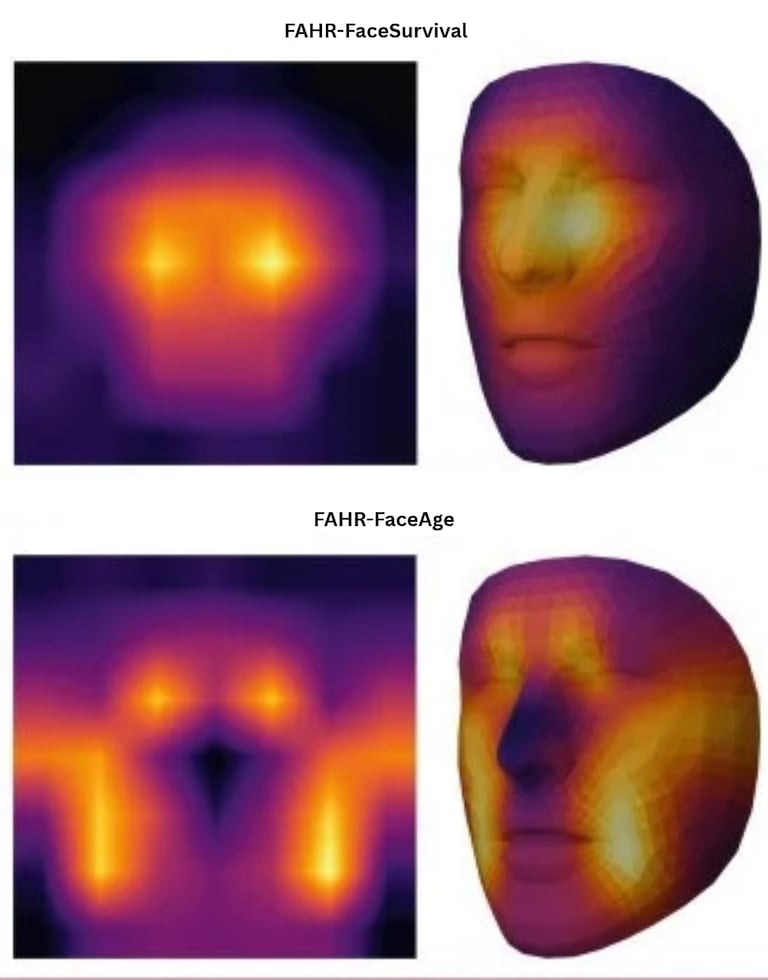
The researchers believe the images may contain clues about a patient’s general health and ability to cope with intensive treatment. However, the study does not establish exactly what the AI detects or whether those clues provide information that doctors cannot already identify.
Expert says the results need careful interpretation
In comments published by the Science Media Centre, Prof. Miroslaw Bober, a professor of video processing and machine learning at the University of Surrey, said the study was substantial and that its validation on an independent group of patients was an important strength.
But he warned that predicting survival risk is different from explaining why a patient may die.
Although the researchers discuss biological age, FAHR-FaceAge estimates age from facial appearance. It does not directly measure the biological processes associated with ageing.
Bober also questioned whether the tool offers information beyond a doctor’s assessment of a patient’s general health. The study did not measure those clinical assessments, making it difficult to determine whether the AI would add useful information in practice.
Read also : AI decodes 217-year-old Napoleon letter in six hours
He also pointed to differences in performance across patient groups. The facial-age measure was not significantly associated with survival among Black patients after adjustment for other factors, although the separate survival model was.
A long way from use in hospitals
The researchers see potential for facial analysis to help doctors assess frailty and decide which patients may be able to tolerate intensive treatments, including radiotherapy, surgery and drug therapy.
Raymond Mak, a radiation oncologist at Mass General Brigham and a co-author of the study, said the goal was to make health assessments more consistent and easier to carry out, while supporting rather than replacing doctors’ judgement.
The findings also linked smoking, heavy alcohol use and drug use with older-looking faces. Smoking showed the strongest association, with current smokers tending to appear older than former smokers and people who had never smoked.
However, the study did not show that the AI could track changes in a person’s health over time. Bober noted that smiling and changes in lighting shifted the estimated age by about two years on average, with larger differences in some cases. He said claims that the tool could monitor ageing or lifestyle changes were premature.
For now, the system remains experimental. Researchers still need to test it across more hospitals and patient groups and establish whether its predictions improve on existing medical assessments.
