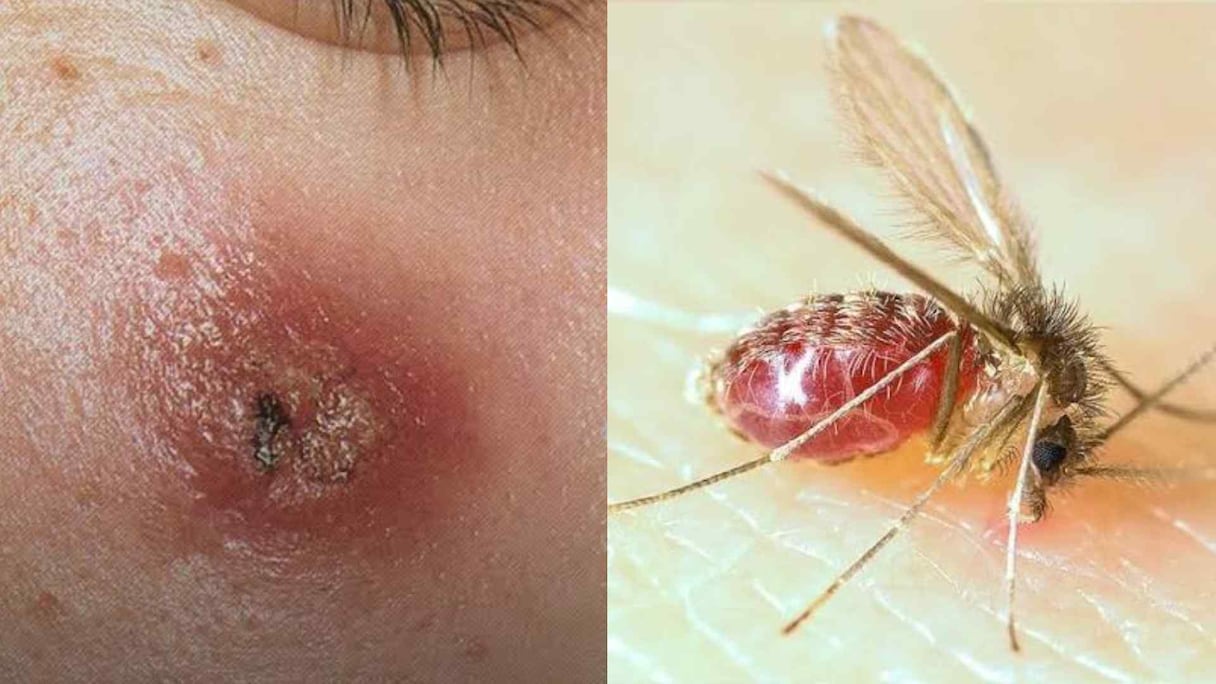
The return of cutaneous leishmaniasis to several areas of southeastern Morocco has raised concerns over the spread of the disease, with hundreds of new cases reported in outbreak areas in the provinces of Zagora and Errachidia. More than 441 cases have been confirmed in the Tamegroute health district in Zagora province alone. In response, doctor and health policy and systems researcher Tayeb Hamdi is warning of the risks associated with delayed diagnosis and treatment, particularly as the disease can leave permanent skin scars, especially when ulcers affect the face and other exposed parts of the body.
Hamdi, vice president of the National Federation of Health, told Le360 that southeastern Morocco, along with the country’s semi-arid and oasis regions, has historically been endemic for cutaneous leishmaniasis. The emergence of new cases does not mean the disease is new to these areas, he explained, but is linked to an environmental cycle involving wild rodents, which act as reservoirs for the parasite, and sand flies, which transmit it to humans.
He said infection rates generally rise seasonally depending on changes in the weather and the activity of the insect vector. Climate change, particularly prolonged droughts, rising temperatures and climate variability, also affects rodent reproduction and sand fly behavior, while shortening the insect’s development cycle and increasing its activity.
Read also : Mobile medical caravan brings free healthcare services to remote villages near Assilah
The current outbreak coincides with a rise in cases since September 2026, particularly in the communes of Tamegroute and Fzouata in Zagora province and the Jorf area in Errachidia province. The appearance of skin ulcers in October and November is linked to the parasite’s incubation period, which can last from several weeks to several months after a sand fly bite. This means symptoms may emerge long after the infection has been transmitted.
Regarding the first signs of the disease, Hamdi pointed out that sand flies are extremely small and make no buzzing sound. Their bites are also generally not painful, meaning people may not even notice they have been bitten.
The infection usually begins with a small red bump or painless spot. Over several weeks, it gradually develops into a nodule or skin ulcer with clearly defined, rounded edges, sometimes covered by a thin membrane or scab.
“These signs differ from ordinary mosquito bites, which are generally accompanied by swelling and itching before disappearing within a few days,” he added.
Hamdi urged people not to dismiss any skin ulcer that fails to heal after more than three weeks. “Such cases require a visit to a doctor or the nearest health center to determine the nature of the infection, rather than relying on self-medication or waiting for it to disappear on its own,” he said.
Regarding possible complications, Hamdi explained that cutaneous leishmaniasis is generally not fatal, unlike the visceral form of the disease, which affects internal organs. However, its danger lies in the damage it can cause to the skin, particularly when treatment is delayed.
“Delaying treatment leaves the door open for bacteria to penetrate the ulcers, causing painful bacterial infections,” he said.
“The infection can leave deep, permanent scars, particularly when it affects the face and limbs. This can have psychological and social consequences for patients, especially children and girls,” he added.
The doctor stressed that early diagnosis greatly increases the chances of recovery without permanent skin damage. “The earlier the infection is diagnosed and treated, the faster and more effective the response, and the greater the chance of preventing deep damage to skin tissue,” he said.
He added that waiting until the ulcer grows larger and progresses makes it more difficult to prevent scarring, even after the parasite has been eliminated.
Hamdi also warned against using traditional remedies, cauterizing ulcers with fire, or applying herbs and chemicals of unknown origin to affected areas. Such practices can further irritate the skin and worsen the lesions, in addition to increasing the risk of bacterial infections and delaying appropriate treatment.
“Treatment is free and available at health centers. It is the only safe solution,” he said, urging families not to expose children to unproven treatments and to seek medical care as soon as suspicious symptoms appear.
Read also : Multidisciplinary medical caravan brings early screening closer to Es-Semara residents
On prevention, Hamdi said schools could play a key role in limiting the spread of the disease by organizing awareness and early-detection campaigns, particularly in rural and oasis communities. He also called for teachers and administrative staff to be trained to recognize the initial signs of infection among pupils and refer suspected cases to health centers.
He further called for a joint approach involving the health and education sectors, including teaching children how to protect themselves from insects, ensuring safe sleeping conditions and monitoring cases involving unusual skin ulcers.
As for measures to contain infection hotspots, Hamdi stressed that responsibility does not rest with the Ministry of Health alone, but requires the involvement of local authorities, elected local councils and environmental services.
He called on these bodies to step up waste collection, clean up illegal dumping sites and waterways, and organize regular rodent-control operations, particularly near residential areas and oases.
He also urged health services to ensure that medicines and treatment supplies are available at rural health centers, strengthen epidemiological surveillance teams, and train medical and nursing staff in rapid diagnosis and the management of infected patients.
At the household level, he recommended using insecticide-treated bed nets with fine mesh, installing protective screens on windows and doors, and using approved and safe insect repellents. He also advised keeping animal shelters away from bedrooms and properly disposing of organic waste and construction debris, which can provide suitable breeding grounds for sand flies.