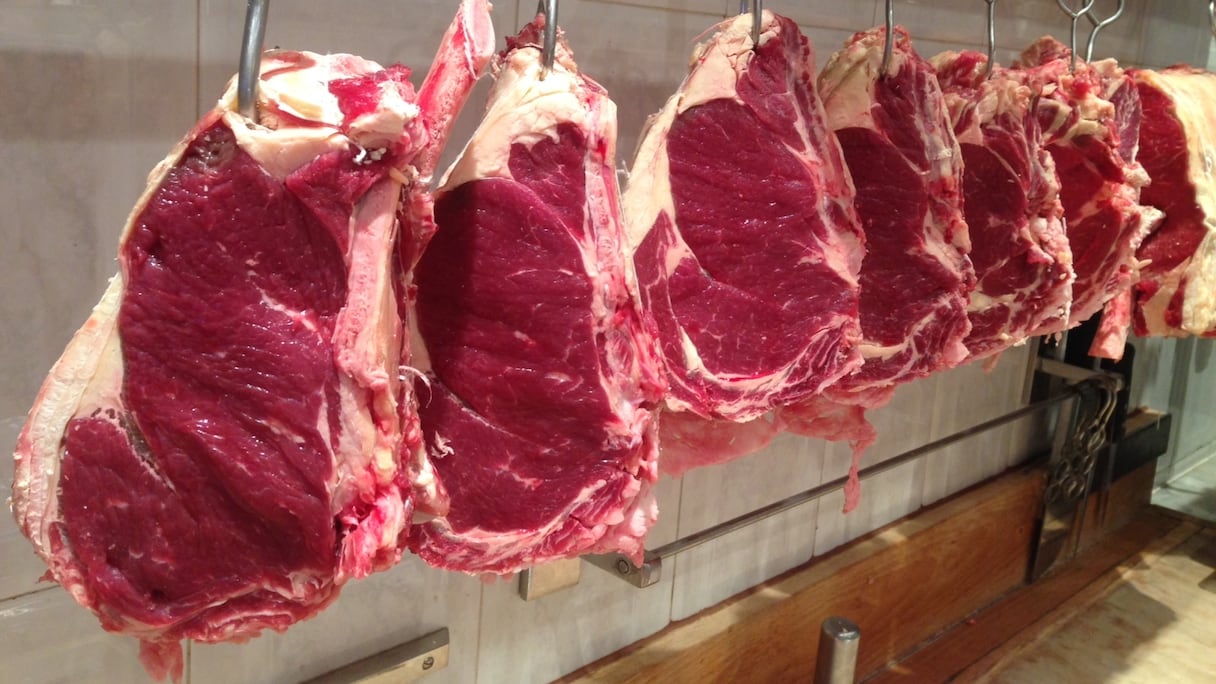
Red meat prices in Casablanca have been rising for nearly three years, putting a growing strain on household purchasing power. Many consumers have been forced to change their eating habits and cut back on meat, including during religious holidays, when demand traditionally increases.
At butcher shops across the city, a kilogram of beef now costs 130 dirhams, while lamb sells for 150 dirhams. These prices continue to frustrate both consumers and industry professionals, despite several government measures aimed at stabilizing the market.
There are differing views among professionals on what is driving the increase. Some point to fluctuations in international markets and the rising cost of food products in general, which have affected not only red meat but also poultry and seafood.
Read also : Meat, chicken and fish prices leave consumers with few cheap options
Others blame shortcomings in government efforts to rebuild Morocco’s national livestock herd and the country’s growing reliance on imports. They argue that imports alone cannot provide a lasting solution to high meat prices.
Speaking to Le360, Abdelouahid Boukhit, manager of the Al Jamiâ red meat market in Casablanca, said the depletion of the national herd, combined with increased reliance on imported meat, was helping keep prices high.
“Rebuilding the national herd and supporting livestock farmers should be the priority. These measures would be essential to preventing further price increases in the coming years,” he said. Without such action, he warned, current prices could become a permanent feature of the Moroccan market.
Read also : Beef at MAD 120, lamb at MAD 160 as food price pressure spreads to chicken, eggs
Boukhit also pointed to imbalances in the market, where supply remains under pressure while demand is falling. Faced with high prices, many consumers are choosing to wait for a possible drop before returning to their usual buying habits.
The removal of customs duties on meat imports, a measure introduced to improve market supply, has not led to a significant drop in prices at butcher shops, Boukhit said.
He also warned that prices could rise further ahead of Ramadan and Eid Al-Adha, two periods when red meat traditionally plays a major role in Moroccan households’ diets.
