The group was received on September 2 and began an intensive orientation program in Rabat that week. The English Teaching Assistants then continued with specialized training to prepare them for work in Moroccan classrooms.
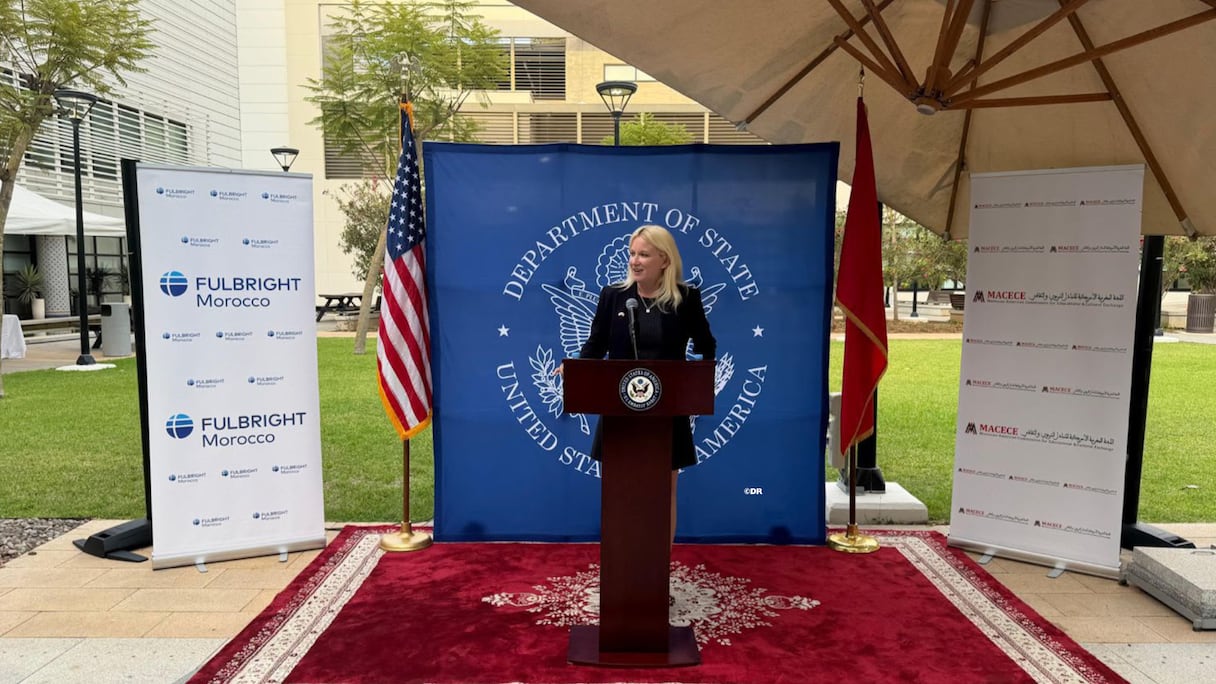
As part of the welcome program, the grantees attended a reception at the US Embassy in Rabat, where they met Moroccan and American Fulbright alumni, members of MACECE’s board and US diplomats.
Their arrival comes in a significant year for both countries, as 2026 marks 250 years of Moroccan-American friendship, dating back to Morocco’s recognition of US independence in 1777. It also marks the 80th anniversary of the Fulbright Program, created after World War II to promote understanding between nations through education.
Read also : Casablanca honors first graduates of university-certified robotic surgery program
This year’s group includes six Fulbright student researchers whose projects cover a range of topics across Morocco.
Their research includes the representation of Amazigh people in Moroccan cinema, with fieldwork in Ouarzazate, and the experiences of French-born Muslim families living in Morocco, based on field research in Meknes.
Other researchers will study sustainable tourism models for preserving kasbahs and palaces in the Souss-Massa and Drâa-Tafilalet regions, the role of the calligrapher sultan in late medieval Maghrebi manuscripts, and traditional knowledge held by Amazigh women in a saffron cooperative near Taliouine.
Another project will explore participatory artificial intelligence tools for reconstructing heritage in cooperation with communities in the High Atlas recovering from the 2023 earthquake.
Five Fulbright visiting scholars will also teach and conduct research at Moroccan universities this year.
Their projects include a study of the Quran and the human senses at Moulay Ismail University in Meknes; agentic artificial intelligence for educating the next generation at Abdelmalek Essaadi University in Tangier; and research into urbanism and landscape through drawing along the Bouregreg Valley at the National School of Architecture in Rabat.
Other projects will focus on inclusive physics education using artificial intelligence for deaf and hard-of-hearing students at Mohammed V University in Rabat, and the digital preservation of Moroccan Jewish heritage through the Rabat Genizah Project, in partnership with Ibn Zohr University and the Museum of Moroccan Judaism.
The group also includes 12 Fulbright English Teaching Assistants who will spend the academic year in university classrooms across Morocco, from Salé, Casablanca and Mohammedia to Tetouan, Fez, Oujda, El Jadida, Safi, Essaouira, Berrechid and Ouarzazate. Two will be based in Marrakech.
The cohort is completed by a recipient of the Fulbright Distinguished Award in Teaching, a primary school teacher who will spend the fall studying how “eco-schools” programs can promote sustainability education in Moroccan schools in both rural and urban areas.
“This new generation of American Fulbright scholars, professors and English Teaching Assistants arrives in Morocco at a promising moment for our bilateral partnership,” said Dr. Rebecca Geffner, executive director of MACECE.
“From Tangier and Tetouan in the north to Marrakech, Essaouira, Ouarzazate, Agadir, Meknes, Oujda and Taliouine, they will bring American expertise, ideas and enthusiasm to communities and institutions across the country,” she said.
Geffner added that their work reflects the breadth of American expertise and the growing importance of issues shaping Morocco’s future, including artificial intelligence, education, urban development, cultural heritage and human capital.
“Through research, teaching and direct engagement with Moroccan communities, these Fulbright grantees will help build relationships and practical partnerships that strengthen the strategic ties between the United States and Morocco,” she said.
US Embassy Chargé d’Affaires Benjamin Ziff said Fulbright has “for decades” been a key pillar of educational and cultural exchange between the United States and Morocco.
“It has created lasting ties between our peoples and institutions. As we celebrate 250 years of Moroccan-American friendship and 80 years of the Fulbright Program, this new cohort continues that partnership,” he said.
Their work across Morocco, Ziff added, will strengthen academic ties, encourage the exchange of ideas and build relationships that will benefit both countries in the years ahead.
Read also : Morocco takes center stage at international cooperation fair in Ecuador
As the American grantees began their year in Morocco, a new group of Moroccan Fulbright grantees also left for the United States.
Nearly 50 Moroccans will spend the academic year there through Fulbright programs covering master’s studies, doctoral research, advanced research, Arabic language teaching and professional training.
MACECE oversees the Fulbright Program in Morocco and works to promote educational exchange, mutual understanding and people-to-people diplomacy between Morocco and the United States.
