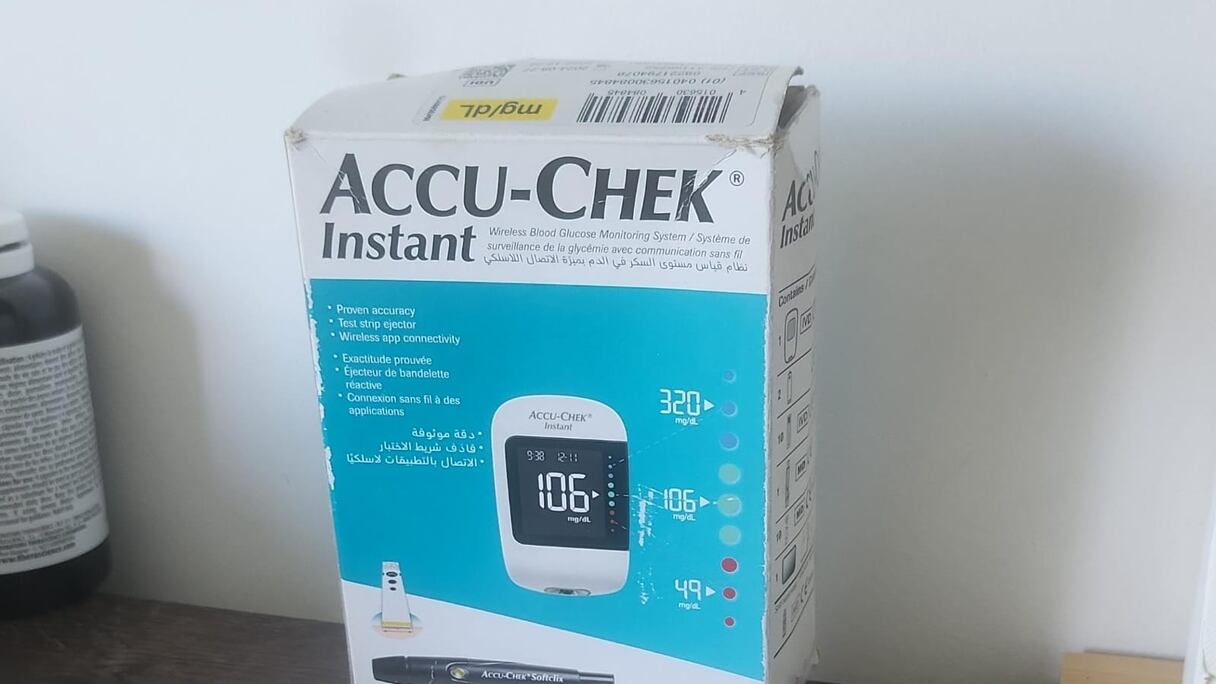
Sarah Chahi knows almost exactly what type 1 diabetes costs her.
Every three months, the 25-year-old doctoral student spends around MAD 3,330 on insulin: two boxes of Lantus long-acting pens and three boxes of NovoRapid rapid-acting pens. Her insulin is reimbursed. The device she relies on to continuously track her blood sugar is not.
Chahi usually buys continuous glucose monitoring sensors, or CGMs, in France for €45 to €47 each, roughly MAD 484 to MAD 506. She tries to buy enough for three to five months at a time, either travelling herself or asking relatives to bring them back.
Locally, she sometimes finds another brand for around MAD 500 per sensor.
“It requires not only a significant budget, but also a lot of planning and organization to make sure I do not run out,” she told Le360.
For Chahi, who was diagnosed with type 1 diabetes at 13, the expense comes on top of the relentless work of managing the disease: checking glucose levels, calculating carbohydrates, adjusting insulin and anticipating the effects of food, exercise, stress and changes in routine.
“There is not really any break,” she said.
The financial constraint has already shaped her treatment choices. She has never used an insulin pump because of its price and lack of coverage. She also gave up a longer-acting insulin that she says would have suited her better because it was not reimbursed.
Instead, she continues using an insulin that requires two daily injections.
Her current CNOPS coverage, as a dependent of her parents while completing her doctorate, reimburses her insulin but not her CGMs. That arrangement will end in March 2027.
“If I do not find another solution by then, I will also have to cover the cost of my insulin myself. I am going to opt for AMO,” she said.
When the sensor becomes unaffordable
Chahi’s experience gained wider attention after she posted a social-media video showing what she spends money on. She included her glucose sensors almost as a joke. The response exposed a much broader affordability problem.
Parents of children with diabetes began contacting her. One mother has a child with special needs who cannot always recognize or communicate episodes of hypoglycemia or hyperglycemia. A CGM would allow the mother to monitor the child’s glucose levels continuously, but she cannot afford one.
Another man who travels frequently wanted a sensor for his diabetic mother so that he could monitor her glucose remotely.
“These testimonies show that access to these technologies can have an impact that goes far beyond mere convenience,” Chahi said.
For her, reimbursement of CGMs should come first, followed eventually by insulin pumps.
“These are not new technologies,” she said. “They have existed and been used for many years and can considerably facilitate the day-to-day management of the disease and improve quality of life.”
Choayb Laghachou faces much the same calculation.
The 25-year-old, diagnosed with type 1 diabetes in 2018, estimates that managing the disease costs him between MAD 2,000 and MAD 2,500 a month when insulin, glucose testing and laboratory expenses are counted.
Tresiba, the long-acting insulin he says is best suited to his treatment, costs MAD 243 per pen and is not reimbursed. A box of five NovoRapid pens costs MAD 571 and is not fully covered, he said.
CGMs add around MAD 1,000 a month. That expense often means going without them.
“For people without health coverage, the costs are exorbitant. Even with AMO coverage, the out-of-pocket expenses remain colossal because of the flaws in the reimbursement system,” Laghachou told Le360.
For someone with type 1 diabetes, insulin itself is non-negotiable. Laghachou takes at least four injections a day while constantly adjusting doses according to meals and glucose levels.
“The daily injection is the life-sustaining treatment that keeps me alive,” he said.
Even without insulin, the bills add up
The financial burden is different, but hardly absent, for people managing type 2 diabetes.
Kenza Fahim, a self-employed online seller diagnosed two years ago, does not take insulin and does not use a CGM. She nevertheless estimates her diabetes-related spending at MAD 700 to MAD 1,000 a month.
Metformin costs her only MAD 30 to MAD 60 monthly. The larger expenses come elsewhere.
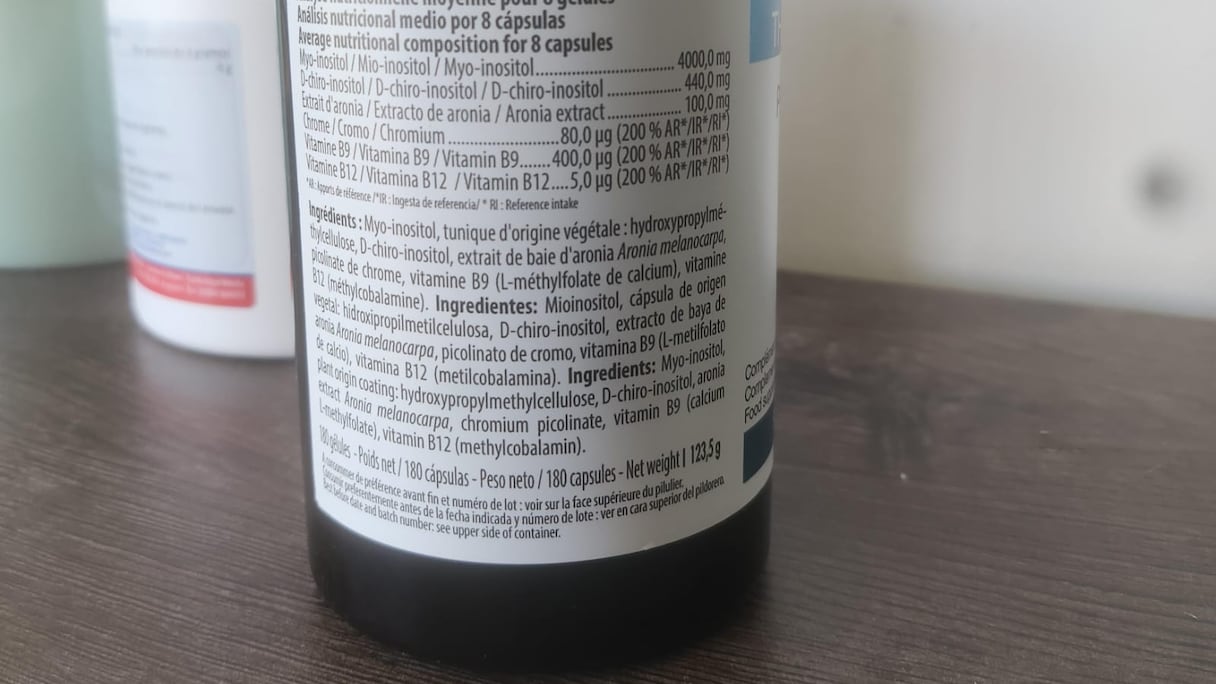
A box of 50 glucose test strips costs MAD 150 to MAD 300. A quarterly HbA1c test at a private laboratory costs around MAD 200 to MAD 300. Myo-inositol, which she takes for insulin resistance associated with polycystic ovary syndrome, costs as much as MAD 500 a month and is not reimbursed because it is classified as a dietary supplement.
“For a freelancer with fluctuating income, this fixed monthly expense weighs heavily on the budget,” Fahim said.
Her diabetes is registered as a long-term condition, giving her coverage for basic treatment and laboratory tests on the basis of the national reference tariff.
But that tariff is itself part of the problem, she says.
A specialist consultation may cost MAD 400 or MAD 500 privately while the agreed reference tariff stands at MAD 250. The difference comes directly from the patient’s pocket.
Fahim pays her own CNSS contributions and has no supplementary insurance. At times, she says, the administrative process involved in seeking reimbursement is enough to make her abandon the claim altogether.
“I end up paying and enduring the situation in silence,” she said.
Nearly 3 million people with diabetes
The affordability question extends far beyond the patients who spoke to Le360.
Health systems and policy researcher Tayeb Hamdi estimates, citing WHO figures, that nearly 3 million people in the country may have diabetes, with about one in three unaware of their condition.
More than 90% of diagnosed patients have type 2 diabetes, while less than 10% have type 1, which requires insulin for survival.
The case for better access to newer technologies, Hamdi says, does not mean that every person with diabetes needs a CGM or insulin pump.
Patients with well-controlled type 2 diabetes treated with tablets generally do not require continuous monitoring. The case is much stronger for people with type 1 diabetes, certain insulin-treated type 2 patients and people at particular risk of hypoglycemia.
CGMs continuously track glucose instead of relying on individual finger-prick readings. That can reveal fluctuations that conventional testing misses, including dangerous episodes of low blood sugar during sleep.
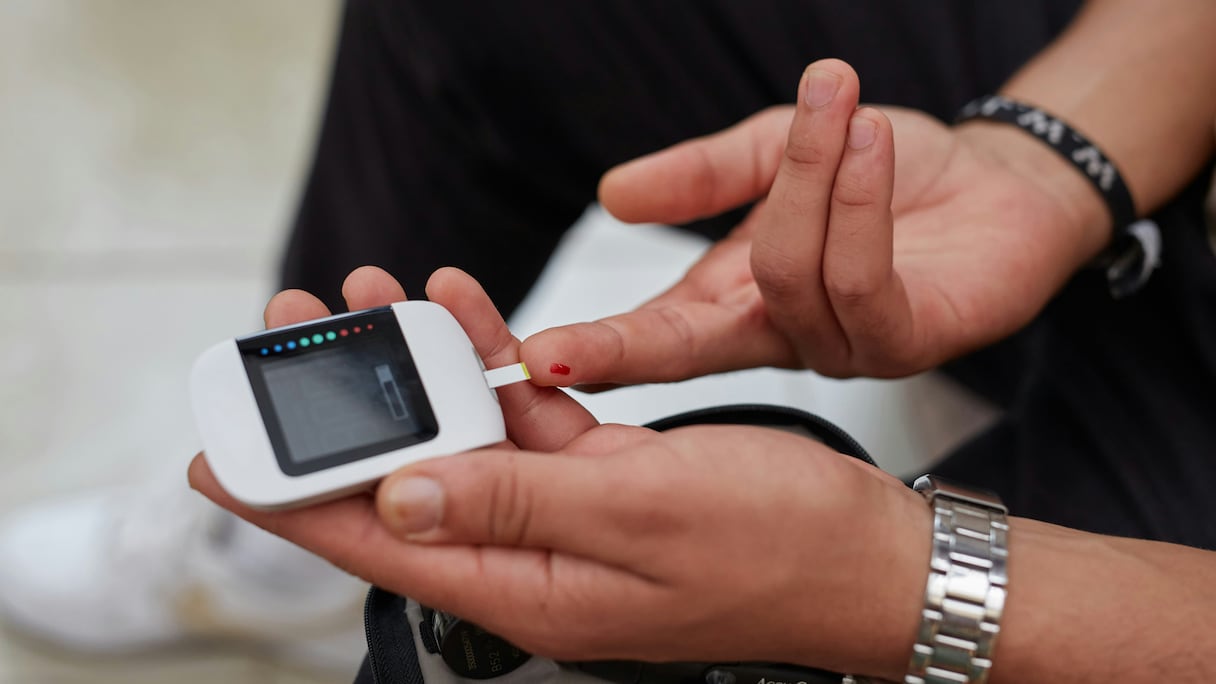
“With capillary blood glucose testing, patients generally prick themselves once or twice a day, because it is impractical but also for cost reasons,” Hamdi said. “Continuous monitoring, on the other hand, detects what finger pricks miss, starting with the many nighttime episodes of hypoglycemia.”
The technology can also be linked to automated insulin-delivery systems that adjust insulin according to a patient’s needs.
Yet Hamdi says he sees very few locally based patients using continuous monitors and almost none using pumps.
“In both the United States and Europe, nearly 70% of people with type 1 diabetes have a monitoring system providing 24-hour surveillance,” he said. “Morocco is a long way from that.”
According to Hamdi, neither CNSS nor CNOPS currently reimburses this equipment.
‘CGM is not a luxury’
A third-year endocrinology resident interviewed by Le360 similarly puts continuous glucose monitoring at the top of the list of unmet needs.
Most insulin products are reimbursable, she said, although two ultra-long-acting basal insulins — degludec, sold as Tresiba, and glargine U300, sold as Toujeo — are not.
“What is the urgent issue now? It is CGM,” she said. “A technology that is not new at all, but is still not reimbursable.”
Continuous monitoring can be particularly important for patients who no longer recognize the warning signs of falling blood sugar, including during sleep. It also allows patients to see their readings throughout the day, adjust doses more effectively and live with greater flexibility.
Remote monitoring can be particularly useful for children and older people, while the data give doctors a clearer picture when adjusting treatment.
“So CGM is not a luxury; it is a necessity,” she said.
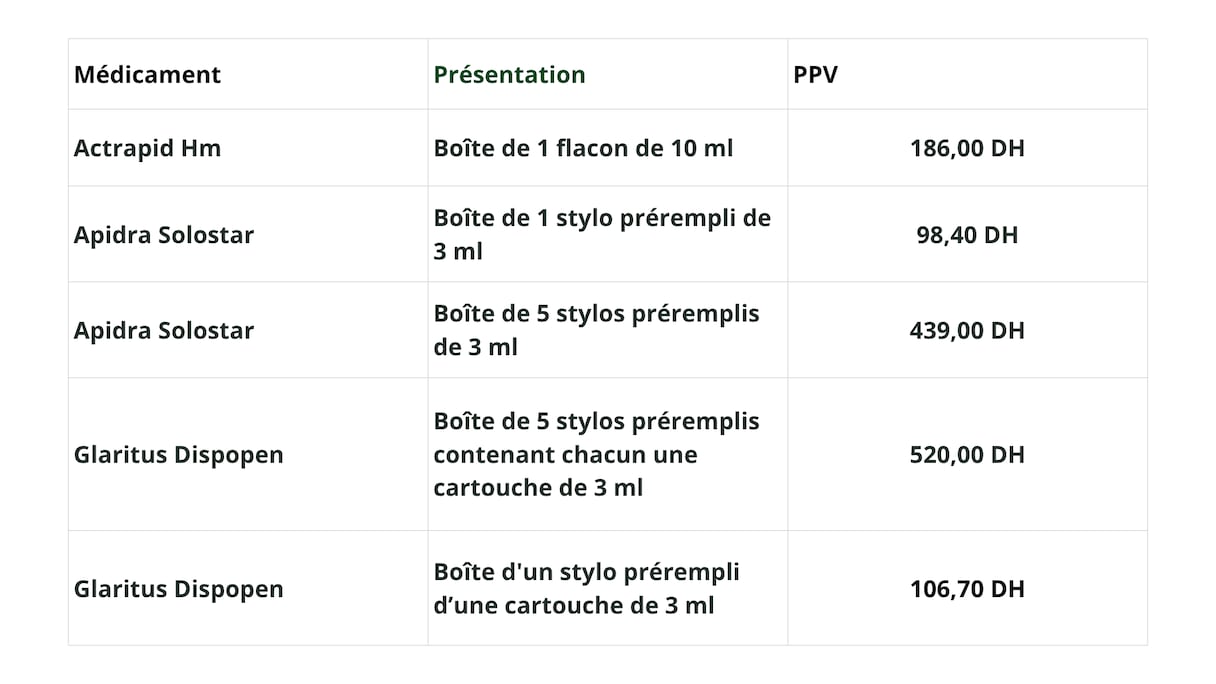
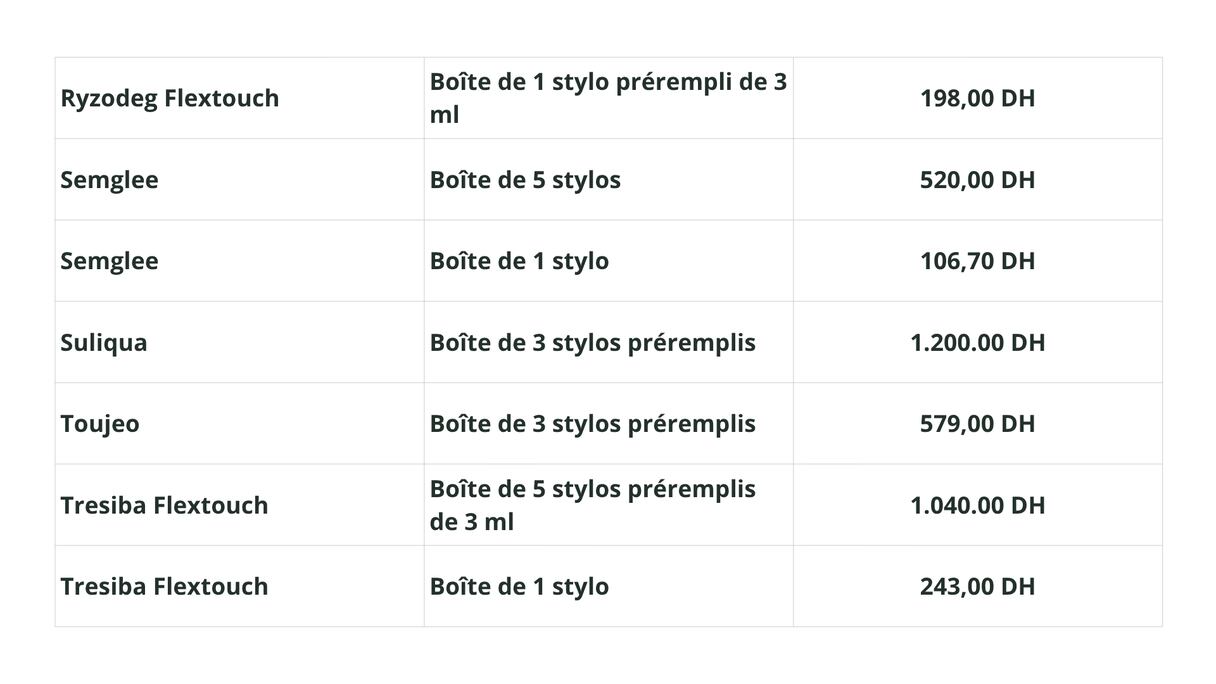
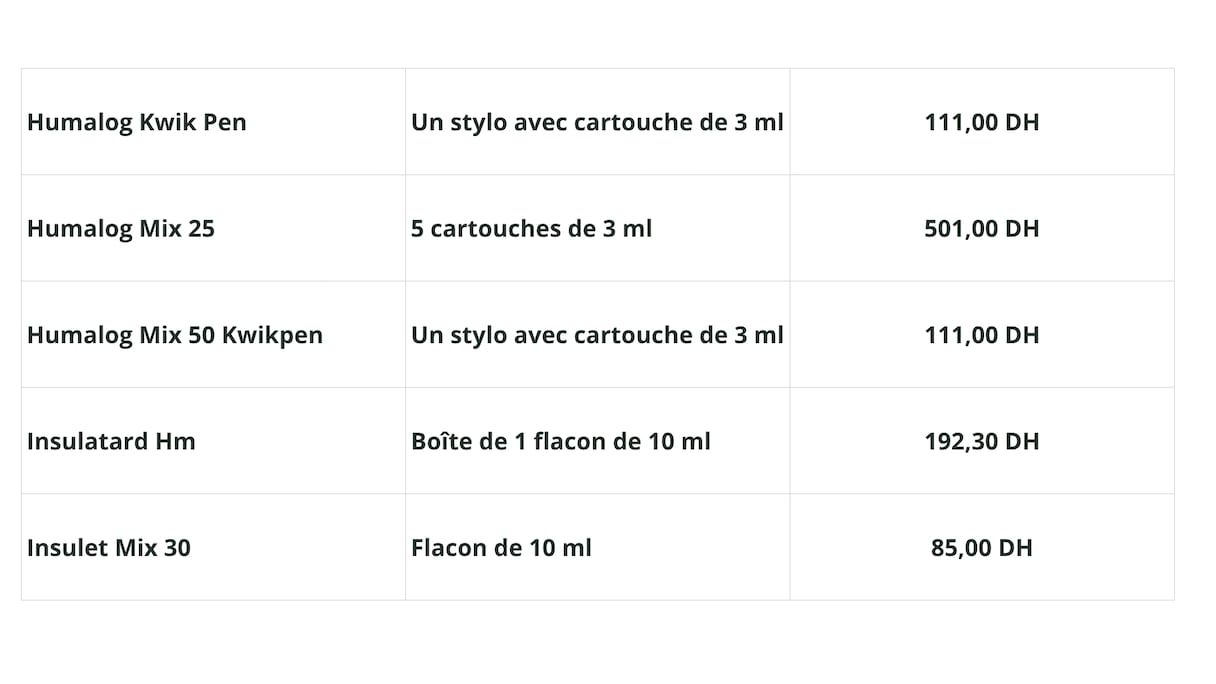
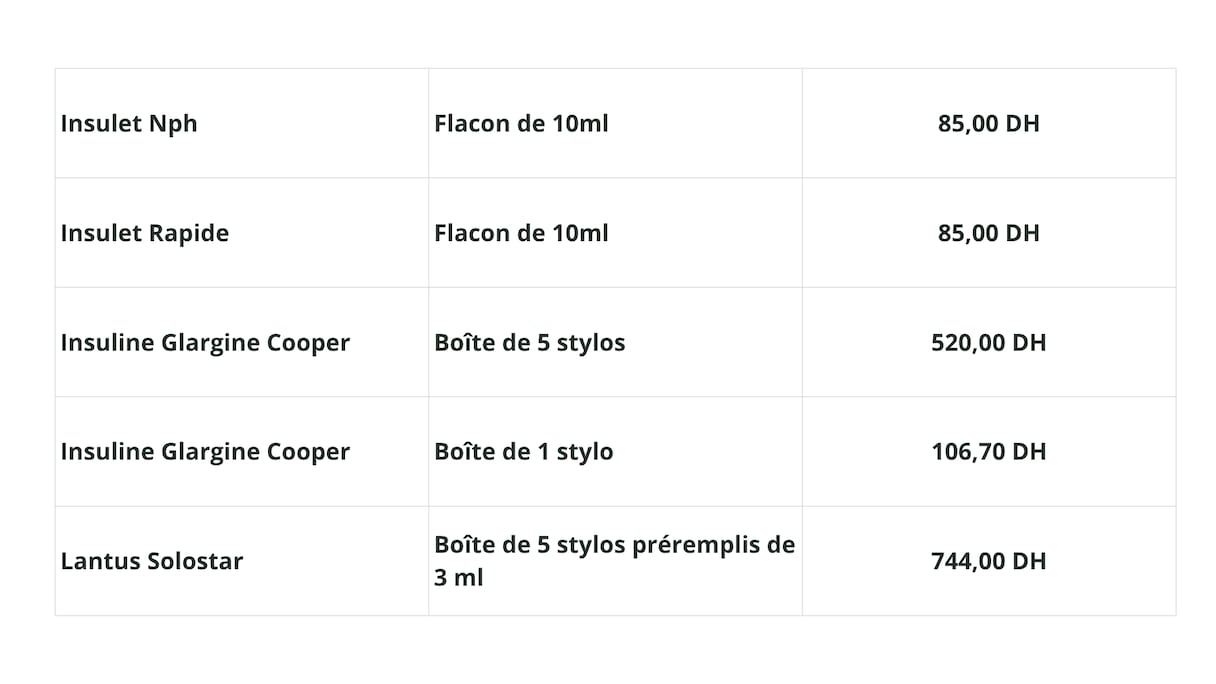
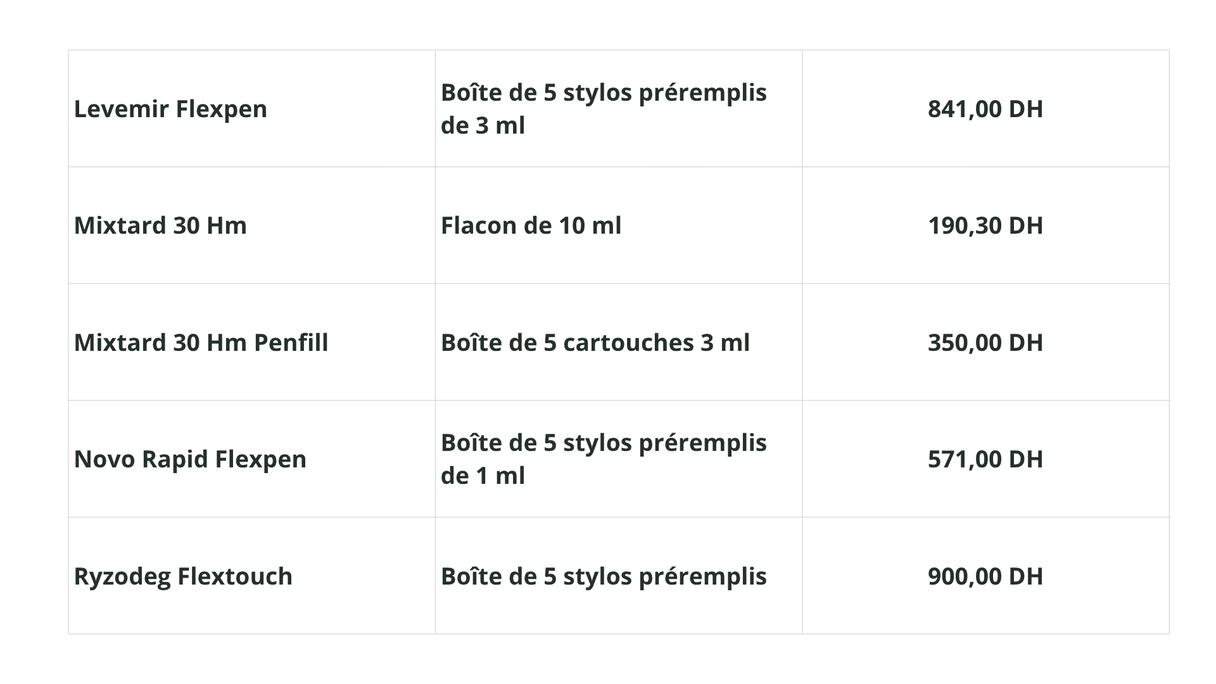
Source: Moroccan Agency for Medicines and Health Products (AMMPS)
Insulin prices
The cost of failing to control diabetes can be considerably greater.
Hamdi points to stroke, heart attacks, amputations, kidney failure requiring dialysis, retinopathy and blindness among the complications associated with the disease.
Those costs eventually reach households and the health system alike.
More than 53% of AMO health expenditure is absorbed by 3% of insured people, all of whom have chronic conditions, including diabetes, according to figures cited by Hamdi.
That is why he disputes the idea that describing diabetes as “100% reimbursed” gives an accurate picture of what patients actually pay.
Coverage is calculated against reference prices and does not encompass every medicine or device used to manage the disease, he said. Patients can therefore remain responsible for substantial expenses even when their diabetes is recognized as a chronic condition.
“The system exists on paper,” Hamdi said. “In reality, the calculations reveal a very high out-of-pocket cost.”