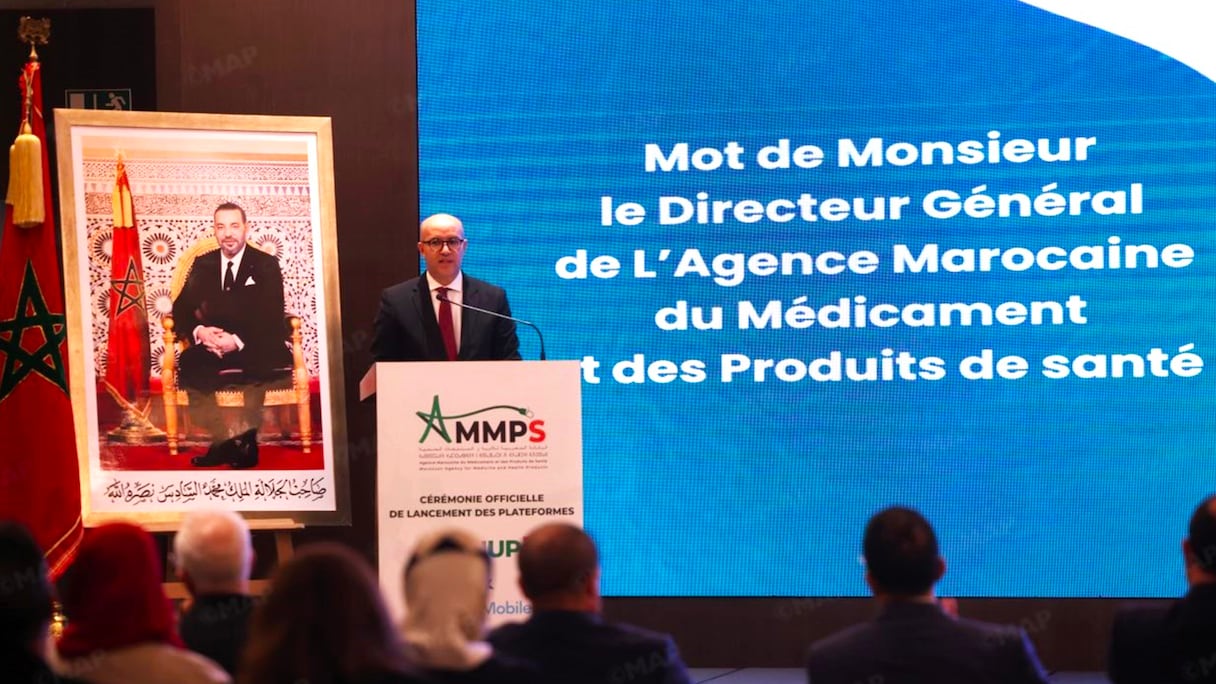
The Moroccan Agency for Medicines and Health Products (AMMPS) officially launched VigiMobile and VigiUp in Rabat on Wednesday, November 4. The two digital platforms are designed to make it easier to report adverse events associated with medicines and health products.
The launch took place as part of the international Med Safety Week 2026 campaign, held from November 2 to 8 under the slogan “Adverse events: Don’t ignore them, report them.” The initiative is part of efforts to modernize Morocco’s national health system, in line with the High Royal Guidelines of King Mohammed VI, with the aim of ensuring health and medication safety.
The ceremony was attended by Abdelkrim Meziane Belfkih, secretary-general of the Ministry of Health and Social Protection, AMMPS Director General Samir Ahid, institutional officials, representatives of healthcare institutions and professionals from the sector.
Speaking on the occasion, Health and Social Protection Minister Youns Bjijou said the launch of VigiMobile, for reporting adverse events linked to medicines and vaccines, and VigiUp, for other health products, would provide “professionals and citizens with simple, accessible tools.”
In a speech read on his behalf by Meziane Belfkih, Bjijou stressed the importance of health monitoring mechanisms in supporting reforms to the health system. He also emphasized the need to promote a culture of reporting and strengthen coordination among national and regional stakeholders.
Read also : Multidisciplinary medical caravan brings early screening closer to Es-Semara residents
The digital transformation of the national health system is not an end in itself, the minister said. Rather, it should make procedures easier for users, improve the flow and processing of information, and strengthen institutions’ ability to identify risks and respond to them. He added that the two platforms were a concrete example of this approach.
For his part, Ahid outlined the agency’s efforts to modernize monitoring systems, improve the early detection of risks, and make it easier for healthcare professionals and citizens to contribute to the safety of medicines and health products. He also stressed the importance of strengthening the regional network for health monitoring through closer coordination among the various stakeholders in the health system.
For the AMMPS, medication safety does not end with market authorization. It also depends on continuous monitoring, early risk detection and the collective ability to act to prevent any event that could compromise patients’ health, Ahid said.
The event also featured a panel discussion titled “Reporting, the cornerstone of health monitoring: How can every healthcare professional become an actor in patient safety?” The discussion focused on the role of healthcare professionals in identifying and reporting adverse events and their contribution to preventing risks.
As part of Med Safety Week 2026, the AMMPS is also rolling out a nationwide and regional awareness program. It includes initiatives targeting university students who are future healthcare professionals, as well as outreach activities organized in coordination with the network of Regional Centers for Health Monitoring.
