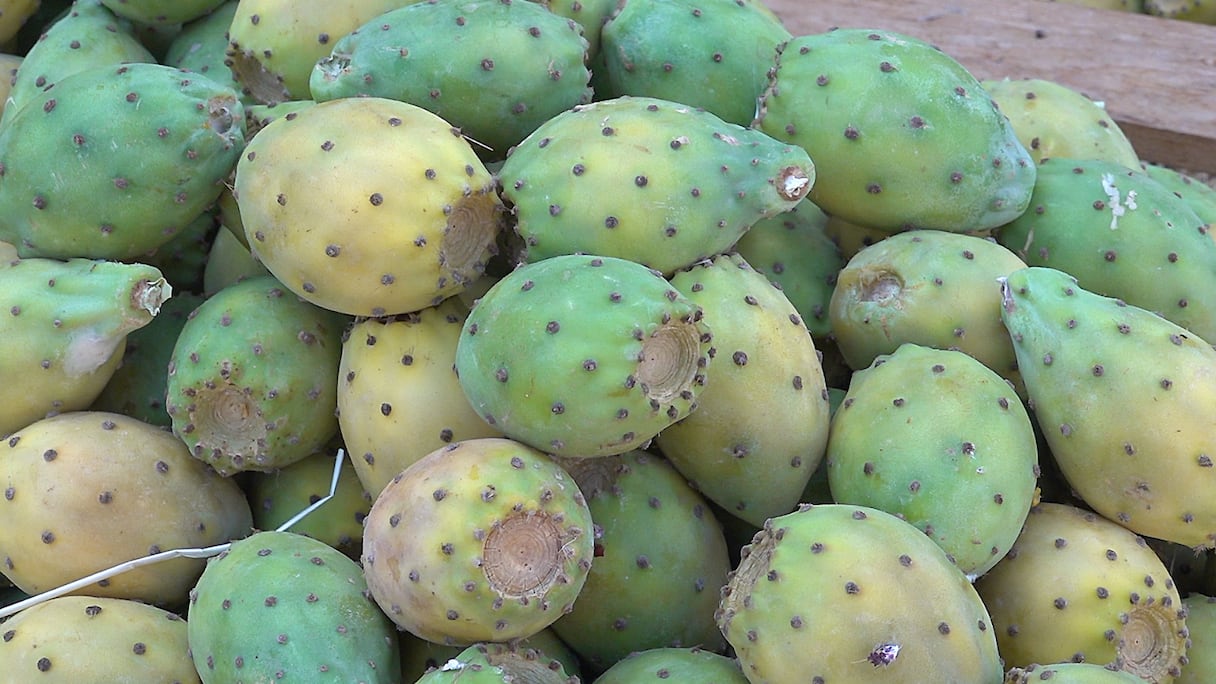
For generations, prickly pears, known locally as karmouss l’hendi, were one of Morocco’s most affordable summer treats, earning the nickname “the poor man’s fruit.” This year, however, many consumers are discovering that the seasonal favorite has become considerably more expensive.
At markets across Casablanca, prices currently range from 2 to 7 Moroccan dirhams per fruit depending on size, quality, and origin, with some vendors charging as much as 10 dirhams in the early weeks of the harvest.
Sellers say they are not responsible for the sharp price differences. Instead, they point to limited supply, higher procurement costs, and the lingering effects of the cactus cochineal insect, which devastated Morocco’s prickly pear plantations over the past decade.
“I sell them for between 2 and 3 dirhams each, depending on their size, and some customers still think that’s expensive,” said Mouhcine, a vendor at Souk Al Haffari in Casablanca. “Others charge 7, 8, or even 10 dirhams, but that’s not our case.”
He said wholesale prices vary significantly depending on quality and origin.
“We buy shipments for between 200 and 350 dirhams,” he said. “Then you have transport costs, handling, and losses. Under those conditions, it’s difficult to sell them for less.”
Another vendor, Said, described prices above 6 dirhams as excessive, noting that wholesale prices have so far remained relatively stable. But he cautioned that the market remains difficult to predict.
“No one can say today whether prices will go up or down,” he said. “Everything depends on production and the quantities arriving at wholesale markets over the coming weeks.”
Much of the current situation can be traced to the cactus cochineal, an invasive insect that first appeared in Morocco in 2014 and severely damaged one of the country’s signature crops.
The pest devastated traditional growing areas, particularly around Sidi Ifni and Aït Baâmrane, destroying large sections of plantations. According to the National Institute for Agricultural Research (INRA), Morocco’s prickly pear cultivation covered roughly 150,000 hectares before the outbreak.
Since then, production has gradually shifted toward other regions, including Rehamna and areas surrounding Agadir. Even so, growers have yet to restore the volumes that once supplied domestic markets.
With demand already strong at the start of the summer season and supplies still relatively limited, vendors say prices remain elevated. They expect additional harvests to ease pressure on the market in the coming weeks, although few anticipate a return to the exceptionally low prices that once made prickly pears one of Morocco’s cheapest fruits.
“In our opinion, it will take at least another five years before production fully recovers and prices return to what Moroccans were used to,” Said said.
