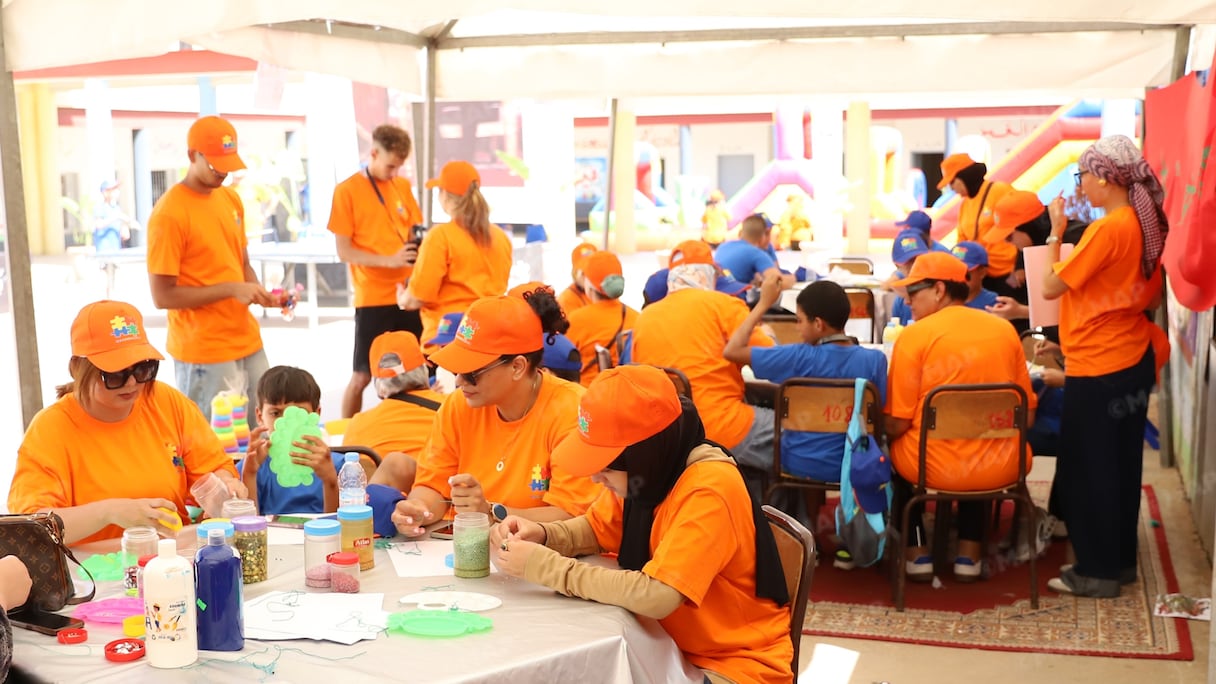
Children with autism spectrum disorder (ASD) from different parts of Morocco are taking part in the second edition of a national inclusive summer camp being held in Salé from August 9 to 20.
Organized by the Mosaïque Association in partnership with the State Secretariat for Social Inclusion, the initiative is being held under the theme “Educational summer camps: a new vision for shaping lives through inclusion and empowerment.”
The program aims to develop the skills and abilities of 40 children with ASD while supporting their integration into society.
It also seeks to promote the right of children with ASD to take part in educational and recreational activities in an appropriate environment. The program includes a range of educational, recreational, and paramedical workshops and activities.
This year’s edition also includes 20 children without ASD, alongside 40 companions and 20 staff members specializing in educational, medical, and paramedical fields.
Speaking on the occasion, Samir El Ayadi, the Mosaïque Association’s deputy president and director of the camp, described the initiative as a unique national experience aimed at establishing a model for inclusive summer camps.
He said this year’s edition is also focused on supporting mothers by providing them with psychological and recreational assistance.
The goal, according to El Ayadi, is to draw up recommendations to be submitted to the relevant ministry with a view to adopting a national model for inclusive summer camps.
Sofia Ben Abdelkhalek, a psychomotor therapist and ASD specialist, said the main role of the specialists at the camp is to support the children and ensure their participation in the various activities on the program.
The approach involves gathering information about each child through direct communication with their parents to identify their individual needs, she explained.
Ben Abdelkhalek said the initiative is primarily aimed at strengthening the children’s independence and facilitating their integration, with a particular focus on developing their communication skills through techniques adapted to each child’s abilities.
The families of participating children also expressed their satisfaction at taking part in the program for a second consecutive year, highlighting the collective efforts to meet parents’ expectations.
They also stressed the positive impact of such programs on participating children, giving them an opportunity to enjoy their right to recreation and inclusion.
