For nearly six months, Sanaa says, she has been making the same trip to the health center for the insulin her eight-year-old son, Amine, needs.
And for nearly six months, she says, the answer has been the same.
“There isn’t any left.”
Sanaa was among parents who gathered outside the Wilaya of Casablanca on Saturday, some holding boxes of insulin above their heads and others accompanied by their diabetic children, to complain that treatment they depend on every day has become increasingly difficult to obtain through public health centers.
Health authorities tell a very different story.
An authorized source contacted by Le360 said checks with the Moroccan Agency for Medicines and Health Products (AMMPS) showed no shortage in public facilities and that existing insulin stocks were enough to meet needs for the year, on top of a safety stock.
Somewhere between the health center counter and those stocks lies a dispute that has dragged on for months.
“There is an insulin problem. We have been unable to get it from public health centers for six months,” said one mother at Saturday’s protest, holding up a box of NovoRapid, the rapid-acting insulin taken around mealtimes.
The families say they have held several sit-ins over the issue. This time they came asking authorities to replenish health centers, saying children with type 1 diabetes cannot simply wait for supplies to return.
Their bodies do not produce insulin. Missing treatment can send blood sugar sharply higher and, in severe cases, lead to diabetic ketoacidosis, which can become life-threatening without prompt treatment.
For Mohamed, whose daughter Malak is six, being sent away from the health center means heading to the pharmacy.
That bill does not come alone.
“Having to buy insulin and the equipment is a heavy financial burden, on top of the cost of test strips and medical follow-up,” he said.
The strips are needed several times a day to check blood glucose. Add insulin, syringes or pens and consultations, and a treatment normally collected through the public system begins eating into the household budget.
“This is not a luxury product that can be replaced or put off,” Mohamed said. “Not having it exposes our children to serious, potentially fatal complications.”
Reports reaching diabetes campaigner Choayb Laghachoua suggest the picture differs considerably from one place to another.
“It all depends on where you live,” he told Le360.
Laghachoua, who lives with diabetes and runs an Instagram page on the condition, said patients have reported difficulty finding several types of insulin at pharmacies, including Tresiba and, particularly in Casablanca, Lantus.
He said complaints from public health centers have come from Casablanca and El Hajeb as well.
“In some health centers, though not all, there has been absolutely nothing for more than six months,” he said. “I receive more than 100 messages from desperate families every day.”
He dates the complaints to roughly the same period cited by the parents protesting in Casablanca.
But insulin pens have further muddied the waters.
Laghachoua said patients had told him that a public procurement scheme for insulin pens had supplied health centers in Casablanca before the batch quickly ran out, prompting families to question what became of the supplies.
The authorized source disputes that account of how the public system works.
“Insulin pens have never been distributed at health centers,” the source said. “Patients normally receive insulin in vials, along with the necessary syringes.”
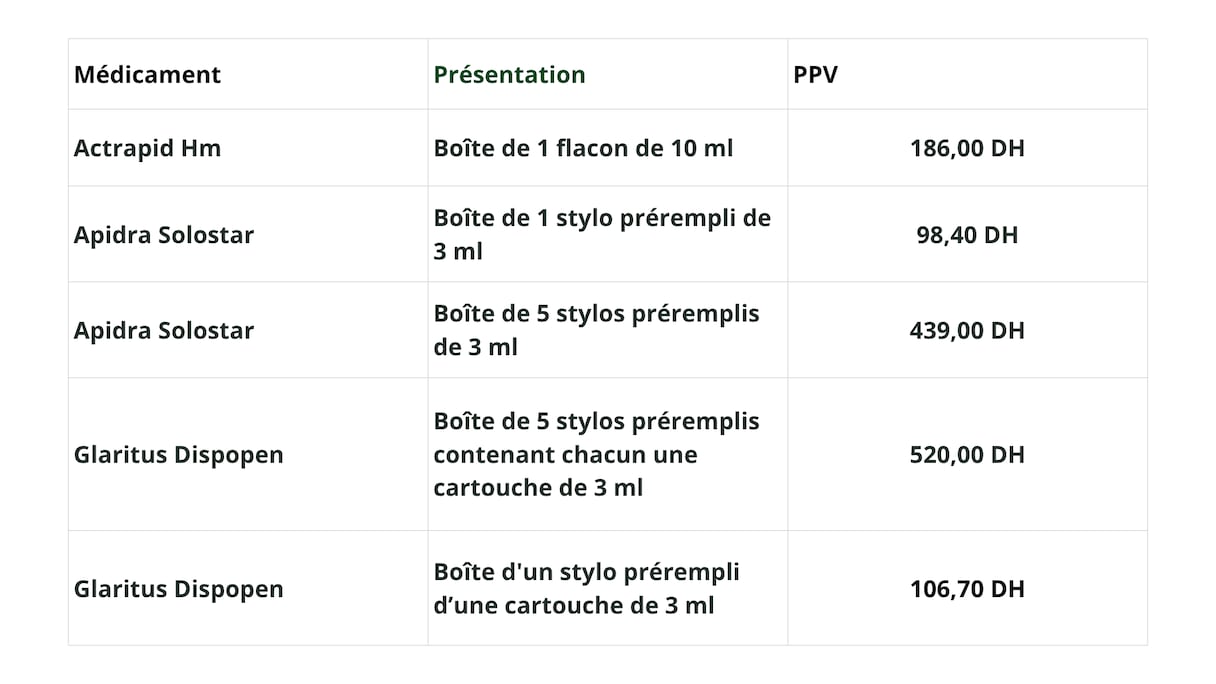
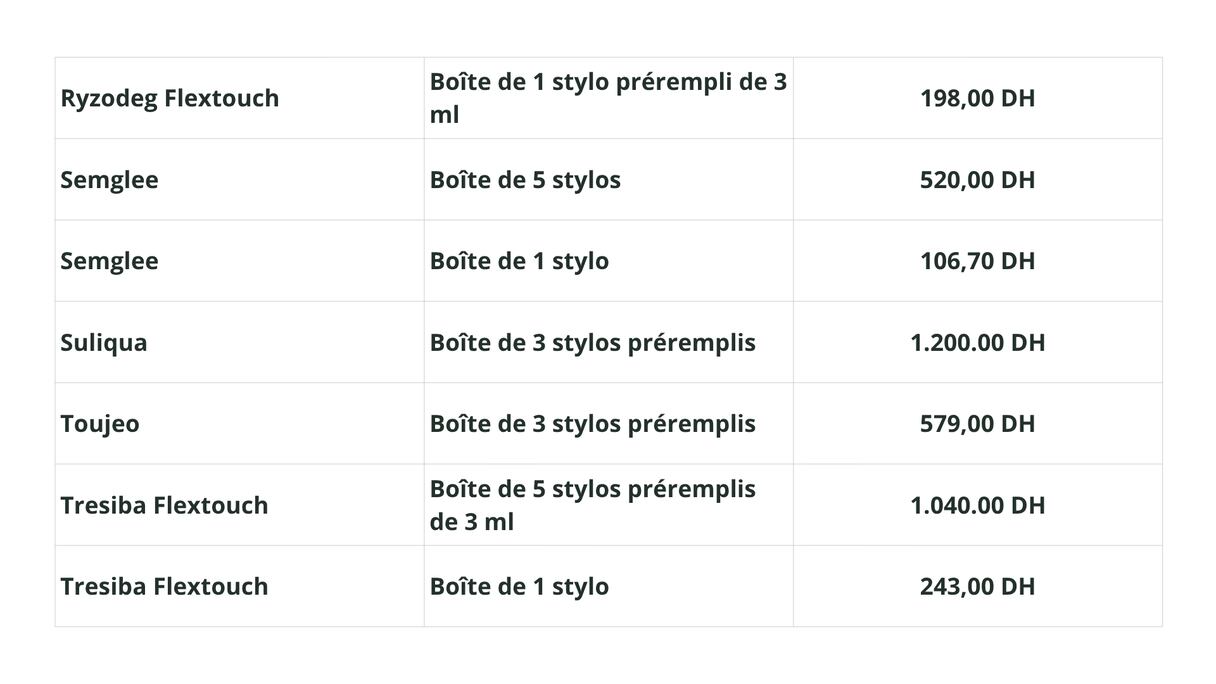
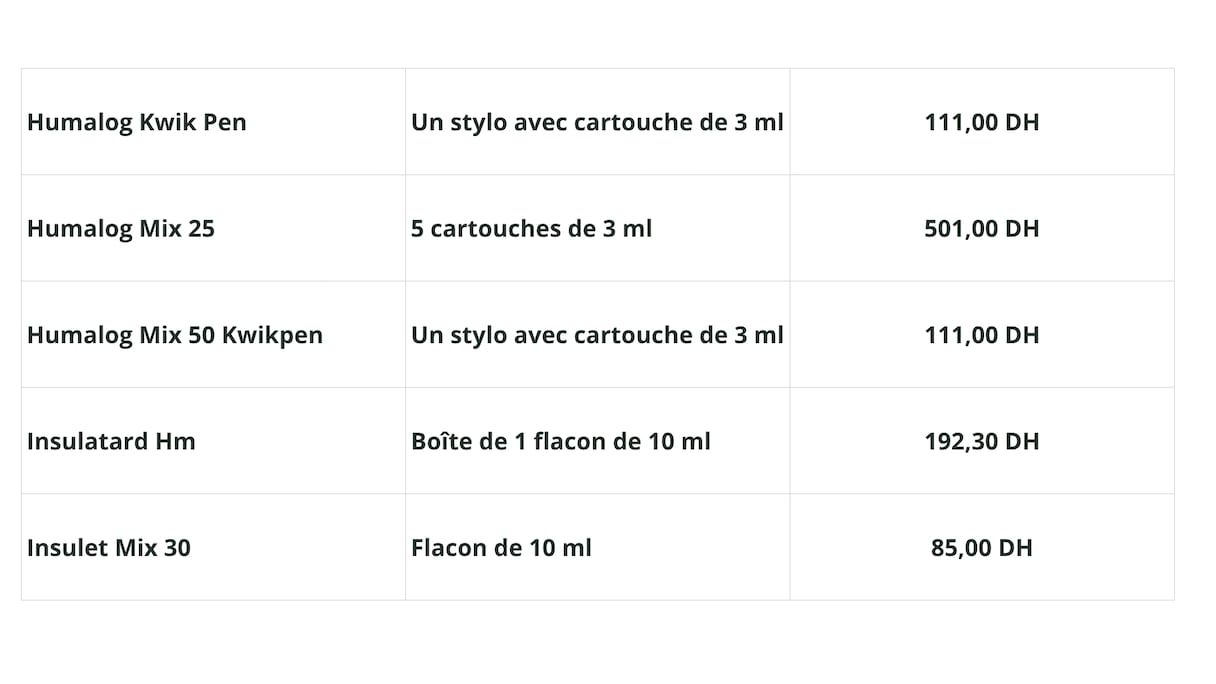
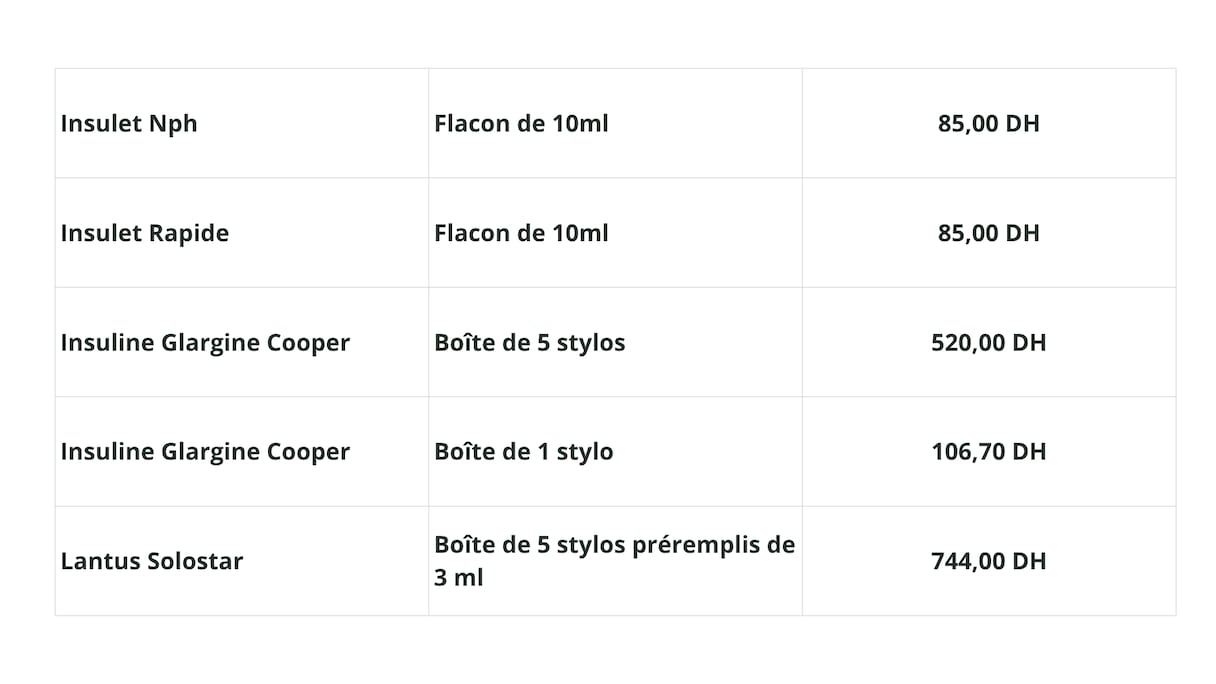
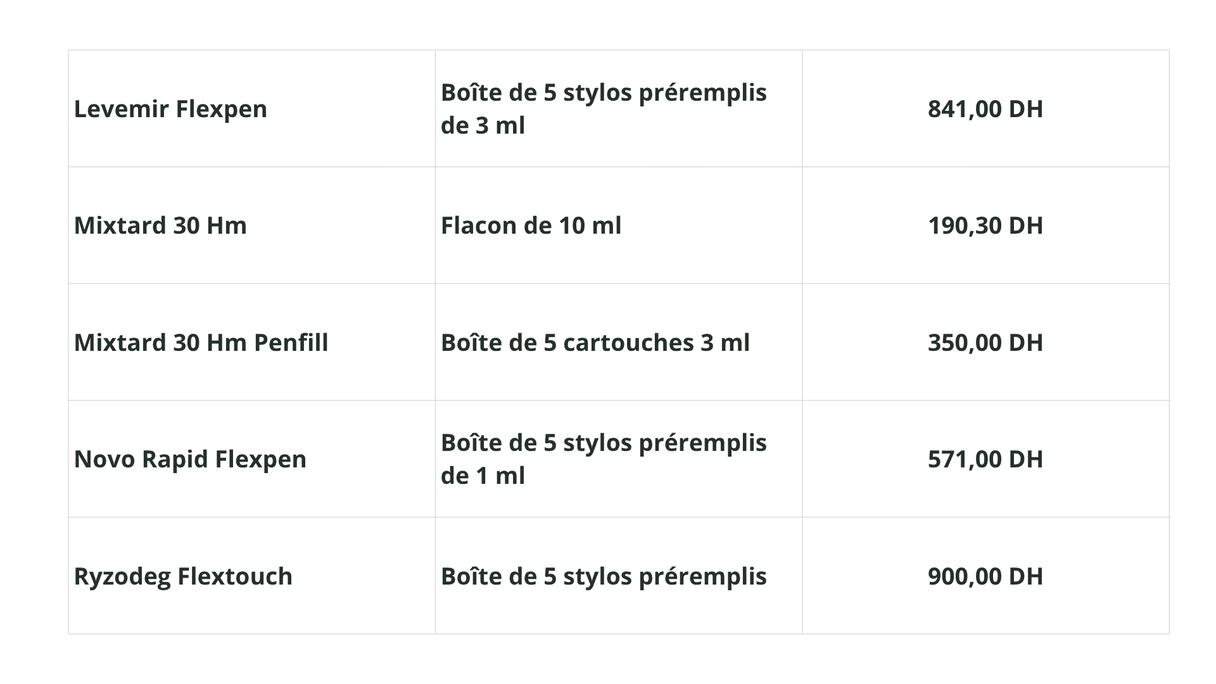
Source: Moroccan Agency for Medicines and Health Products (AMMPS)
According to the source, reports concerning pens may instead stem from supplies distributed through diabetes associations, which provide them to some patients outside the health-center network.
As for insulin itself, the source was categorical.
“There is neither a shortage nor a decrease in stocks at health centers and hospitals. The quantities available are sufficient.”
The stock currently held by the public system, the source said, is enough “to cover the needs for the year, in addition to the safety stock.”
That leaves families such as Sanaa’s with a much more immediate test of those assurances; whether the next trip to their health center ends differently from the last one.