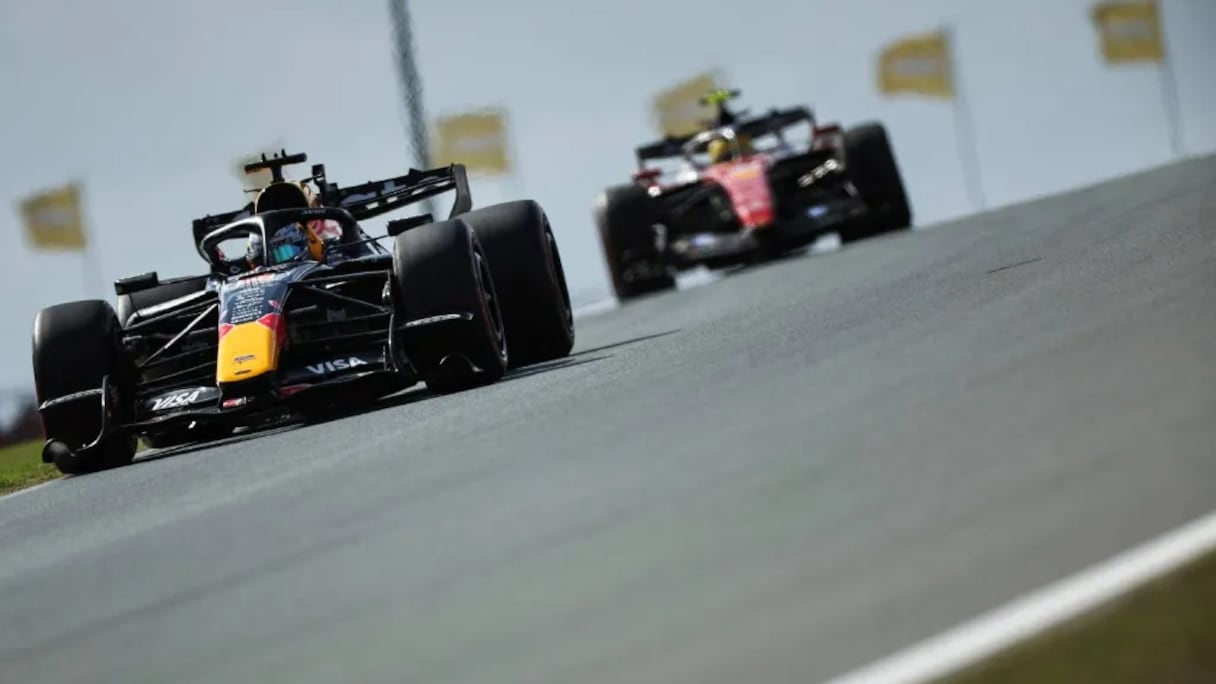
The FIA’s latest assessment of Formula 1 power units places Red Bull-Ford at the top of the engine rankings, a contrast to the on-track performance this season where Mercedes has emerged as the strongest overall package.
The federation’s second Additional Upgrades and Opportunities (ADUO) assessment, which covers races from the season-opening Australian Grand Prix through the Hungarian Grand Prix, determined Red Bull-Ford’s internal combustion engine to be the most powerful in F1.
Mercedes’ engine power was found to be 2% to 4% behind Red Bull, while Audi, Ferrari, and Honda were more than 4% adrift. Honda’s new power unit, introduced at the Dutch Grand Prix, was not included in this assessment.
Following the first two assessment periods, Mercedes will be allowed one additional power-unit homologation in 2026 and another in 2027. Audi, Ferrari and Honda will each be allowed two additional homologations in 2026 and two in 2027.
Nikolas Tombazis, the FIA’s director of single-seater racing, commented on the findings, stating that the federation had conducted a ”thorough and exhaustive analysis" as part of its ADUO review process. He expressed confidence that “based on the quality of the data, its analysis is incredibly robust, giving us a high level of confidence in our findings.”
Tombazis also emphasized the FIA’s need to “respect the confidentiality and intellectual property of the teams and their power unit manufacturers” when releasing details of the findings.
“This is the first year of ADUO so naturally there are areas which we may evolve over time, in discussion with all the PU manufacturers,” Tombazis concluded.
However, these findings do not necessarily reflect the overall performance of the cars. The ADUO system focuses solely on the internal combustion engine, whereas modern F1 power units also incorporate complex hybrid systems. Furthermore, overall performance is influenced by critical factors such as aerodynamics, chassis performance, and car setup.
This distinction is particularly evident when examining the championship standings. Mercedes continues to lead both the drivers’ and constructors’ championships, holding a 59-point advantage in the drivers’ standings and an 87-point lead in the constructors’ championship. Their consistent points-scoring record underscores the strength of their overall package, despite their engine not topping the FIA’s ranking.
The championship standings present a very different picture for Red Bull. Max Verstappen is currently sixth in the drivers’ championship, and Red Bull Racing sits fourth in the constructors’ standings. While the team has demonstrated strong pace at some circuits, their season has been marred by problems and inconsistent results, making their top engine ranking difficult to reconcile with their championship positions.
These latest results also coincide with McLaren, which uses Mercedes power units, showing signs of a strong resurgence by winning the last two races. This suggests McLaren could become another significant contender in the second half of the season.
The third ADUO review period of 2026 will cover races 12 to 18, from the Netherlands to Mexico City. Honda’s updated power unit will also be included in that assessment, providing a fuller picture of how the relative performance of the power units has evolved.