In a lengthy report published on Friday, July 24, The New York Times examines the debate over the host of the 2030 FIFA World Cup final. Following an investigation into the issue, the newspaper reveals several details surrounding the match scheduled for July 21, 2030. Just days after Spain defeated Argentina to win the 2026 World Cup, attention has already shifted to the next edition of the tournament.
From June 8 to July 21, Morocco, Spain, and Portugal will co-host the 24th FIFA World Cup, marking the tournament’s centenary. As part of the celebrations, Argentina, Uruguay, and Paraguay will each host the opening match involving their respective national teams, commemorating 100 years since the competition’s first edition. The remainder of the tournament will be played across 11 stadiums in Spain, six in Morocco, and three in Portugal.
Casablanca’s chances remain intact
The New York Times asks “which stadium will have the honor of hosting the final, the biggest event in world sport.” The newspaper quickly rules out Camp Nou, which is undergoing renovations, and instead focuses on the Santiago Bernabéu as the Spanish Football Federation’s (RFEF) preferred choice.
Sources within the Spanish Football Federation, speaking on condition of anonymity, told the newspaper there were “many reasons” to award the final to the Bernabéu. They argued that Spain, as “the largest of the three host countries,” will host the highest number of matches and has “extensive experience organizing major events” and is “the footballing powerhouse of the trio, as demonstrated by Luis de la Fuente’s national team’s run at the 2026 World Cup.”
Read also : Casablanca or Madrid? Who will really decide the host of the 2030 World Cup Final?
A second Spanish source said sponsors and key industry stakeholders “would also be attracted by the prospect of a final held in such a historic stadium, located in the heart of one of Europe’s most visited capitals.” However, the source acknowledged that the situation has changed significantly in recent months.
“Eighteen months ago, it was impossible to imagine the Bernabéu losing the 2030 final. Today, it wouldn’t surprise me, given how weak the RFEF’s position is compared with everything Morocco has undertaken,” the source said.
The newspaper then points to the launch of construction on the 115,000-seat Grand Hassan II Stadium, a project estimated to cost nearly one billion euros, even before Morocco had been selected as a co-host of the tournament.
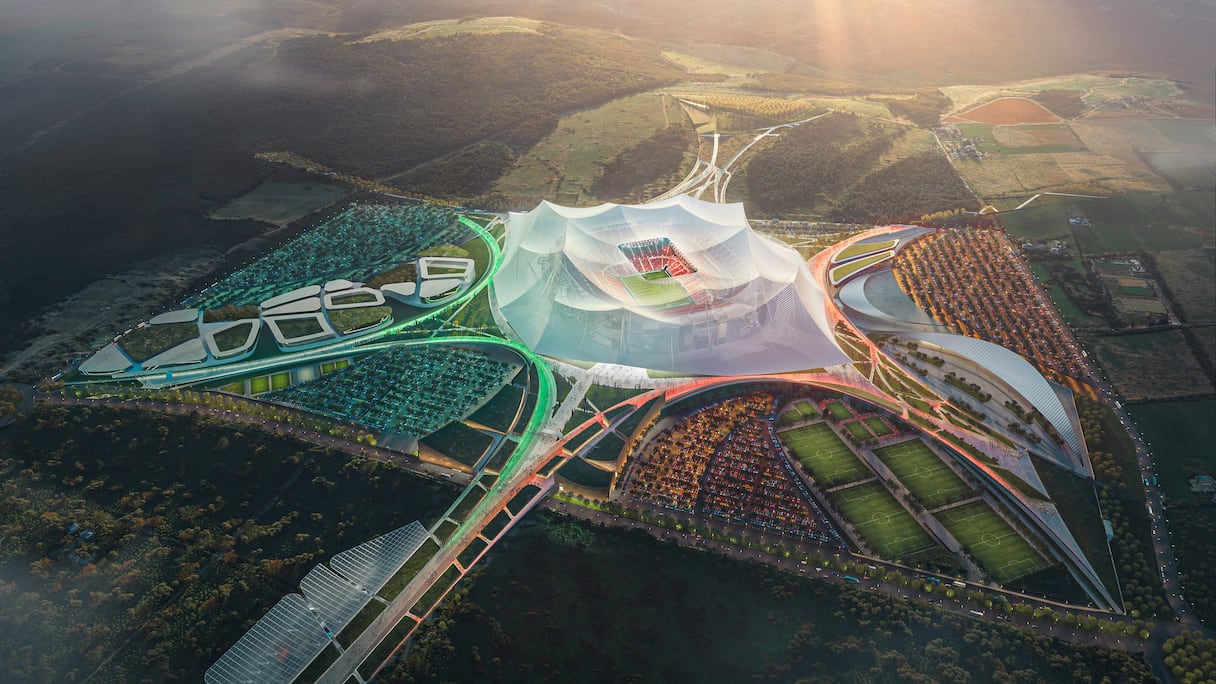
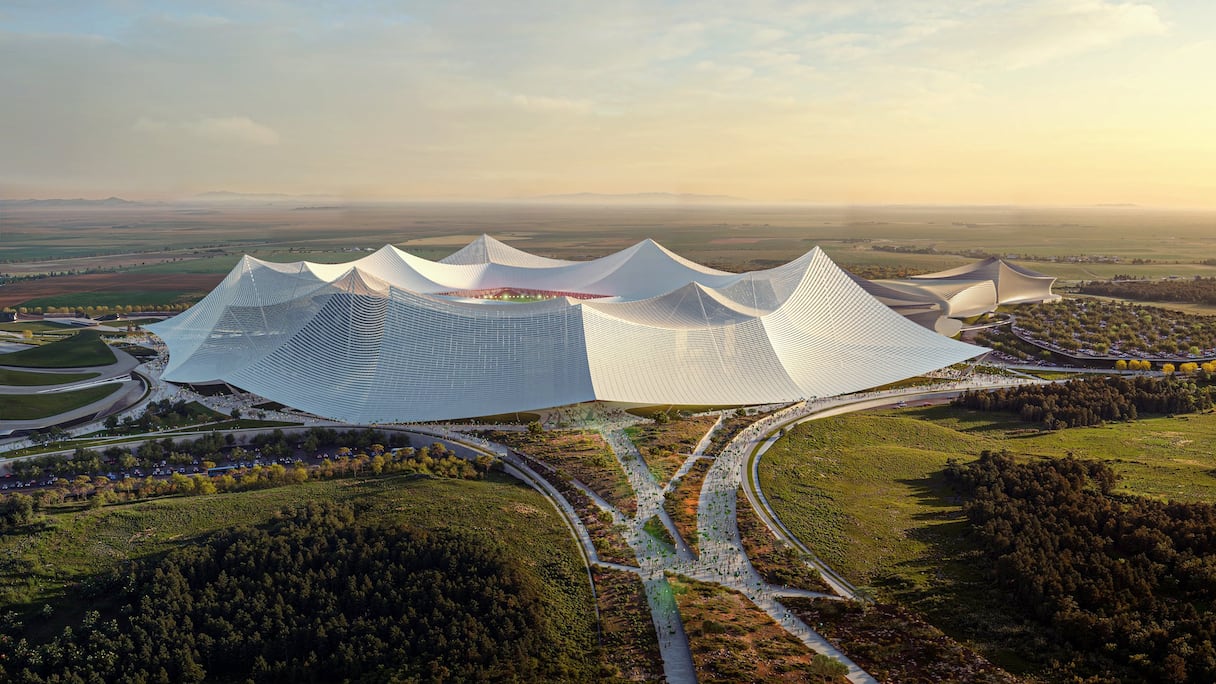
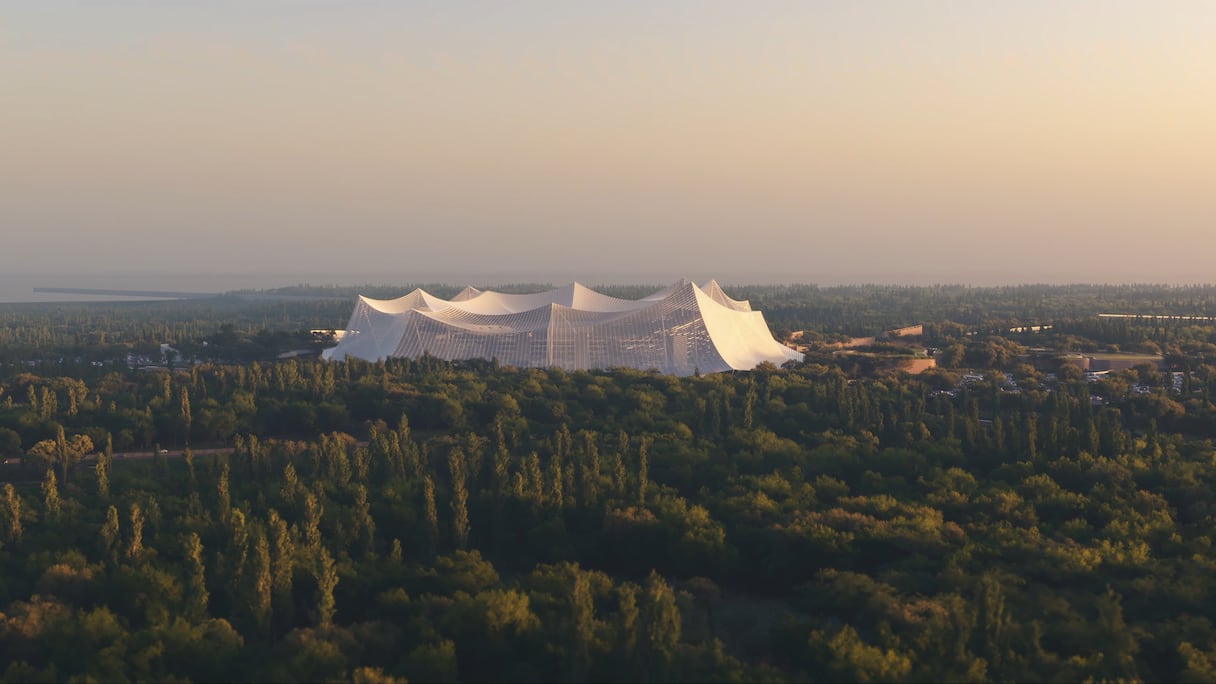
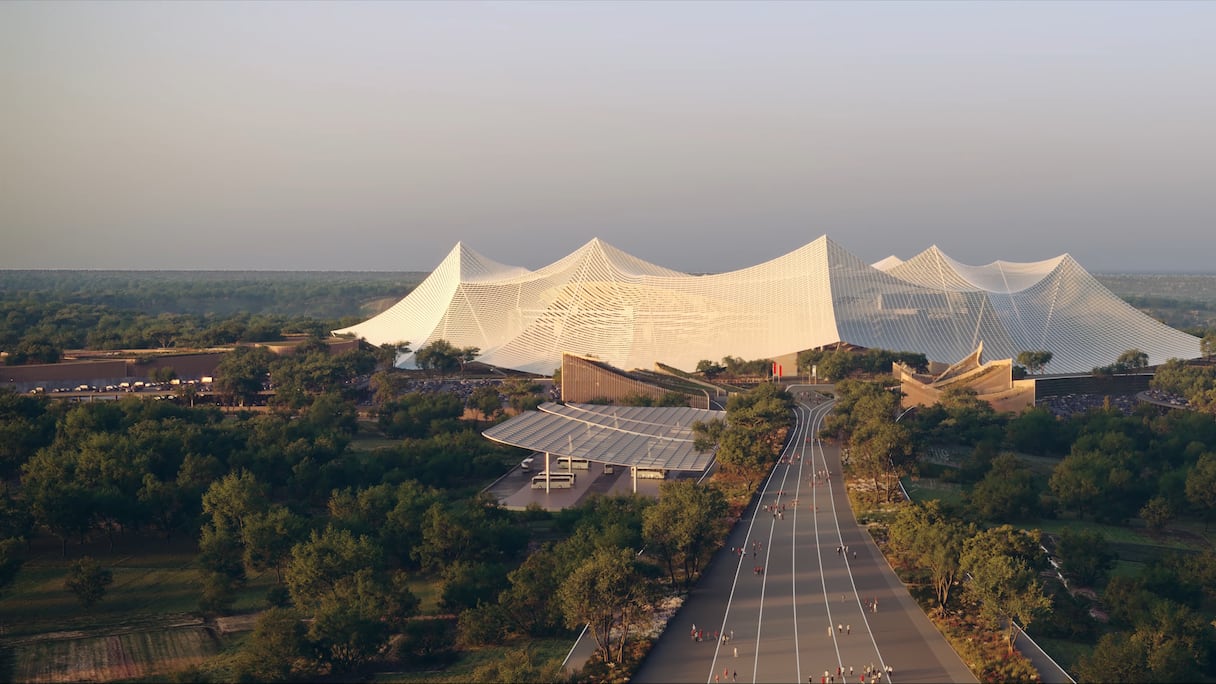
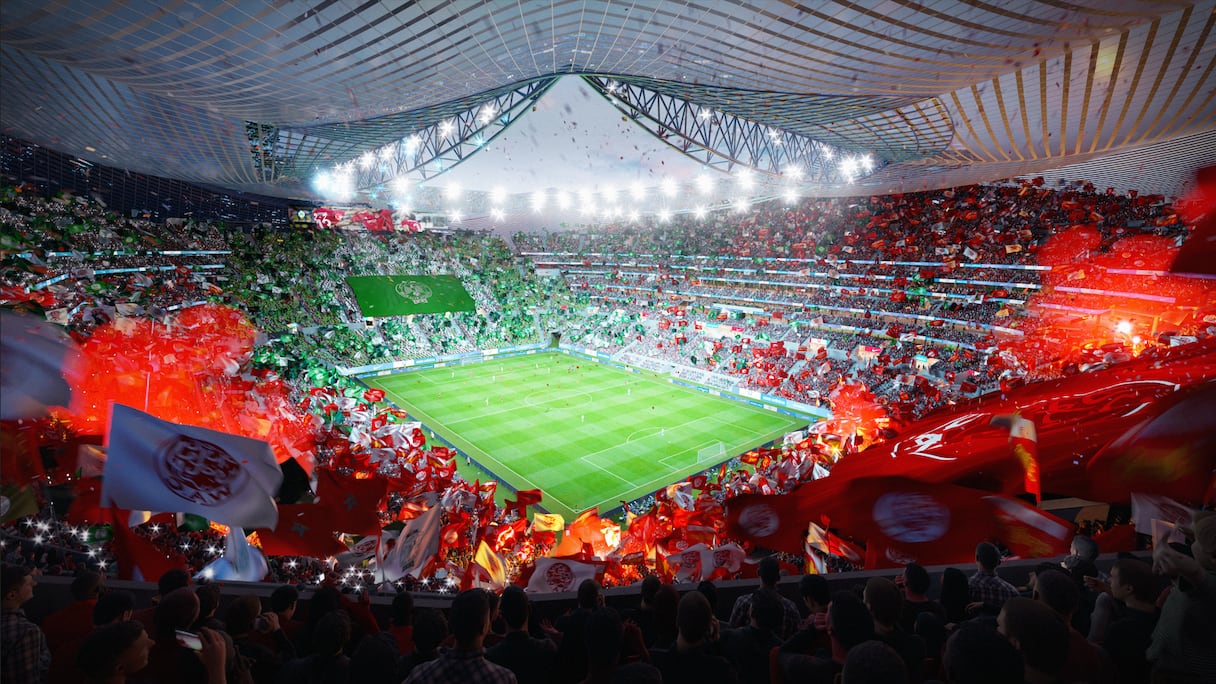
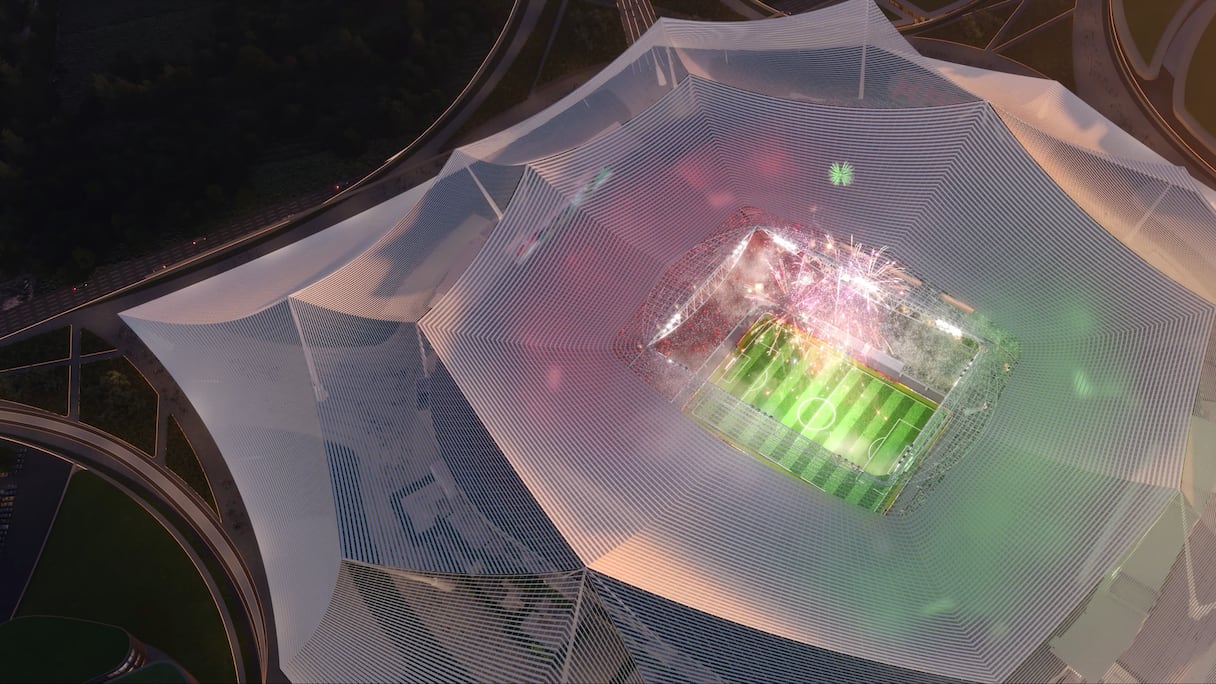


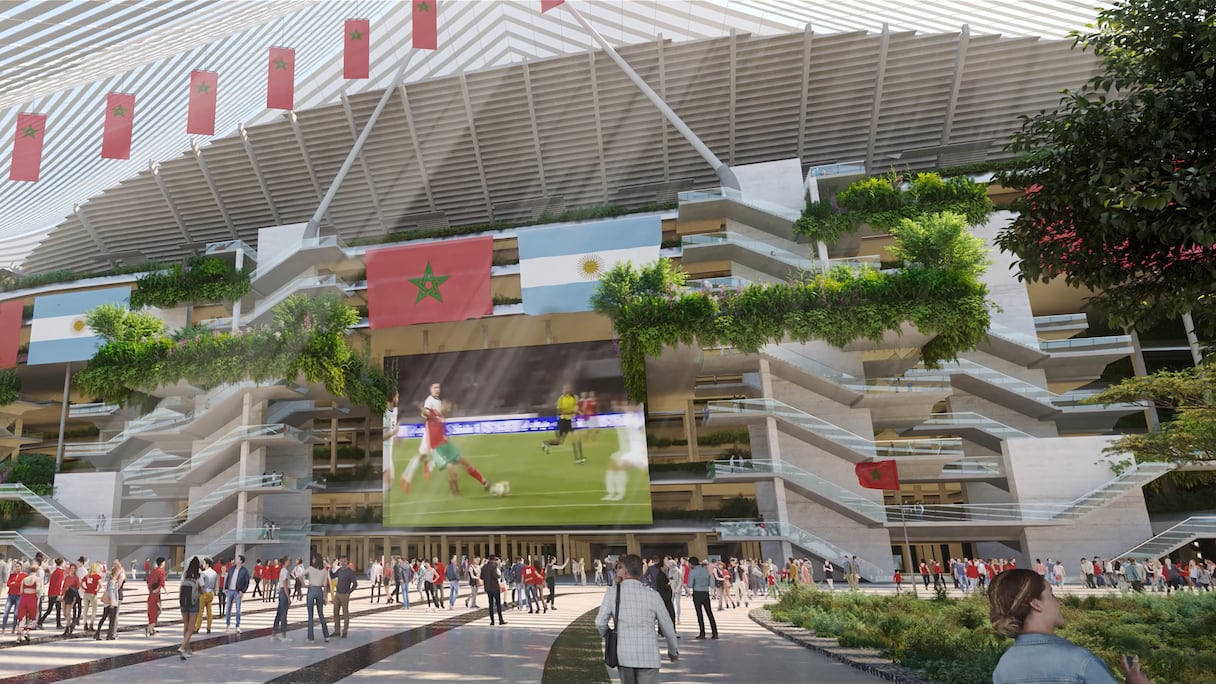
Model of the Grand Hassan II Stadium in Benslimane.
It also quotes Yassir Soussi, director general of Morocco’s National Agency for Public Equipment (ANEP), as saying, “We know that for many people the Bernabéu is the cathedral of football, but it sits in the middle of a city and it is already built. The Grand Hassan II Stadium is entirely new. It is easier to adapt it to FIFA’s requirements. Whatever FIFA asks for, it can have.”
The newspaper adds that “this massive investment forms part of King Mohammed VI’s policy of making Morocco a major global football power.”
It also highlights Fouzi Lekjaa, president of the Royal Moroccan Football Federation (FRMF), describing him as “one of the most influential figures in international football” and “a strong supporter of FIFA president Gianni Infantino.”
The New York Times also noted that the Italian-Swiss FIFA president inaugurated FIFA’s new Africa office in Rabat in July 2025, noting that it is similar to the organization’s Miami office, “from which much of the preparation for the 2026 World Cup was supervised.”
Read also : AFCON 2025 final: CAS hearing set for October 8
The newspaper also cites sources close to senior Moroccan officials overseeing preparations for the tournament, who argued that hosting the final in Casablanca would be “fairer,” based on the principle of sharing major events among FIFA’s confederations, noting that Africa has hosted only one World Cup final in its history, in South Africa in 2010.
Spain under pressure
The report also points to what it describes as “institutional problems in Spain.” It says Spanish Football Federation president Rafael Louzán, who took office in December 2024, “has not yet managed to build international relationships as strong as those of his Moroccan counterpart.”
“The fear of losing the 2030 final to Morocco was very present among delegates gathered at the RFEF’s annual assembly on June 30 in Madrid, according to a source who attended the meeting,” the newspaper writes.
On July 7, Spain’s Minister of Education, Vocational Training and Sports, Milagros Tolón, dismissed speculation over Spain’s ability to host the final.
“There is nothing. These reports are circulating, but nothing is official. I can assure you that this government will work to ensure the final is played in Spain,” she said.
Louzán also addressed the issue before Spain’s quarterfinal against Belgium on July 10.
“Spain carries the greatest weight in this World Cup. We are already working, and the countdown will begin in September. Spain is capable of organizing major events, as you saw during Pope Leo XIV’s visit to the Bernabéu at the beginning of June,” he said.
Read also : 2030 World Cup Final: ABC pits La Roja’s triumph against a supposed ‘Moroccan lobby’
However, the day after Spain’s World Cup triumph, comments by LaLiga president Javier Tebas cooled relations with FIFA. Speaking to La Gazzetta dello Sport, he said FIFA “was destroying football” and called for Gianni Infantino to step down. The New York Times says those remarks “dealt a blow to Madrid’s chances of hosting the final.”
The newspaper also contrasts Morocco’s good relationship with FIFA with what it describes as “strained” relations between Spain’s socialist government and Rafael Louzán, who was previously a member of the country’s main conservative opposition party. According to the newspaper, this situation could complicate future dialogue.
There is, however, one figure in Spain who enjoys a good relationship with Infantino: Real Madrid president Florentino Pérez, described as “widely regarded as an asset for the Bernabéu.”
“Florentino should call his friend Gianni. That’s now the Bernabéu’s best chance,” a source who previously worked with both Real Madrid and FIFA told the newspaper.
Read also : AFCON expansion to 28 teams delayed as CAF reverses course
The report notes that Pérez and Infantino share a common rival in UEFA president Aleksander Čeferin. Pérez supported Infantino’s expanded FIFA Club World Cup format, while Infantino publicly backed Pérez during his successful re-election campaign earlier this summer.
Trump involved?
The newspaper also examines the possible role of U.S. President Donald Trump in the issue. Citing Spanish radio station COPE, The New York Times reports that Trump had pressured FIFA to award the 2030 final to Morocco, viewing the Kingdom as a better “partner” for the United States.
“The atmosphere nevertheless appeared cordial on Sunday in the VIP section of MetLife Stadium, where Pedro Sánchez and Donald Trump sat in the front row as Spanish captain Rodri lifted the trophy. Photographs showed the two men shaking hands before kick-off,” the newspaper writes.
While Trump may have exercised “significant influence” over the 2026 World Cup, the newspaper notes that the United States will have a different president in four years and that FIFA’s priorities will have changed by then.
Read also : Ayyoub Bouaddi tops world’s most valuable young footballers ranking
“From the beginning of the process, even before the host countries were selected, the many sources consulted were categorical: above all, it is the interests and positions of FIFA’s top leadership that will matter,” the newspaper writes, while also noting that a proposal to expand the tournament to 64 teams remains under consideration.
“No definitive confirmation is expected before the next FIFA Congress, scheduled for March in Rabat, further illustrating Morocco’s influence within the governing circles of world football. During that Congress, Gianni Infantino is expected to seek a fourth term as FIFA president and, in all likelihood, will face no challenger,” The New York Times concludes.
Infantino, who enjoys the backing of the African and South American confederations, is expected to be re-elected on March 18, 2027, in Rabat.
