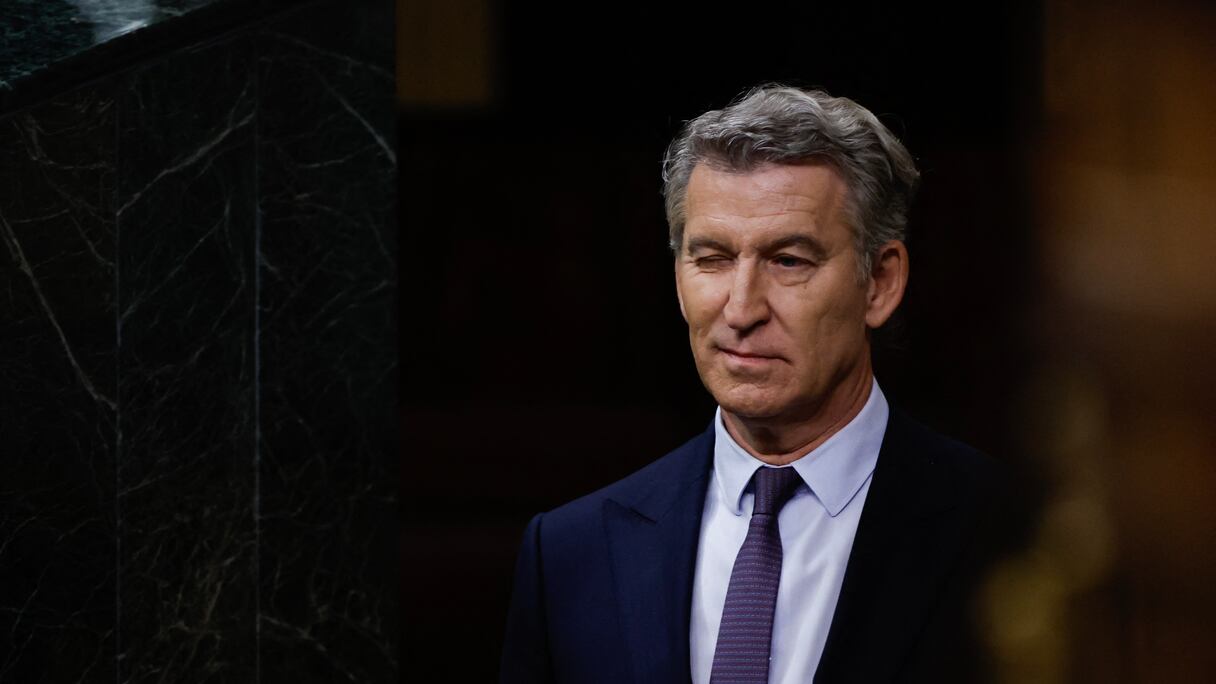
For several weeks, Alberto Núñez Feijóo, leader of the People’s Party (PP), Spain’s main right-wing party, has been hammering home the same message: if his country does not secure the final, it should withdraw from hosting the 2030 World Cup alongside Morocco and Portugal. His stance reflects Spain’s growing anxiety over the choice of venue for the tournament’s most important match, with Madrid’s Santiago Bernabéu, Barcelona’s Camp Nou and, above all, one stadium that has triggered this wave of opposition by emerging as far more than just another contender: the Grand Stade Hassan II.
The Moroccan stadium, designed to be one of the largest and most modern in the world, is causing concern as it increasingly emerges as a serious contender to host the showpiece match, which Spain is determined to stage on its own soil. The arguments have been put forward by the co-host: the reigning world champion must host the match, whether in Barcelona or Madrid. It is a necessity.
Read also : Spain should pull out of 2030 World Cup if it does not host final, says PP leader Alberto Núñez Feijóo
Feijóo, like other political figures, perfectly embodies this obsession. Speaking to Partidazo COPE, the politician reiterated his position: if Spain does not secure the final, “it would almost be better to withdraw.” This threat rests on a firm conviction. For him, staging the match in Spain is virtually self-evident, even if that means imposing his vision on the other parties involved. “I believe that all Spaniards, and everyone involved in sport, particularly football, know that the final rightfully belongs to Spain. It belongs to Spain because of its history, the facts, its organizational capabilities, its infrastructure and its successful experience of hosting other sporting events, from the 1982 World Cup to the Olympic Games.”
Beyond these arguments, Feijóo keeps repeating the same point: Spain and Portugal, he maintains, were the countries that originally launched the bid, while Morocco “joined later.”
And while he is defending his country’s interests, the threat of withdrawal is far from trivial. By raising this possibility, Feijóo is committing Spain as a whole to a decision that would have repercussions for all the co-hosts and, above all, run counter to the agreements concluded with FIFA as part of the joint bid submitted by Morocco, Spain and Portugal. Although the consequences of a possible withdrawal may not be widely understood by the public, sanctions from world football’s governing body cannot be ruled out.
These repeated declarations have eventually spread to other figures in Spanish politics. José Luis Martínez-Almeida, the mayor of Madrid, revealed in a statement to the press that the Santiago Bernabéu had received “the highest score” during FIFA’s recent inspection visit.
He echoed the same arguments: “Hosting the World Cup, having the highest-rated stadium, being world champions.” For him, suggesting that the final could be played in Morocco is even “practically an insult.”
A persistent, almost obsessive insistence on a final decision that rests with FIFA.
