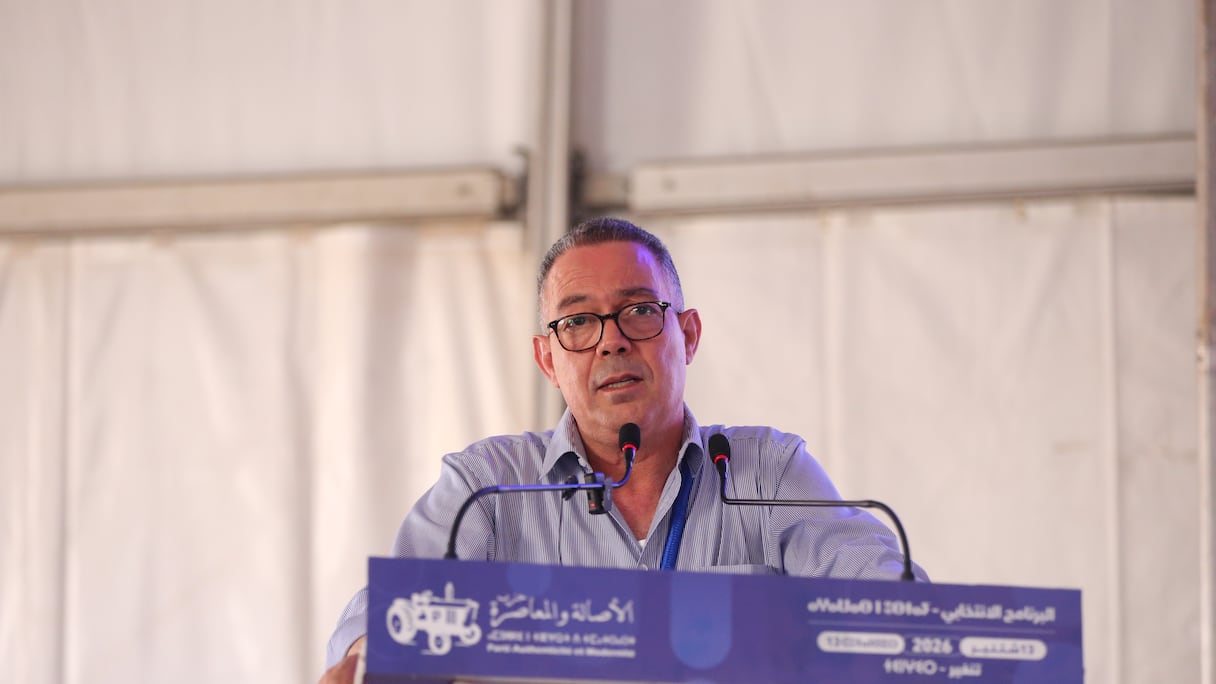
Fouzi Lekjaa, president of the Royal Moroccan Football Federation (FRMF) and a member of the Authenticity and Modernity Party (PAM) political bureau, has spoken at length about some of the main issues surrounding Moroccan and international football, less than two weeks before Morocco’s September 23 legislative elections.
In an interview with Jeune Afrique, he discussed the 2030 World Cup final, Gianni Infantino’s future at FIFA, his own position at the head of the FRMF and the dispute surrounding the 2025 Africa Cup of Nations final.
Speaking to the monthly magazine, Lekjaa addressed the 2030 World Cup and described it as “the culmination of a development process that has been underway for more than 20 years, under the leadership of His Majesty the King, and a lever for adjusting the timelines of certain investments.”
He recalled that “we will have to shorten the implementation timelines for certain mobility projects — high-speed rail, highways and airports — to meet the key 2030 deadline,” while stressing that Morocco did not “wait for the World Cup to launch these projects, but some that were planned beyond 2030 will be brought forward.”
Lekjaa described the tournament as a major driver of growth that will create jobs and accelerate the inclusion of young people. “Hundreds of thousands of young Moroccans and Africans — because this World Cup is an African World Cup — will have the opportunity to train, develop their skills and grow their businesses: the startup will become a small or medium-sized company, and the medium-sized company will become a large one,” he said.
He also highlighted the unique dynamic of the tournament and its potential for cultural exchange. “We are on both shores of the Mediterranean, a region known for its history, civilization and the coexistence of religions and languages. By adding the African continent, this is a major opportunity to show that this strait and its borders are not only the site of a problematic migration flow, but also an asset for cultural exchange and collective success,” he said.
The FRMF president was naturally asked about the venue for the World Cup final, with Benslimane considered a serious candidate while Spain is pushing for Madrid. Confident and characteristically outspoken, Lekjaa said: “On the Moroccan side, faithful to our values, we are following the procedures and respecting the regulations. Like our Spanish and Portuguese friends, we received the FIFA task force, which visited all the cities and infrastructure put forward. The decisions will follow within the scheduled deadlines.”
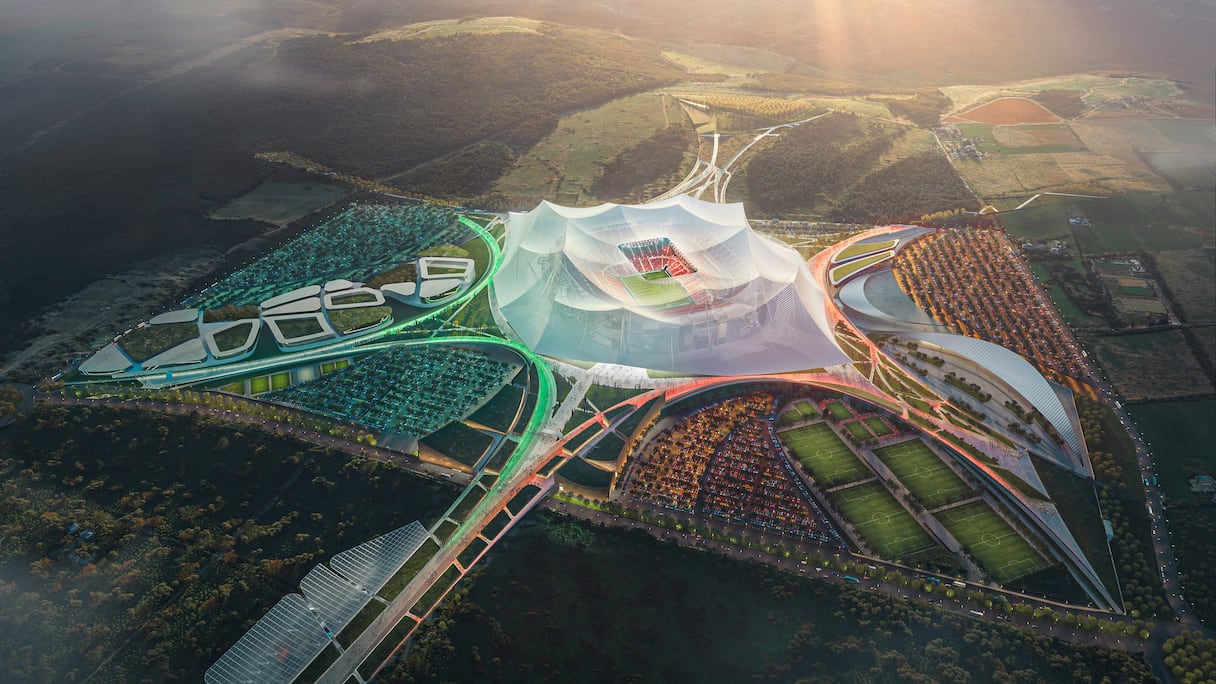
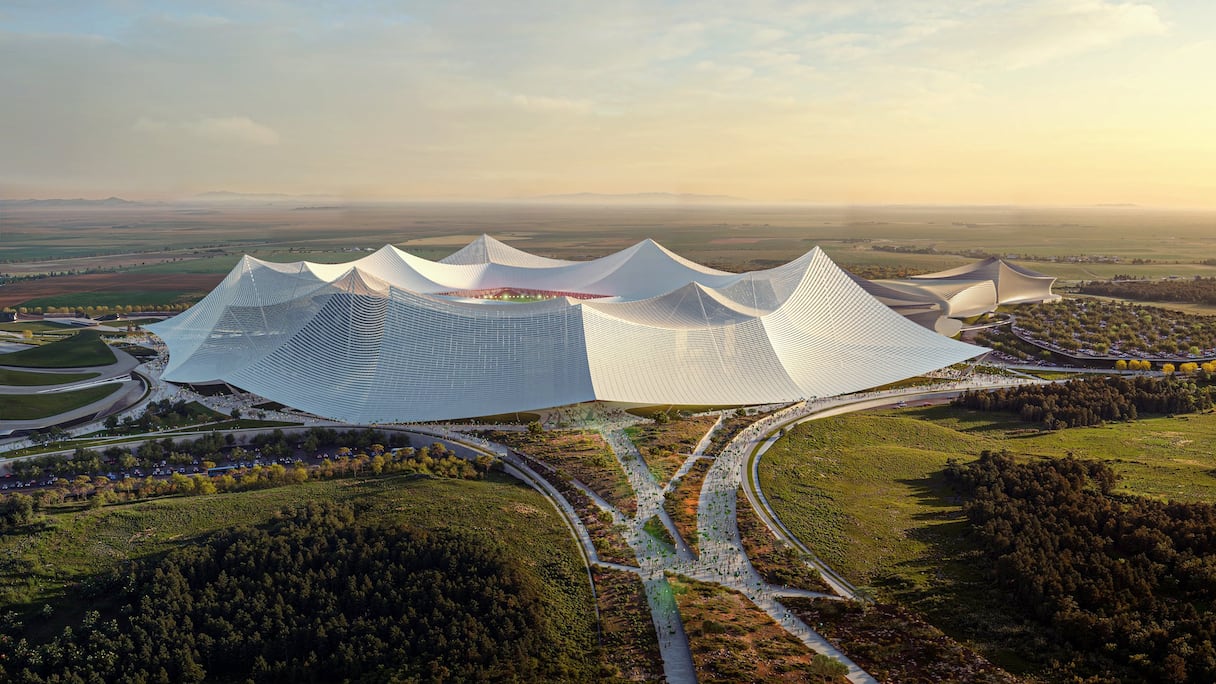
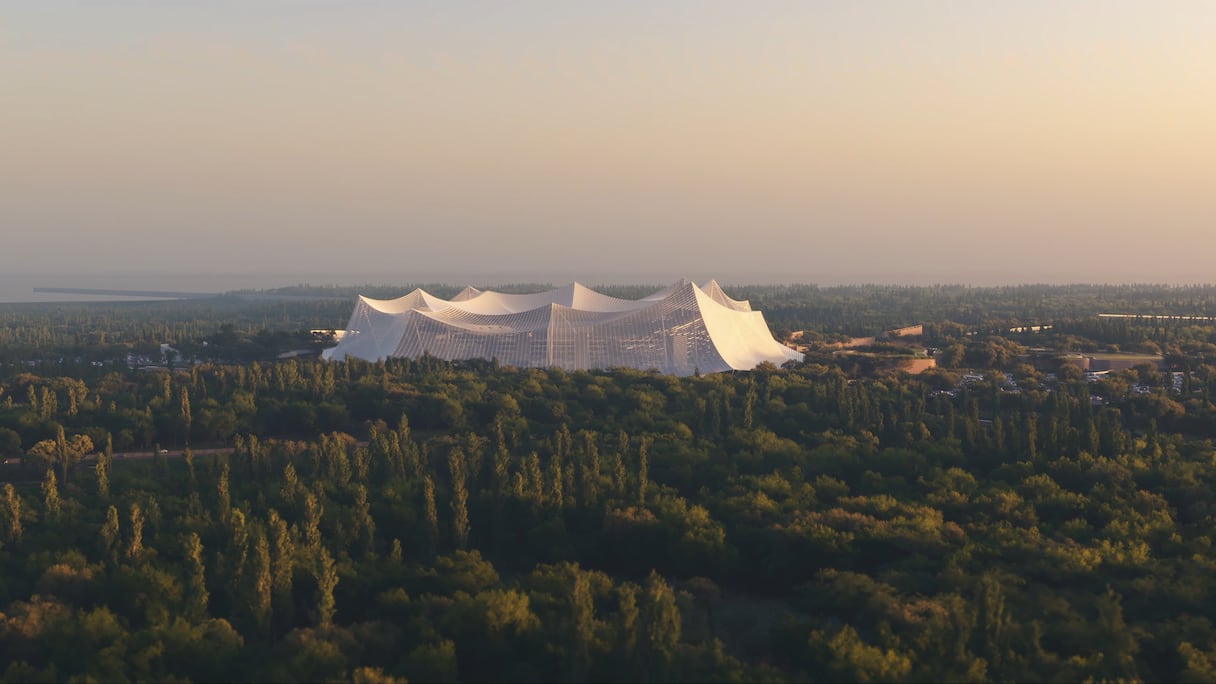
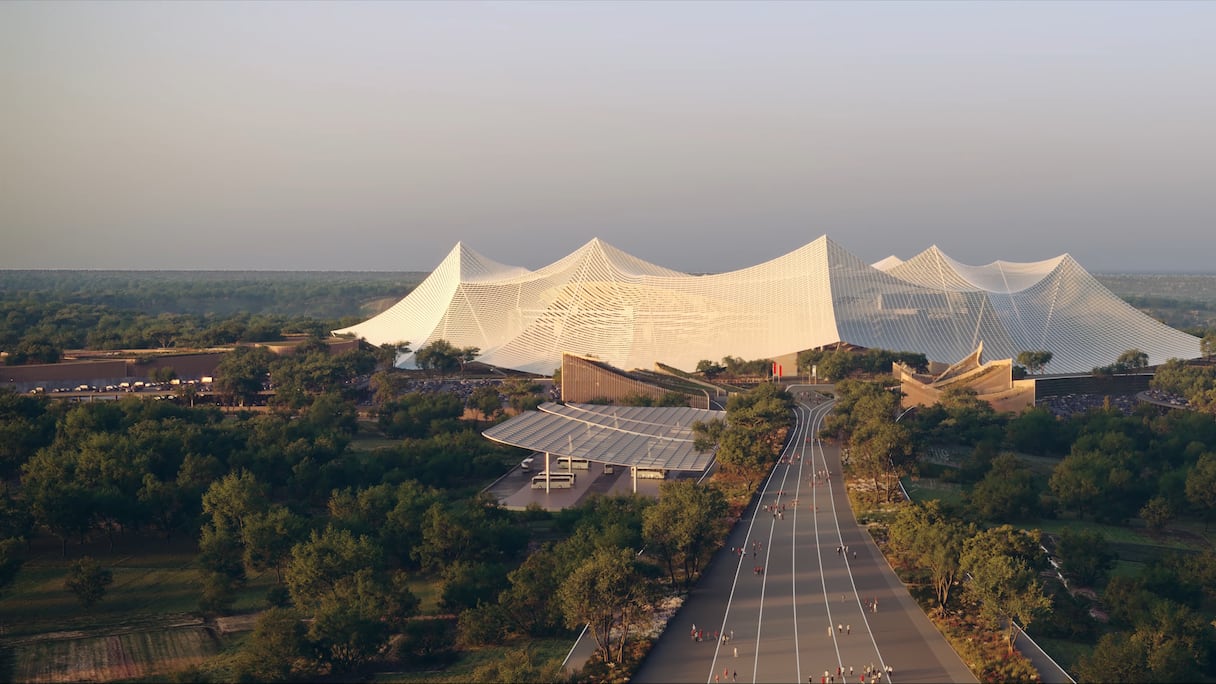
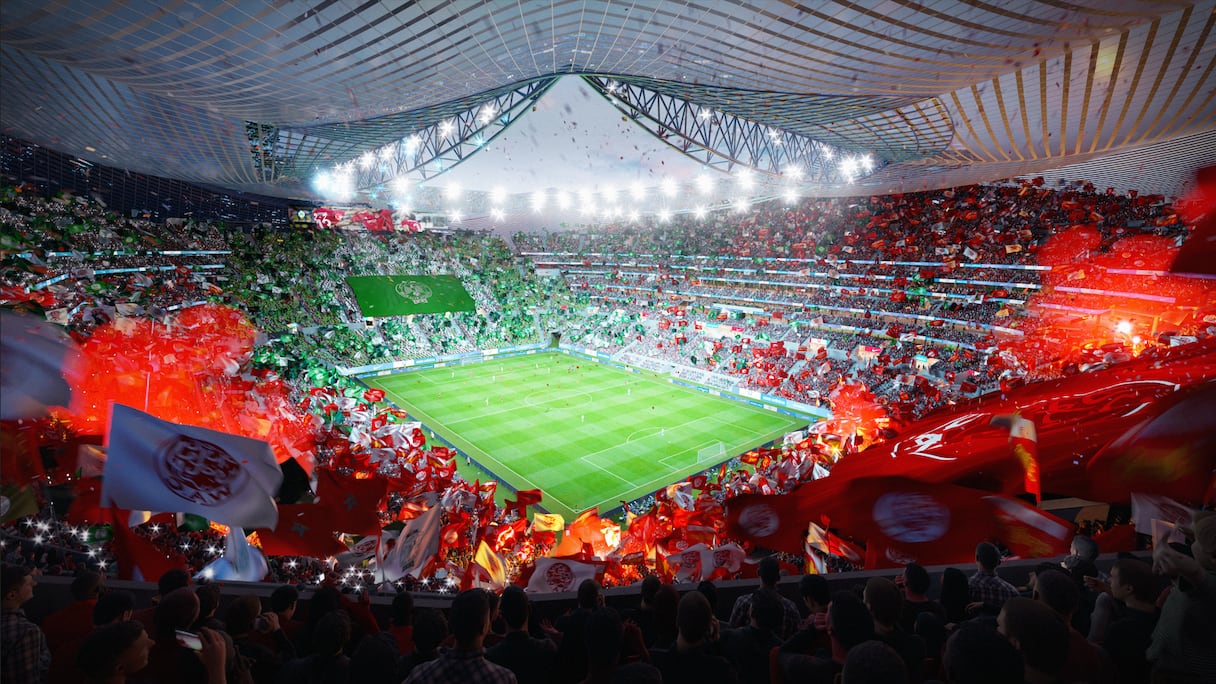
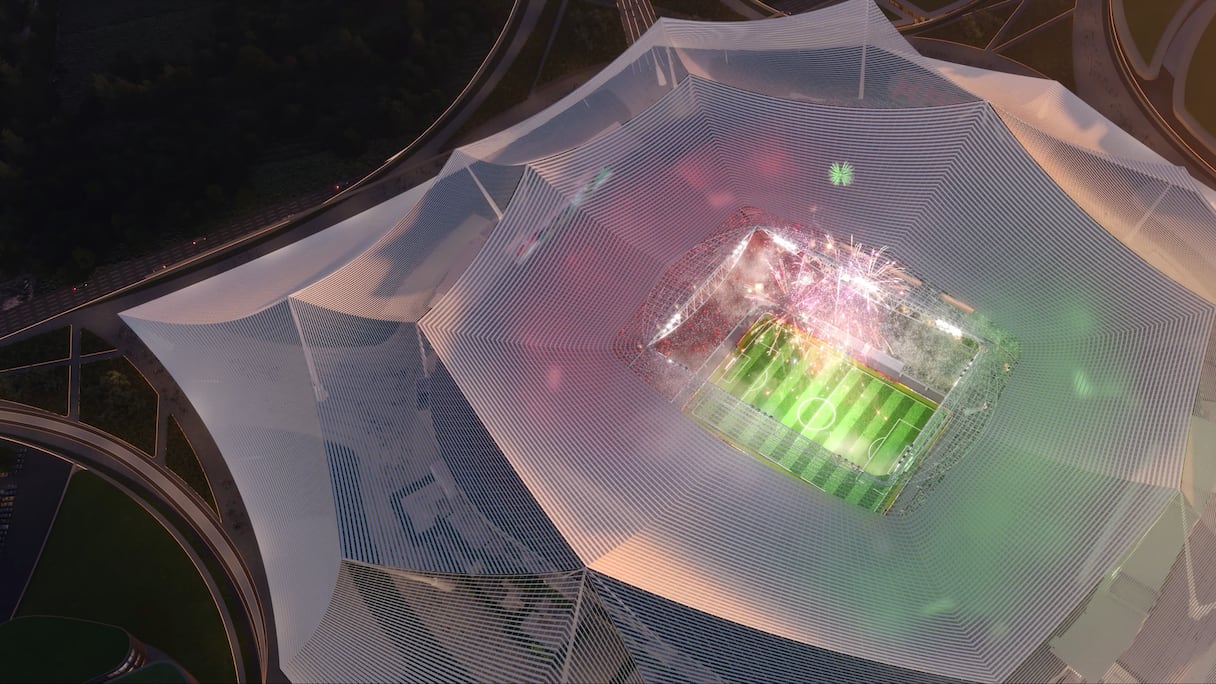
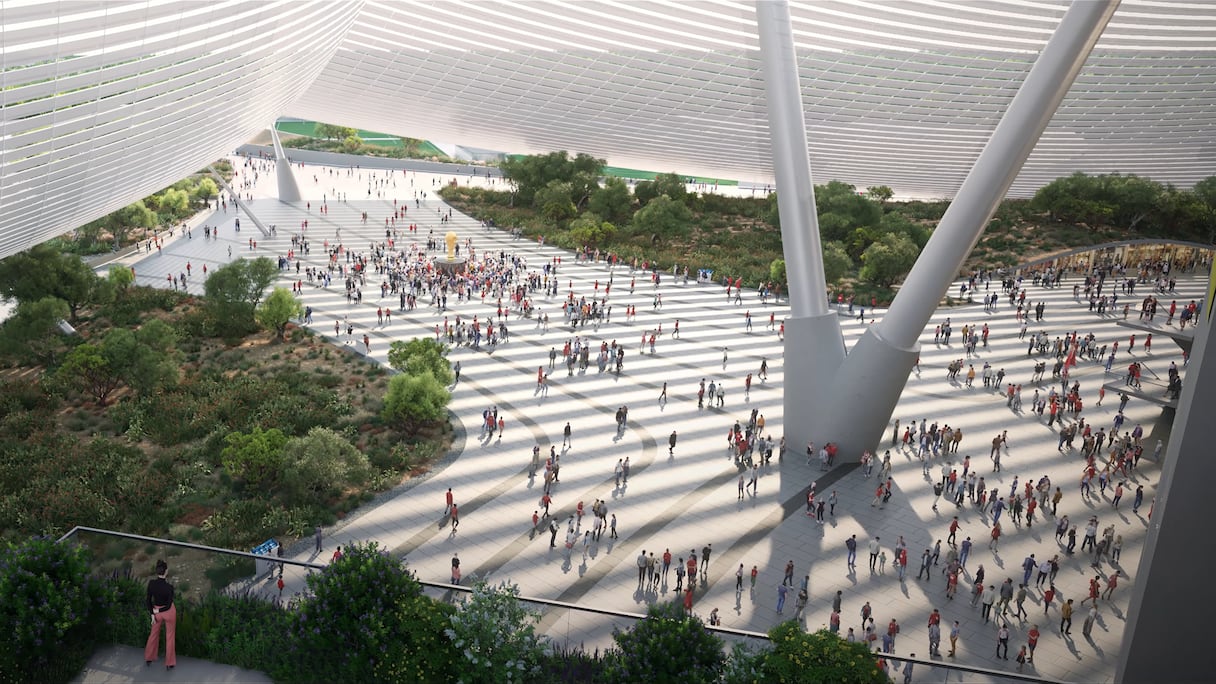
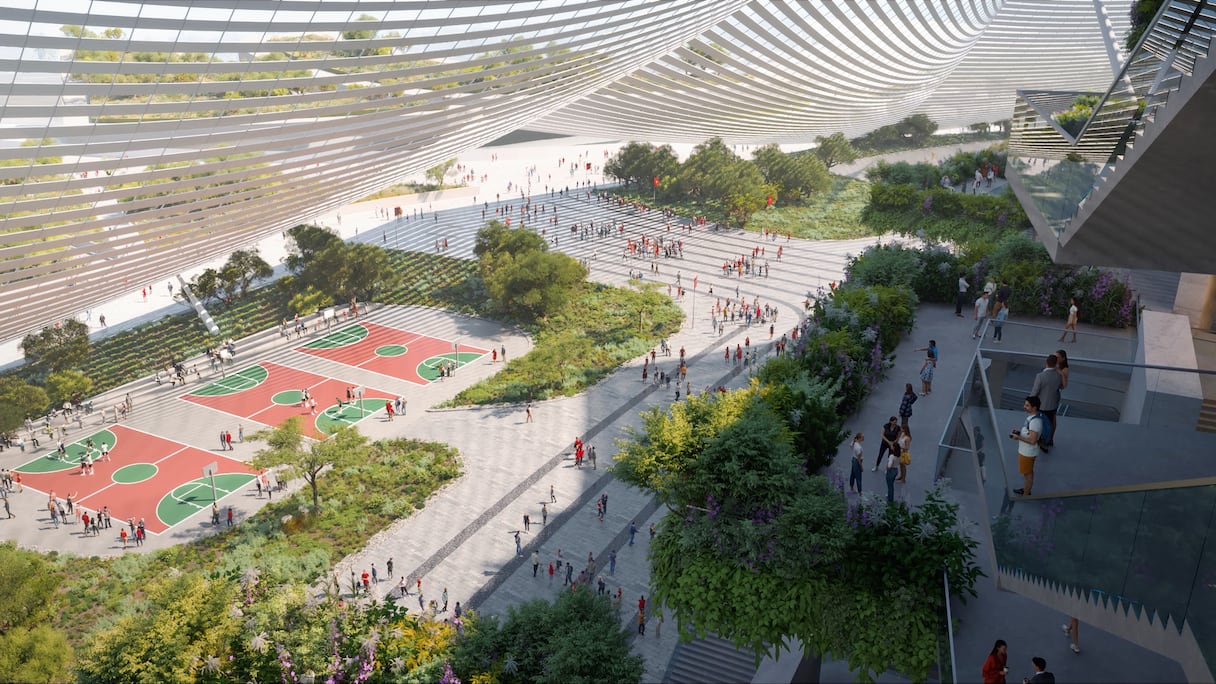
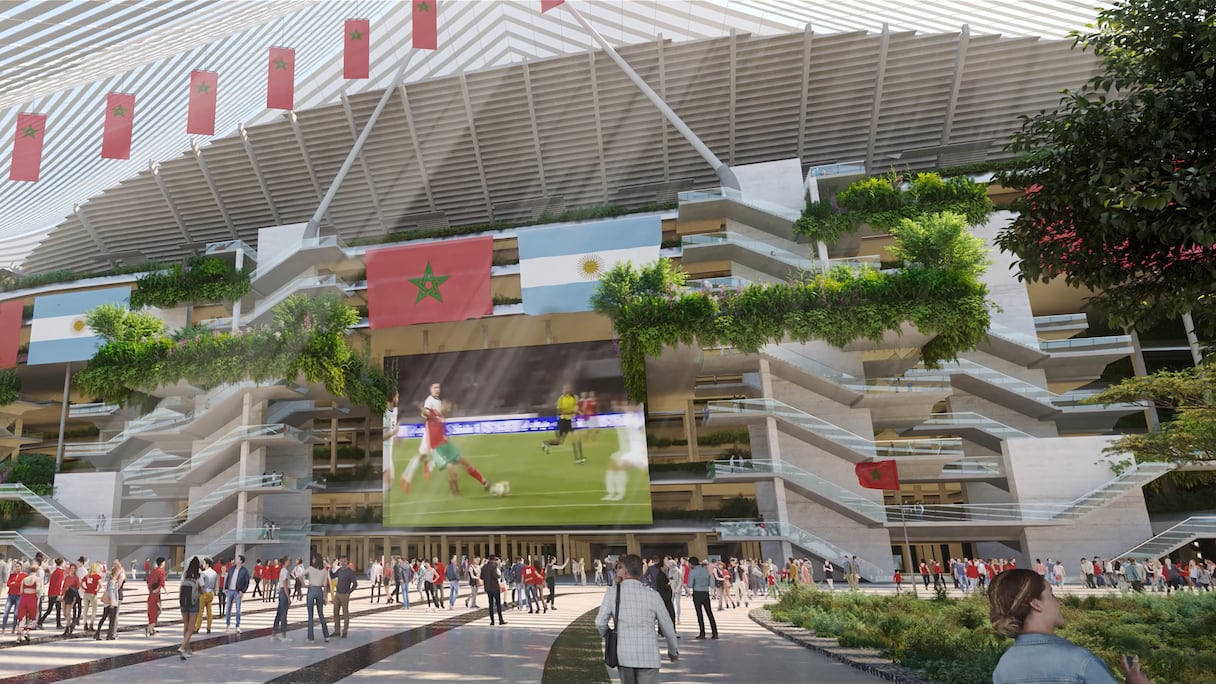
Model of the Grand Hassan II Stadium in Benslimane.
“Morocco, as we explained from the outset, is presenting itself as Africa’s representative, alongside our colleagues represented by Spain and Portugal. We are not three countries operating in a logic of rivalry, but in a logic of complementarity, at the crossroads of civilizations and cultures. We will always be there to defend the rights of the Kingdom of Morocco and Africa, which in my view has the right to host a World Cup final for the second time in a century.”
Lekjaa had previously announced during a PAM rally in Bouznika on Wednesday, September 9 that the Grand Stadium of Casablanca, also known as the Hassan II Grand Stadium, would be the future venue for the final. Spain later firmly rejected any suggestion that it would withdraw if Morocco were awarded the competition’s biggest match.
Lekjaa, who also serves as CAF first vice president and a member of the FIFA Council, was then asked about his future after September 23.
“This question does not arise for the time being, since today I am already a member of the government and I perform these functions without any problem. I would like to clarify an important point that is a source of confusion in Morocco and elsewhere in the world: what is prohibited in football is political interference in sport — we do not want a minister or prime minister, from any political party, interfering in the scheduling of a match, the appointment of a referee or the result of a game. That is what is prohibited. There is nothing, however, that prevents someone holding a position in football from engaging in politics.”
Lekjaa cited Patrice Motsepe, president of the Confederation of African Football (CAF), who is involved in politics in South Africa. “It is rather an asset for CAF, because the football ecosystem needs political support,” he said.
Read also : World Cup 2030: Twenty years after Johannesburg, isn’t it time for another African final?
Lekjaa believes that organizing a World Cup “is not simply an association’s job: it is a political convergence.” He argued that football management and political decision-making should work in harmony because, in his view, “the more we converge, the more effective we are.”
“I have carried out my duties at CAF, FIFA and the FRMF while also being a minister, without this causing any difficulty, and I will continue as long as the circumstances require it. When the time comes to renew the governing bodies, with or without a political position, I will be happy to hand over the reins to my successor, with the goal remaining the international standing of my country in football and sport,” Lekjaa added.
Lekjaa defends Morocco’s position in AFCON final dispute
The head of Moroccan football was also asked about the dispute surrounding the Morocco-Senegal Africa Cup of Nations final, which is now before the Court of Arbitration for Sport (CAS). The court is due to hold a hearing on October 8 following an appeal by the Senegalese Football Federation (FSF).
“We remain faithful to the culture of the Kingdom of Morocco, which is to abide by the law. We respect the law; we do not allow the decision to be influenced by the controversy, which in any case will have no impact on it. We believe that the rules of football and the legal rules applicable to a match were breached by our opponent, in this case Senegal, which is contesting the result. The most important thing is the recognition that there was a deviation from the rules of the game — moreover, FIFA changed its regulations immediately after this episode to provide that a player who leaves the pitch will now be shown a red card, which reinforces our position.”
“We believe that a match begins and ends in fair play: we cannot accept interruptions of 15, 20 or 30 minutes. Otherwise, one could imagine a match starting at 8 p.m. and ending after midnight if each unhappy team left the pitch for 20 minutes each time. That is not football, it never has been and never will be. That is why we asked for our rights to be restored and why we will go all the way — for football itself: if we accept this kind of deviation, then we will have to redefine what football is. One of the ingredients for success in a match is the concentration of the players and staff for 90 minutes; a 20-minute interruption can have dramatic consequences for a team, a player and the football spectacle in general,” Lekjaa added.
The CAF Appeals Committee ruled on March 17, following an appeal lodged by the FRMF, on the application of Articles 82 and 84 of the competition regulations in connection with the events during the final.
On January 18, the day of the match, Senegal’s players left the pitch at the Moulay Abdellah Complex in Rabat for 16 minutes on the instructions of their coach, Pape Thiaw, to protest an refereeing decision awarding Morocco a penalty in stoppage time of the second half. Senegal had initially won the 2025 AFCON thanks to a 94th-minute goal from Pape Gueye before the CAF Appeals Committee issued its decision on March 17.
Lekjaa stressed the importance of restoring sporting truth beyond the outcome of the match itself, noting that the law had already ruled in favor of the FRMF at continental level and declared the Atlas Lions African champions. He said he was optimistic that the legal process would remain consistent with that position.
Read also : No hedging from Lekjaa: 2030 World Cup final will be in Benslimane
Lekjaa explains support for Infantino
Lekjaa also addressed Gianni Infantino’s future. Rabat is due to host the next FIFA Congress on March 18, 2027, while the Swiss-Italian official is seeking re-election as president of world football’s governing body. Lekjaa, who supports Infantino, explained his position.
“Support for Gianni Infantino is not unconditional support; it is part of a broader approach. We believe that football must remain united and that it should be a force that brings peoples and states together, beyond their differences. That is FIFA’s slogan today: ‘Football Unites’.”
“What we have tried to do with Gianni Infantino, but also with our friends at UEFA, is to remain within this approach and make the necessary corrections to improve FIFA’s governance and ensure that checks and balances are in place. A management system without checks and balances is bound to fail; without counterweights, there are always mistakes, even when they are made in good faith,” Lekjaa said.
He also commented on the now-abandoned FIFA Forward Enterprise (FFE) project, which sought to open FIFA to private investors. “Gianni Infantino’s project, in substance, is not a bad one, but it is a project that requires discussion and consultation with all the federations,” he said.
Asked about his support for Infantino, Lekjaa replied: “You are talking about a public statement and about individuals. Today, there is Gianni Infantino; he will complete his term and then there will be someone else. The most important thing is for the institution to remain stable, evolve and respond to the demands of the moment. FIFA cannot remain static in its methods because the world has changed, the public has changed and revenues have changed. That is what matters most to us, regardless of the individuals.”