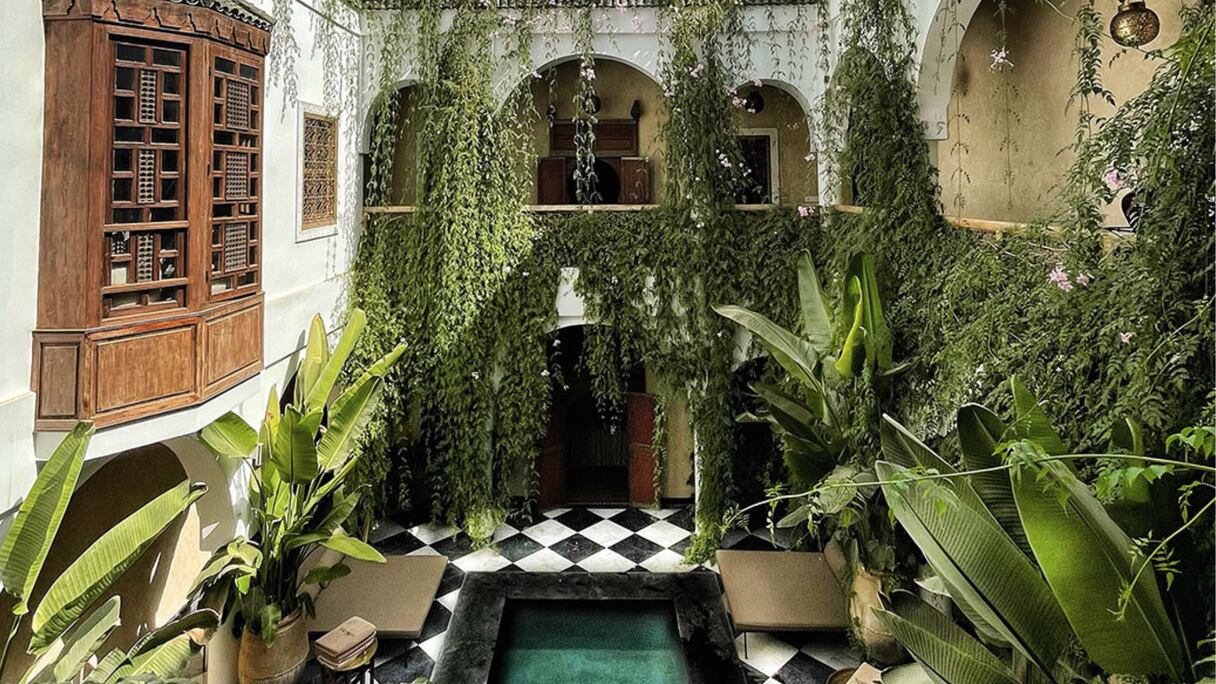
In Marrakech, just a few steps are enough to enter another world. No sooner have you left the bustle of Jemaa el-Fnaa or the lively souks behind than a carved wooden door opens onto a sunlit patio. A fountain murmurs beneath a bougainvillea, limewashed walls offer a welcome coolness, and the scent of orange blossom replaces that of spices. Here, the riad is no longer simply a charming place to stay; it becomes a gateway to the history and soul of the medina.
In the patios, travelers often take the opportunity to pause before heading back out to explore the narrow streets. “Here, you really feel like you are living in the medina rather than visiting it. You discover a different pace, calmer and more authentic,” said a French tourist.
Riads offer an intimate experience in the heart of the medina. Shaded patios, open terraces overlooking the rooftops of the old city and traditional sitting rooms invite visitors to take a break from the bustle of the souks. Climbing plants, fruit trees and fragrant plants create an atmosphere conducive to relaxation. A book, a cup of mint tea and the sound of a fountain are often enough to make the outside world disappear.
Read also : Looking for a September getaway? Agadir makes the top 10
Beyond their role as tourist accommodation, riads also play an active part in preserving Morocco’s architectural heritage. Housed in restored former residences, they help preserve a remarkable architectural legacy through the work of master artisans specializing in zellige, carved wood, carved plaster and traditional metalwork. These restoration projects help preserve the architectural identity of the medina while giving the buildings a new purpose.
For Soufiane and Aya, a couple from Casablanca spending a weekend in Marrakech, this heritage is one of the main reasons for their stay. “We were looking for something typically Moroccan. Sleeping in a traditional house, having breakfast in a patio and interacting with the staff allows us to experience Marrakech differently from our previous stays,” they said.
While riads share a common architectural layout centered around a central patio, each has developed its own identity. Some focus on lush vegetation, with pools, fountains and interior gardens creating a peaceful retreat. Others combine Moroccan furniture with contemporary artwork and modern decor, while others highlight old doors, carved ceilings or architectural elements from different regions of the Kingdom. The succession of different settings can sometimes feel like a journey through several centuries of Moroccan architecture without ever leaving the same place, reflecting the richness of the medina’s heritage.
The experience often continues on terraces overlooking the rooftops of the medina. They offer views of the city walls, minarets and gardens and, when the sky is clear, the Atlas Mountains. At different times of the day, these spaces become ideal spots for seeing the city from a different perspective.
Read also : Where Moroccans are traveling this August: Top domestic and international destinations
This immersion also extends to discovering local craftsmanship. Many riads offer workshops focused on Moroccan cuisine, handicrafts and wellness practices inspired by local traditions. It gives visitors a chance to go beyond simply sightseeing.
“Just by looking up, you notice the craftsmanship in the wood, the zellige and so on. You almost feel like you are sleeping in a house steeped in history,” said a German visitor discovering Marrakech for the first time. “You get a better understanding of the work of artisans and the richness of Morocco’s heritage,” he added.
This new generation of guesthouses is also placing greater emphasis on sustainable practices. The restoration of existing buildings, the use of local materials, the reduction of single-use plastics and the promotion of products sourced from Morocco’s regions all reflect an effort to reconcile tourism development with heritage preservation and environmental protection.
Read also : Africa’s largest airline fleets in 2026: Ethiopian leads as Royal Air Maroc posts fastest growth
Prestigious establishments have also chosen to reinterpret the riad concept by offering private accommodations inspired by traditional Moroccan homes. This illustrates how an architectural model born in the heart of the medinas continues to influence the hospitality industry while showcasing the Kingdom’s cultural identity.
When it is time to leave, many travelers remember less about their room than about the atmosphere of the place. “What I will remember most is the silence of the patio at sunrise and the welcome I received here. That experience is what makes you want to come back,” said Anna, a Spanish traveler.
Despite their differences, riads share the same philosophy: introducing visitors to Marrakech through its living heritage. More than simply a place to spend the night, they invite travelers to explore the medina’s narrow streets, meet artisans, discover local traditions and take the time to experience the city differently. These properties offer another way of telling Marrakech’s story, with each residence helping preserve a memory while opening it up to travelers from around the world.
