Henley Global, a British firm specializing in residence and citizenship by investment, has released the latest edition of its annual ranking of the world’s most and least powerful passports.
The Henley Passport Index ranks passports according to the number of destinations their holders can access without obtaining a visa in advance. According to the firm, “the index is based on data covering 199 passports and 227 travel destinations, is updated monthly, and serves as a comprehensive tool for assessing global mobility.”
Marking the 20th anniversary of the index, Henley Global also conducted a study combining two decades of passport ranking data with 20 years of Global Peace Index data to examine how peace, diplomacy, and geopolitical developments have shaped international mobility over the past two decades.
The study found that, despite interstate conflicts reaching their highest level since World War II, passport strength has nearly doubled over the same period.
Not all passports, however, offer the same level of travel freedom. While some allow holders to visit almost every destination worldwide without a visa, others still require travelers to obtain visas before departure.
Read also : ONDA Rolls Out 100% Digital Boarding Passes Across Morocco’s Airports
The stronger a passport is, the more destinations its holder can access without a visa. Conversely, weaker passports provide access to fewer visa-free destinations. Henley & Partners assigns a score to each passport for every destination.
A passport receives a score of 1 if no visa is required or if the holder can obtain a visa on arrival (VoA), a visitor’s permit, or an electronic travel authorization (ETA) upon entering the destination country.
A score of 0 is assigned when a visa is required before travel or when travelers must secure a government-approved electronic visa (e-Visa) or prior government authorization before qualifying for a visa on arrival.
The visa policy data used in the ranking comes from the International Air Transport Association (IATA), which represents around 290 airlines from 120 countries, accounting for nearly 84% of global air traffic.
Read also : Two Moroccan hotels named among world’s 100 best
With 227 destinations included in the index, the closer a passport’s score is to that number, the stronger it is considered. The farther it is from that figure, the weaker the passport.
The Henley Passport Index enables citizens to assess the global mobility offered by their passports. Including ties, passports are ranked from first place, occupied by Singapore, to 104th place, held by Afghanistan.
With visa-free access to 192 destinations, Singapore holds the world’s most powerful passport, ahead of Japan, South Korea, and the United Arab Emirates, whose passport holders can each travel to 188 destinations without a visa.
Sweden rounds out the world’s top five most powerful passports, with visa-free access to 187 destinations.
At the other end of the ranking, the world’s weakest passports are those of Yemen (30 visa-free destinations), Pakistan (29), Iraq (28), Syria (25), and Afghanistan (22).
Read also : More than 18.8 million passengers passed through Morocco’s airports during first half of 2026
Across Africa, passports generally rank among the weaker travel documents, offering relatively limited visa-free access. For several years, however, a small group of countries has consistently held the continent’s strongest passports.
These are mainly passports issued by countries in Southern and East Africa. Only three African passports provide visa-free access to more than 100 destinations: Seychelles (155 destinations), Mauritius (148), and South Africa (101).
The Seychellois passport is among the world’s strongest, allowing visa-free travel to 155 destinations and ranking 23rd globally, ahead of passports from several major countries, including Russia (47th), Qatar (48th), Saudi Arabia (54th), and China (60th).
According to the article, Seychelles’ position is explained by two factors. The first is its relatively small population of around 140,000, which reduces concerns about large-scale migration. The second is reciprocity.
To support its tourism-driven economy, Seychelles grants visa-free entry to citizens of nearly all countries. In return, some countries extend the same visa-free access to Seychellois passport holders.
Behind this trio are Botswana (61st globally, 81 visa-free destinations), Namibia (65th, 74), Lesotho (66th, 73), Eswatini (67th, 71), Morocco (67th, 71), Kenya (68th, 70), and Malawi (68th, 70).
Read also : Best budget-friendly tourist destinations in Morocco for summer 2026
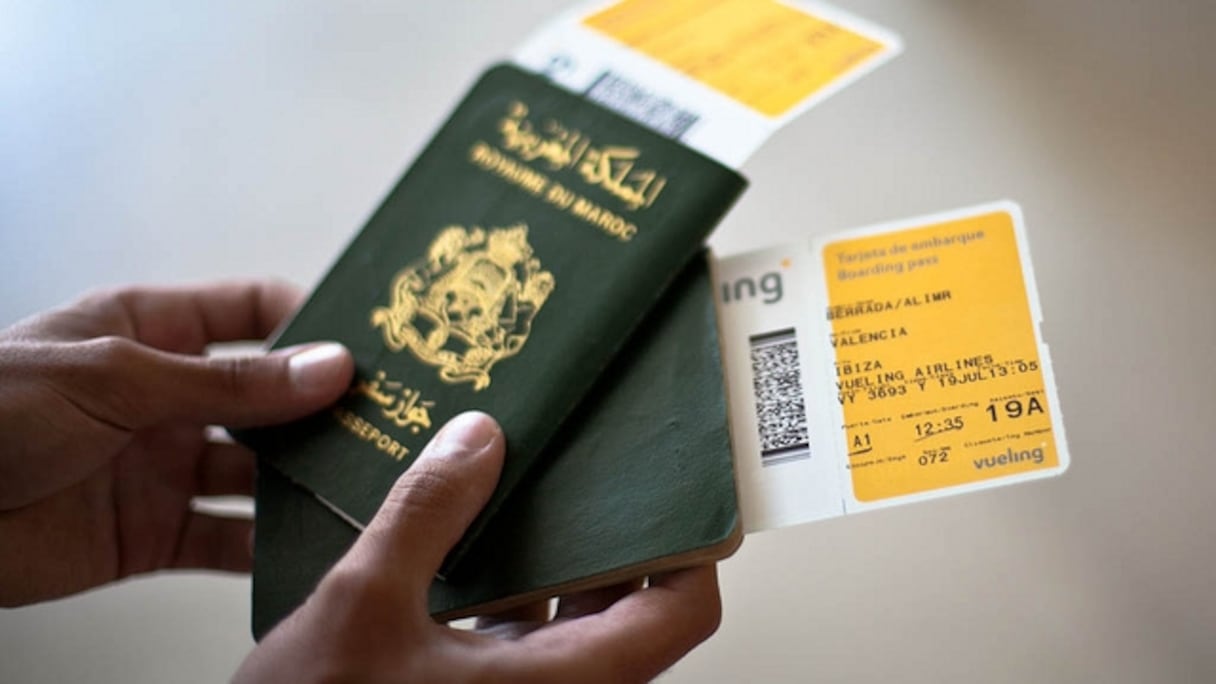
In North Africa, the Moroccan passport remains the region’s strongest, allowing visa-free access to 71 destinations. It ranks ahead of Tunisia (71st globally, 66 destinations), Algeria (81st, 55), Mauritania (81st, 55), and Libya (94th, 39). The Moroccan passport is also the only North African passport to feature among Africa’s top 10 strongest passports.
Among Africa’s weakest passports are those of South Sudan (93rd globally, 41 visa-free destinations), Sudan (93rd, 41), Libya (94th, 39), Eritrea (95th, 38), and Somalia (99th, 32).
