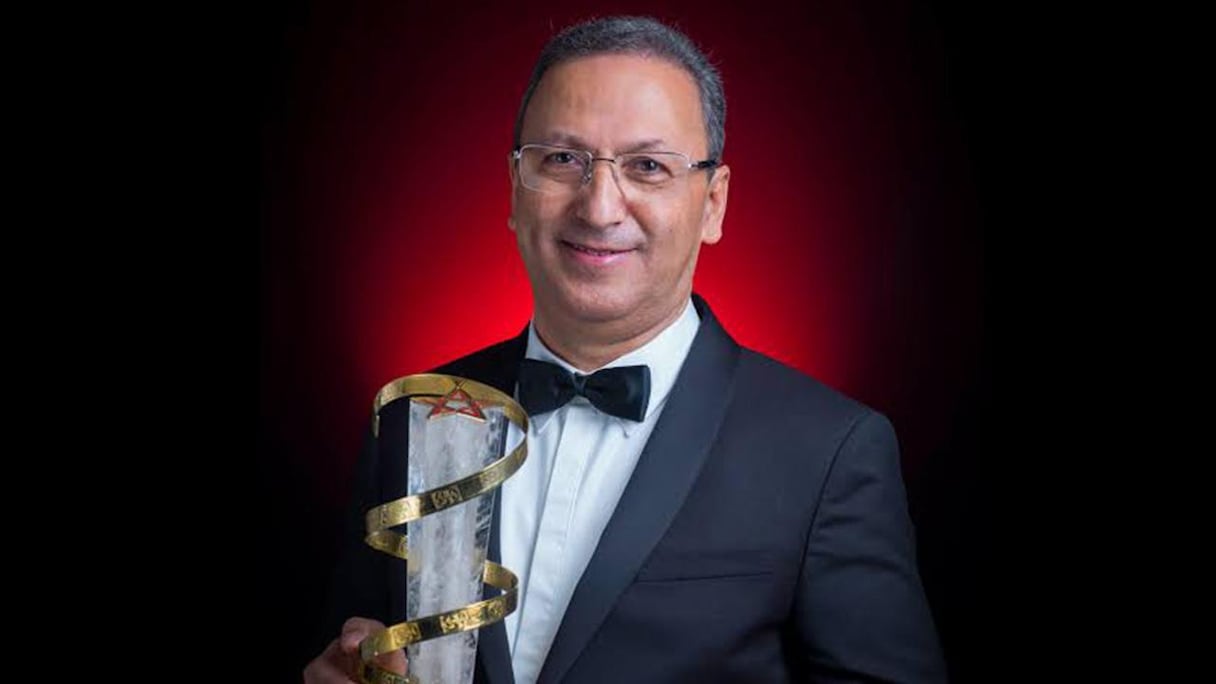
Veteran Moroccan executive producer Zakaria Alaoui has offered a rare glimpse into the production of Christopher Nolan’s The Odyssey, recalling the British-American director’s journey across Morocco and the moment he was captivated by the White Dune on the coast of Dakhla, in southern Morocco.
In an interview with the Moroccan official news agency (MAP), Alaoui said Nolan stood in silence for several moments as he took in the spectacular landscape, which immediately sparked his imagination. The filmmaker had been searching for a location resembling the mythical island of Ogygia, home to Calypso, played in the film by Charlize Theron.
Known for his meticulous attention to detail, Nolan instantly fell under the spell of the vast white sand formation near Dakhla, which appeared to emerge from a mythical world. His decision was made on the spot.
After spending around five weeks filming at the kasbah of Aït Ben Haddou, which doubled as the city of Troy, as well as along the coast of Essaouira and at the Royal Theatre of Marrakech, the international production moved on to continue filming in Italy, Greece, Iceland and Scotland.
It was only after an unexpected scouting trip to Dakhla that Nolan decided to return to Morocco with the entire production for an additional week of filming.
Read also : ‘The Odyssey,’ filmed partly in Morocco, opens to $264 million worldwide
According to Alaoui, Australia and the Bahamas had also been considered for this stage of The Odyssey. But from the very first location visit, the White Dune—known locally as Laghri—outshone every alternative. There, brilliant white dunes merge with the turquoise waters of the Atlantic Ocean, creating a dramatic landscape well suited to an epic inspired by Greek mythology.
“I knew what to expect when Christopher Nolan contacted me,” Alaoui said of the filmmaker, describing him as a demanding director and producer who expects absolute concentration and technical excellence from everyone working alongside him.
The relationship between the two dates back 14 years, when Nolan filmed Inception in Tangier alongside Leonardo DiCaprio. Alaoui recalled that production as both successful and logistically challenging, particularly as it took place during the summer and the holy month of Ramadan.
Read also : How The Odyssey filming in Ouarzazate reinforces Morocco’s status as the “Hollywood of Africa”
Alaoui also shed light on Nolan’s famously discreet working methods.
According to the Moroccan producer, the director carefully protects both the storyline and the shooting schedule, limiting access to the screenplay to a very small group of essential collaborators. To prevent information leaks, communication is handled directly through trusted assistants rather than by telephone or email.
Drawing on more than four decades of experience, Alaoui described The Odyssey, starring Matt Damon, as the first production of its scale ever filmed in Dakhla and the wider region.
Until now, he explained, the logistical complexity of transporting equipment and crews had made blockbuster productions there financially and operationally difficult.
Alaoui praised the support provided by Moroccan public authorities, particularly the Communication Department, which assisted the project at every stage.
The production required transporting large quantities of equipment and deploying experienced executive production teams and technicians to the filming locations. According to Alaoui, the project benefited from “intelligent and generous” public support.
After weeks of intensive work, the Moroccan scenes translated beautifully onto the screen, he said, expressing pride in seeing the country’s landscapes—and the contribution of Moroccan professionals—featured throughout the film.
For him, every screening of Nolan’s adaptation of Homer’s epic will also serve as a showcase for Morocco’s cultural, tourism and economic appeal.
“The film’s most beautiful sequences were shot in Morocco. It is a film that will go down in history and further strengthens the Kingdom’s reputation as a filming destination offering outstanding hospitality as well as exceptional natural, technical and human resources,” said Alaoui, who previously worked at the Moroccan Cinematographic Center (CCM) before producing international films including Green Zone, American Sniper, Mission Impossible, and Spectre, the James Bond film.
Moroccan talent
According to Alaoui, Morocco has evolved far beyond serving as a picturesque backdrop for foreign productions and has become a genuine production partner.
He attributed that transformation largely to the growing expertise of Moroccan professionals. On The Odyssey, he noted, Moroccan technicians outnumbered their foreign counterparts by five to one, with international specialists brought in only for highly specialized technical roles.
Today, Moroccan assistants handle key responsibilities involving camera operations, sound and other core production functions, he said, allowing domestic film and television productions to benefit from professionals trained to the highest international standards.
For Alaoui, the growing interest shown by major international studios in Morocco is far from temporary. Instead, he sees it as part of a long-term trend driven by the Kingdom’s early recognition that economic, cultural and symbolic influence are closely intertwined and that soft power has become increasingly important.
Having begun his executive production career in 1985 on Arthur Joffé’s Harem, starring Ben Kingsley and Nastassja Kinski, Alaoui will have little time to celebrate the completion of The Odyssey.
His next challenge is already underway with the production of Universal Pictures’ The Mummy 4, directed by Tyler Gillett and Matt Bettinelli-Olpin, which is scheduled for release next year.
Honored by the Marrakech International Film Festival in 2014, Alaoui says he remains driven by the same mission: promoting Morocco from north to south by showcasing the Kingdom’s “exceptional natural and architectural diversity,” from its coastlines, mountains and deserts to its modern cities and ancient kasbahs.
Although he has a particular affection for Ouarzazate, whose spectacular landscapes continue to attract some of the biggest names in international cinema, he also advocates a more balanced geographical distribution of film and television productions across Morocco.
Such an approach, he argues, would help stimulate economic and cultural development in more regions while showcasing the country’s virtually limitless wealth of landscapes, heritage and natural settings.