These issues were at the center of the first Moroccan-American Summit on Intellectual Property in the Creative Industries, inaugurated last Thursday at the U.S. Consulate General in Casablanca by the U.S. Mission to Morocco and the Ministry of Youth, Culture and Communication, in partnership with the American Cultural Association (ACA).
Behind the institutional discussions lies a practical concern for artists: ensuring that their rights are respected and that they receive fair compensation for their work.
Creative works used without permission
For photographers, the circulation of images on social media illustrates the limits of copyright protection in everyday practice. Ilyass Baha, a street photographer, says professionals receive insufficient legal guidance, particularly on the rules governing photography and their relationships with galleries.
“I often wonder how I can protect my work. I do street photography, and I lack legal information to know whether I am allowed to photograph people this way,” he said.
He also points to the unauthorized reuse of his images on Instagram, often without credit or payment.

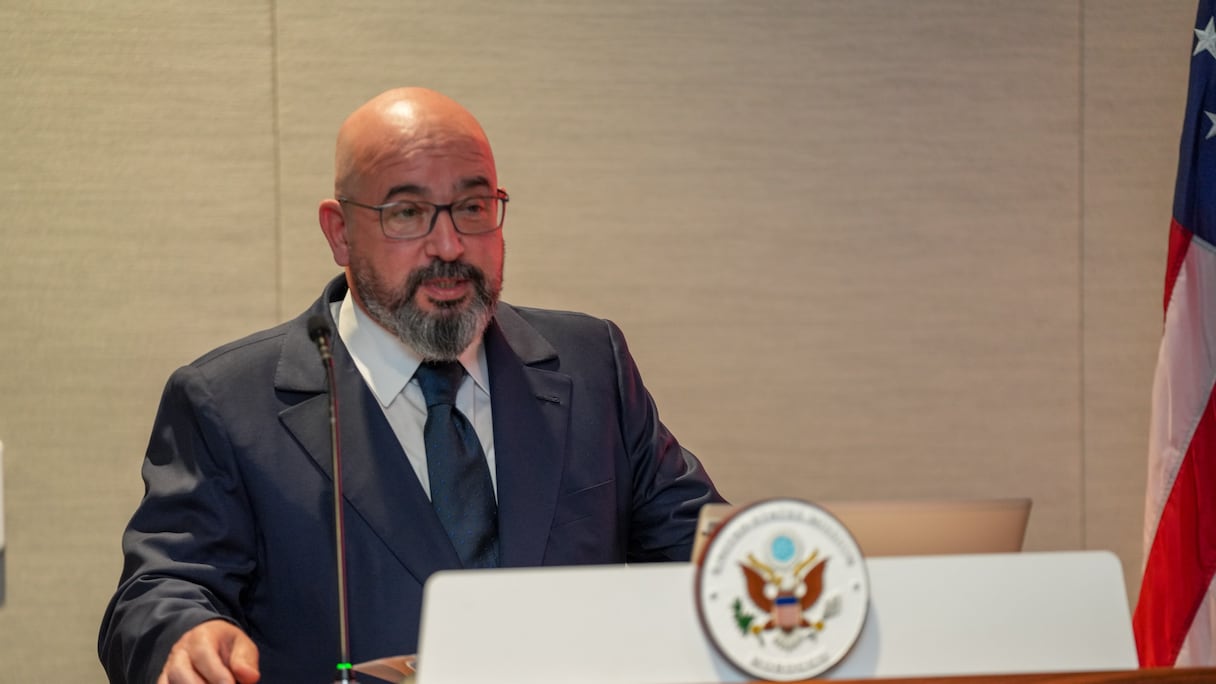
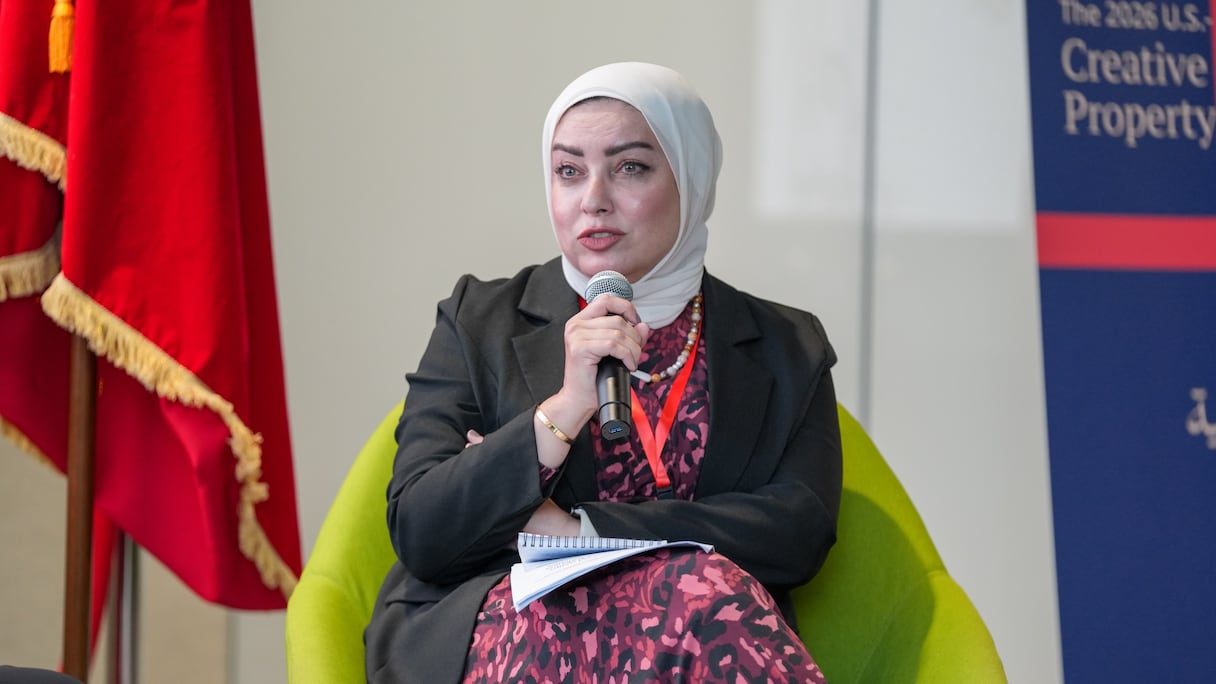
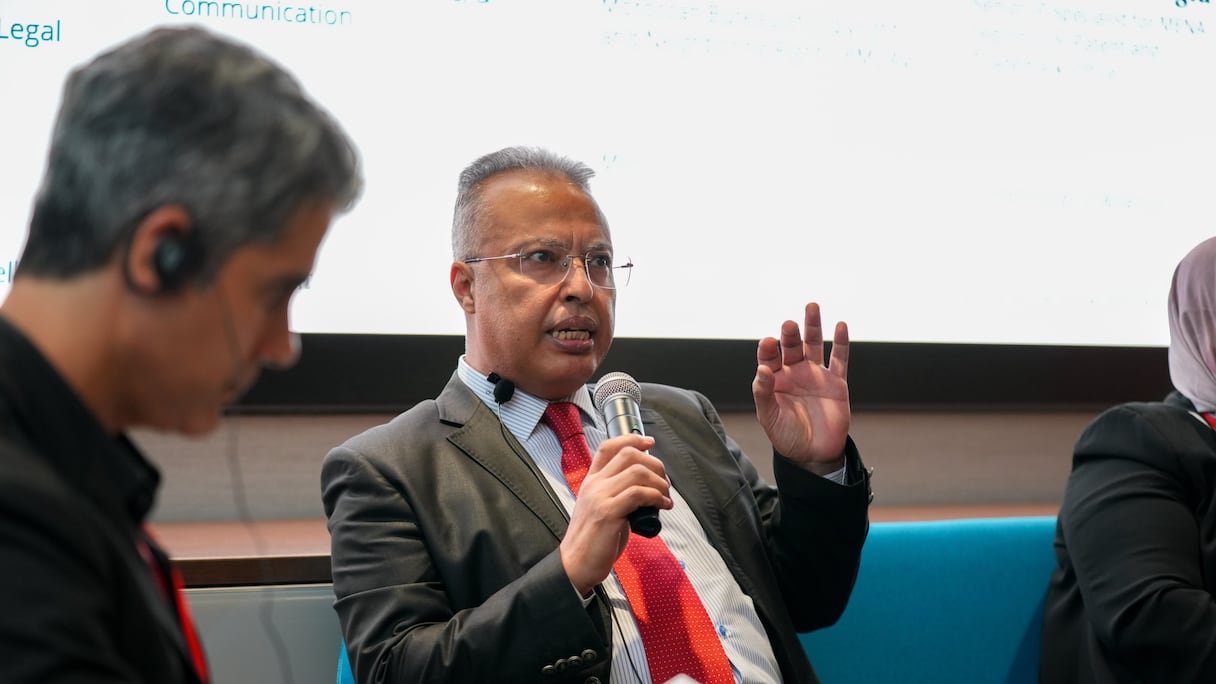
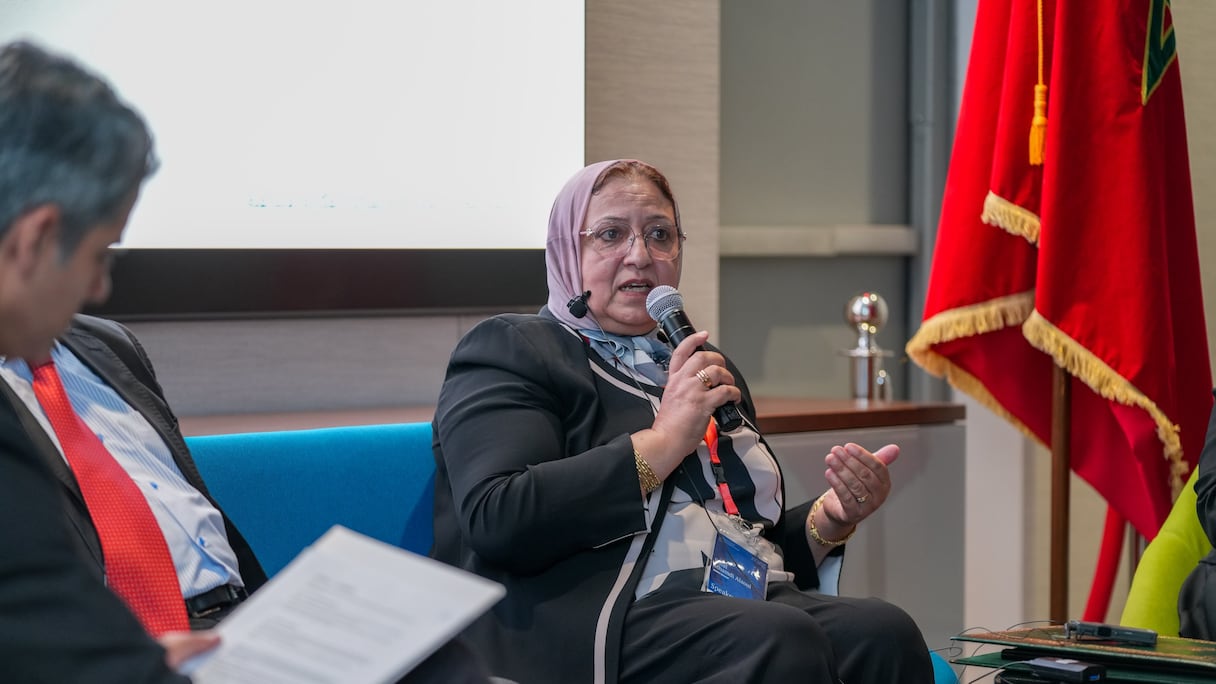
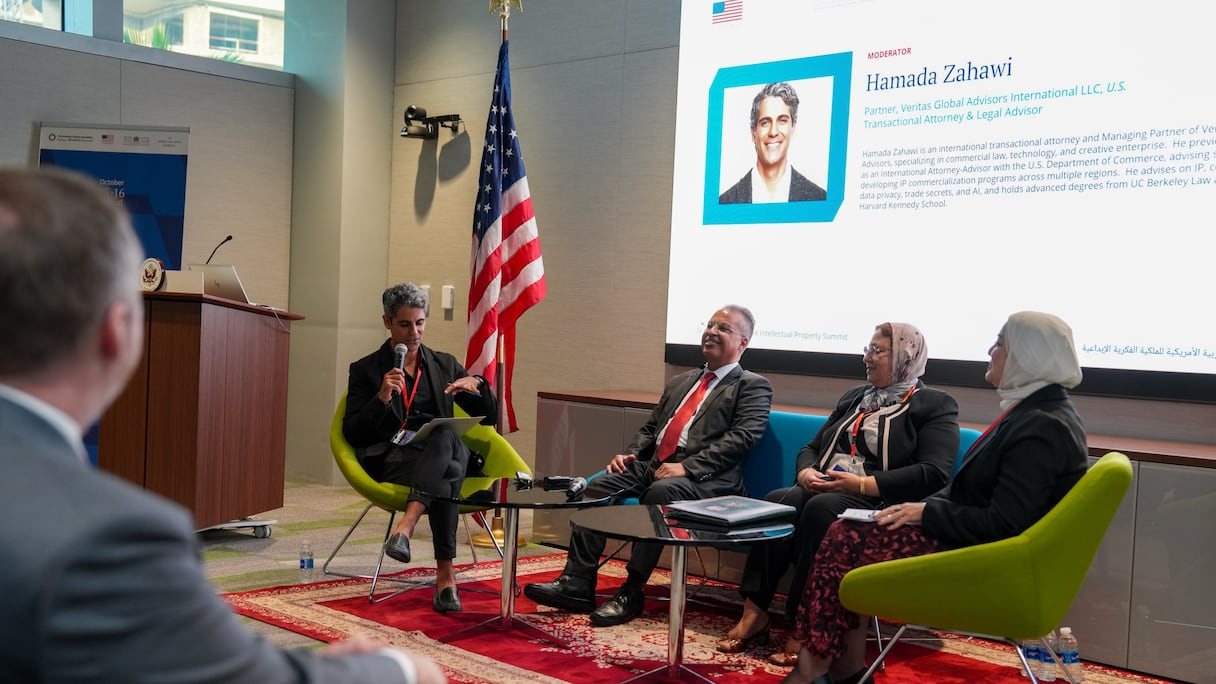
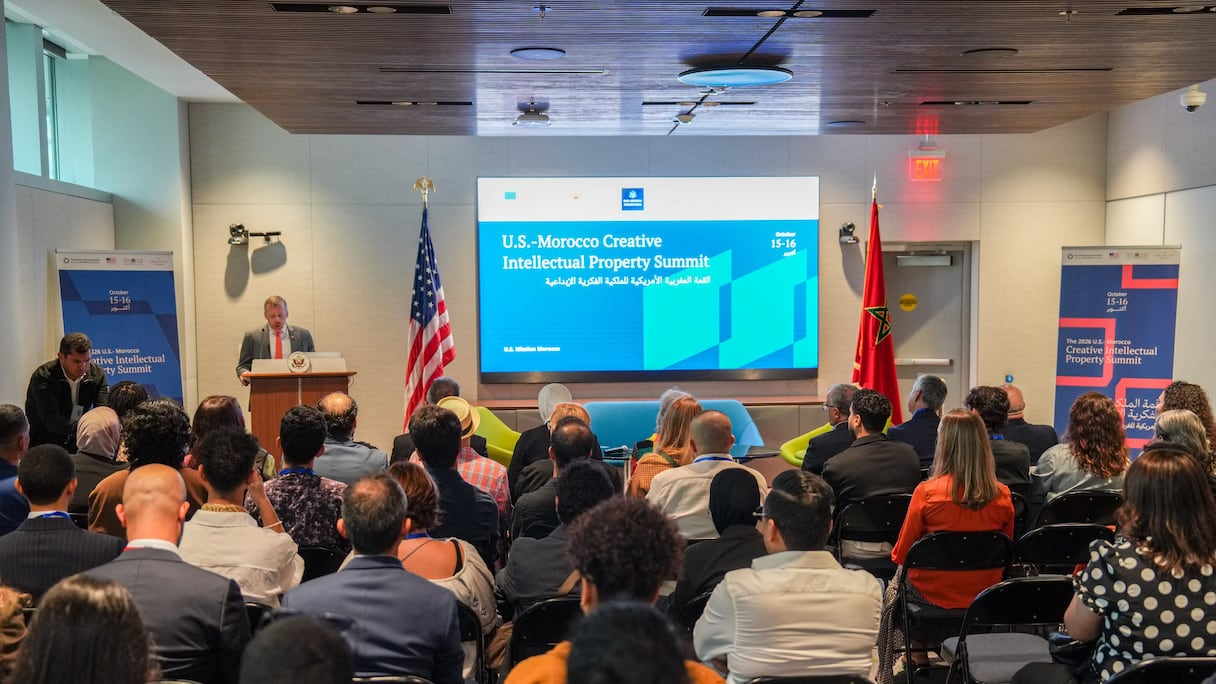
During the first Moroccan-American Summit on Intellectual Property in the Creative Industries. (U.S. Mission Morocco)
“Most of the time, I discover on Instagram that other pages are reusing my photos without my permission and without crediting me,” he said, noting that such practices can also lead to tensions with the people he photographs.
Photographer Charaf Lahlb shares the same concerns. Throughout his career, he says, only two organizations have contacted him to regularize their use of his photographs and pay him for them.
“Copyright disputes are commonplace, and very few people take the initiative to ask for permission or purchase rights before using an artistic work,” he said.
The problem goes beyond a lack of awareness of copyright rules. Creators must also be able to identify unauthorized uses of their work, enforce their rights and secure compensation that reflects the value of their efforts.
Read also : Morocco launches online system for journalists, publishers to claim photocopying royalties
In the music industry, difficulties extend to both registering works and collecting royalties. Singer-songwriter Nada Azhari criticizes procedures she considers complicated and poorly suited to the sector’s realities.
She points in particular to the requirement for proof of radio airplay when registering a song with the Moroccan Copyright and Related Rights Office (BMDA).
According to Azhari, some radio stations that fail to pay royalties refuse to issue the required certificate. This prevents artists from registering their songs in Morocco and pushes them toward foreign organizations, such as France’s Society of Authors, Composers and Publishers of Music (SACEM).
She also highlights the use of music in cafés and restaurants without payment of the corresponding royalties.
“The lack of rigor in the current system deprives us of a large share of our income,” she said, noting that royalties are normally paid several times a year.
The effectiveness of royalty collection and distribution mechanisms is therefore another concern for artists who depend on these payments to make a living.
Read also : Morocco’s anti-corruption reforms face implementation challenge, says Benalilou
Stronger enforcement and more legal content
Elias Khrouz, a lawyer and doctorate holder in intellectual property law, said the summit offers Morocco and the United States an opportunity to exchange best practices, particularly in combating piracy and developing the creative industries.
While he sees growing awareness of intellectual property issues in Morocco, he says further action is needed.
“To continue making progress, we must strengthen enforcement while expanding the legal offer,” he said, calling for legal reforms, modernized administrative procedures and greater private-sector involvement.
Dalal Mhamdi Alaoui, director of the BMDA, also identifies piracy as the main challenge facing creators. She points to stronger legislation and expanded monitoring and investigative powers for the office, particularly in response to digital violations.
She also highlights the involvement of telecommunications operators and regulatory authorities in blocking illegally distributed content.
“As soon as digital piracy is suspected, precautionary measures can be taken immediately to block the illegal distribution of content,” she said.
These measures take on added importance ahead of the 2030 World Cup, which Morocco will co-host with Spain and Portugal. Protecting sports broadcasts is a major challenge for broadcasters and rights holders as piracy, particularly through IPTV services, continues to pose problems.
Turning intellectual property into an economic asset
Hicham Abkari, director of the arts department at the Ministry of Youth, Culture and Communication, argues that intellectual property protection should extend beyond the legal sphere and become a central component of Morocco’s strategy for the creative and cultural industries.
“Cultural industries are a strategic asset for Moroccan youth, creating both jobs and wealth,” he said.
He stressed the need to give the sector a stronger structure built on Morocco’s cultural heritage and equip creators to take their expertise to international markets.
Intellectual property is also an area for cooperation between Morocco and the United States. Rasha Abdelmagid, an intellectual property specialist at the U.S. Patent and Trademark Office (USPTO) for the Middle East and North Africa, said the two countries’ longstanding relationship provides a strong foundation for sharing expertise.
The priority, she said, is to raise creators’ awareness of the economic value of their rights and help them turn their work into sustainable business opportunities.
Christopher Deutsch, the U.S. consul general in Casablanca, also emphasized the economic importance of protecting creative work.
“Strong intellectual property protection allows creative talent to be transformed into lasting economic value,” he said.
Clearly defined rights, secure licensing arrangements and reliable royalty payment systems allow creators to monetize their work, receive fair compensation and build sustainable careers.
Read also : Morocco’s new copyright law tightens rules on illegal IPTV
Deutsch noted that Morocco has a rich creative heritage spanning music, cinema, handicrafts, design and literature. Protecting this creativity, he said, helps preserve opportunities for artists and enables them to reach international markets.
The challenge now is to turn these ambitions into tangible improvements for professionals. Stronger legislation, action against unauthorized use, simpler administrative procedures and more effective royalty payments are all among the priorities raised at the summit.
Ultimately, intellectual property protection is measured not only by the laws in place, but also by whether creators can enforce their rights, receive payment for their work and build sustainable livelihoods through their art.
