Preparations are intensifying ahead of an expected FIFA visit in the coming days, during which officials will assess the venues’ readiness and check whether they meet the technical and organizational requirements for hosting World Cup matches.
Hassan II Stadium: A global-scale project
Construction of the Grand Hassan II Stadium in the province of Benslimane has reached a significant stage. Excavation work began on August 16, 2024, and the 100-hectare site is now undergoing major development.
The project has attracted international attention after the stadium was put forward as a candidate to host the 2030 World Cup final. It faces strong competition for the honor, adding urgency to construction work, with companies operating around the clock to meet the deadline.
Recent images show significant progress across the complex. Stands have been installed on the first, second and third levels, alongside major structural columns and other equipment. Further developments are expected to give the stadium a new look in the coming months.
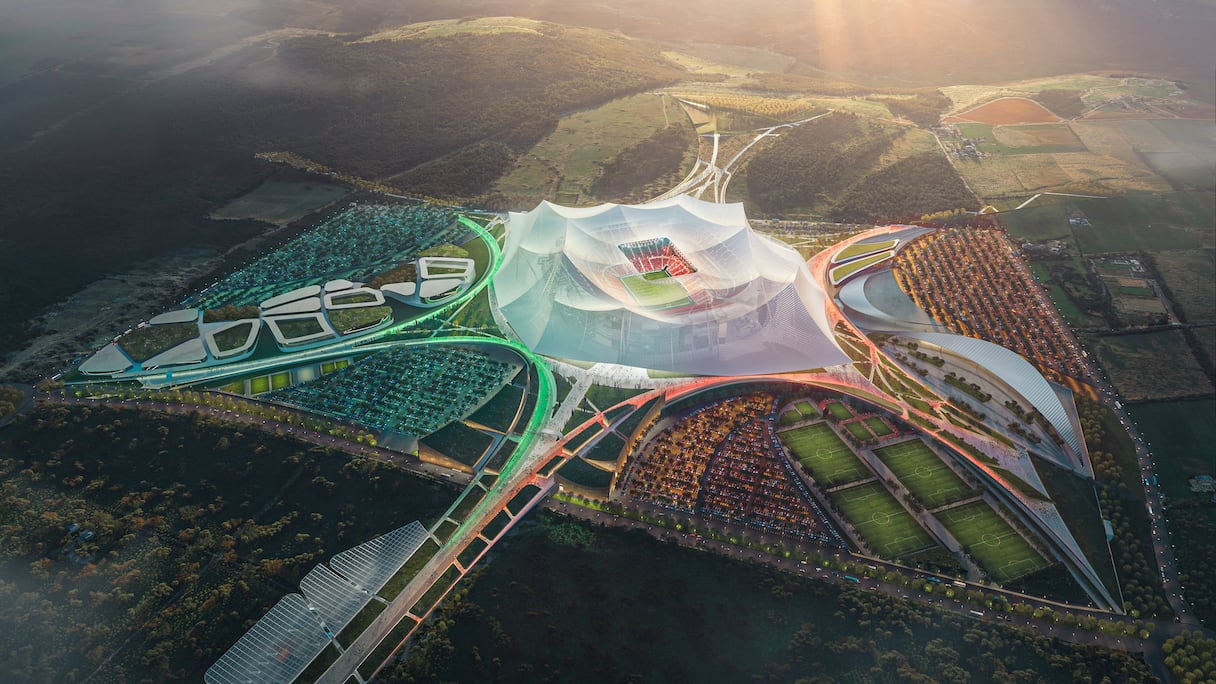
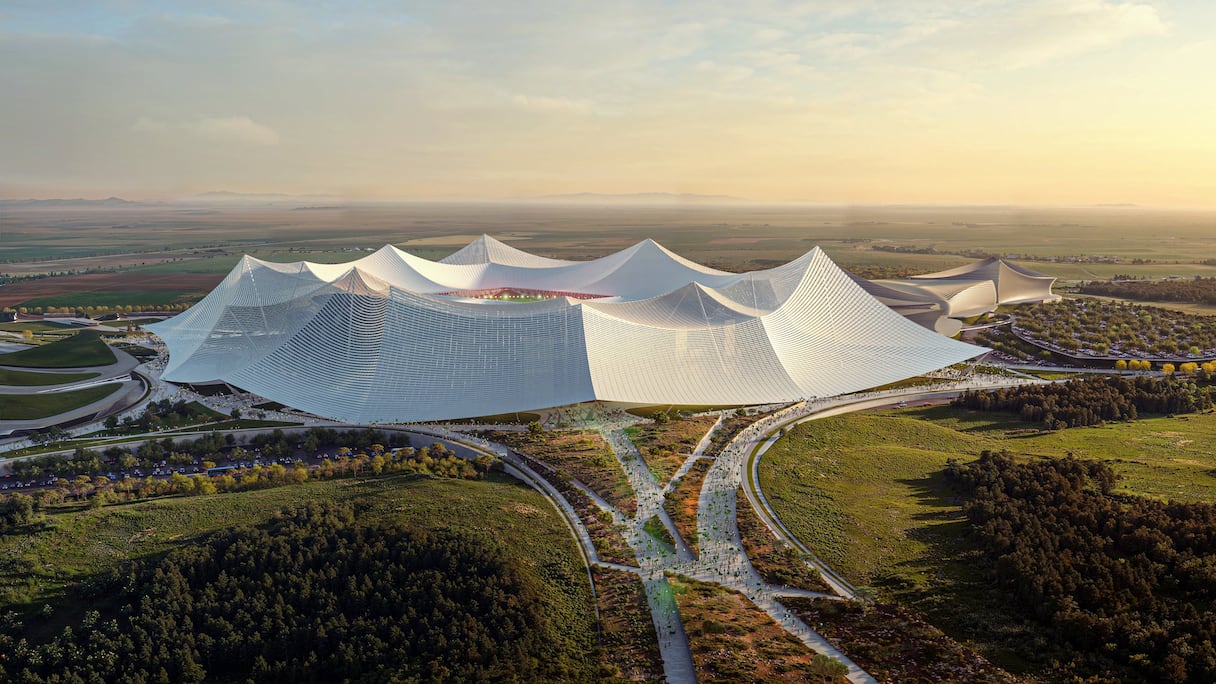
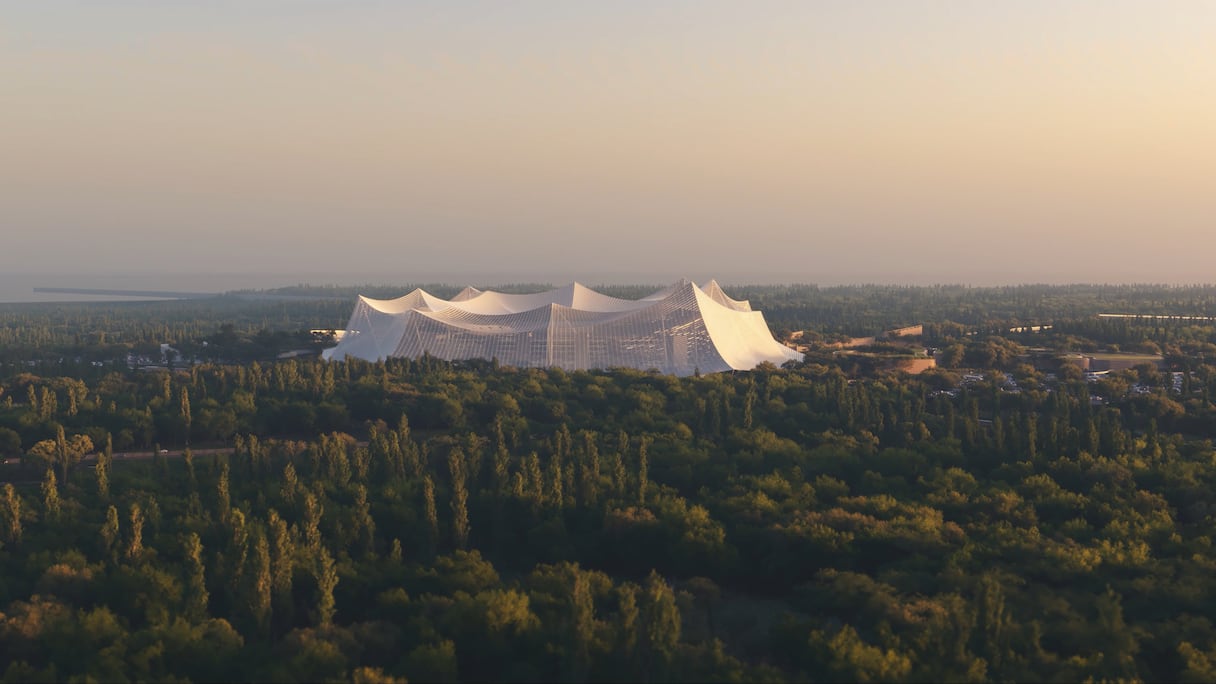
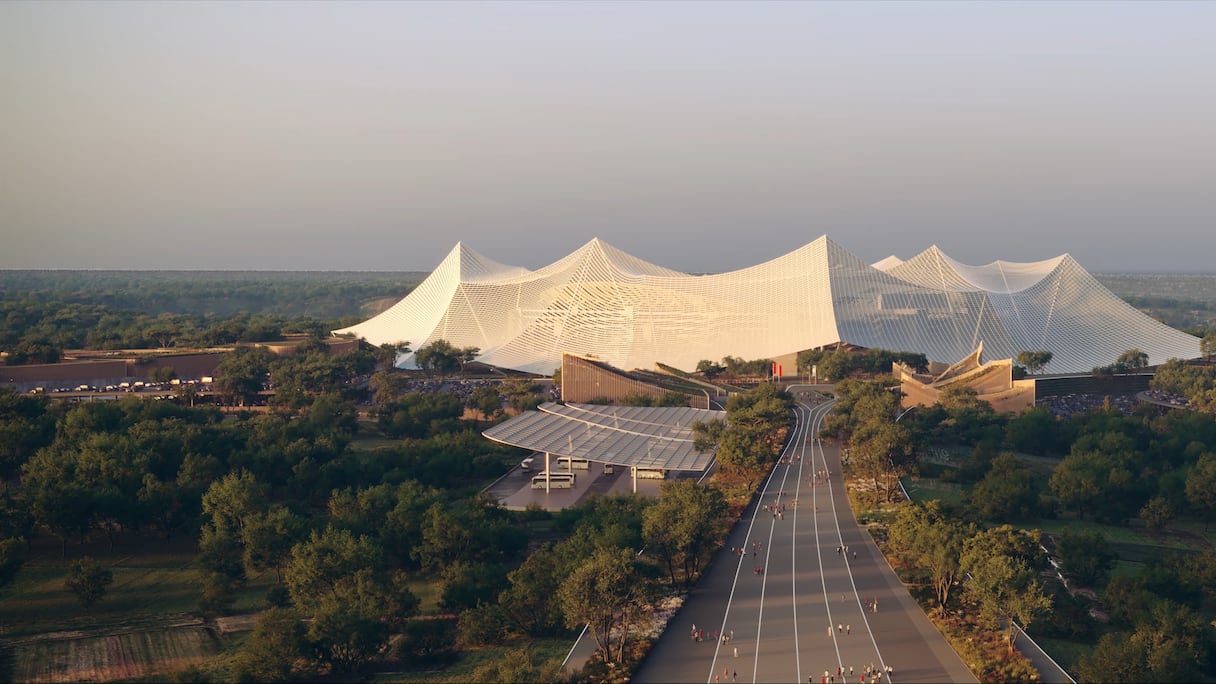
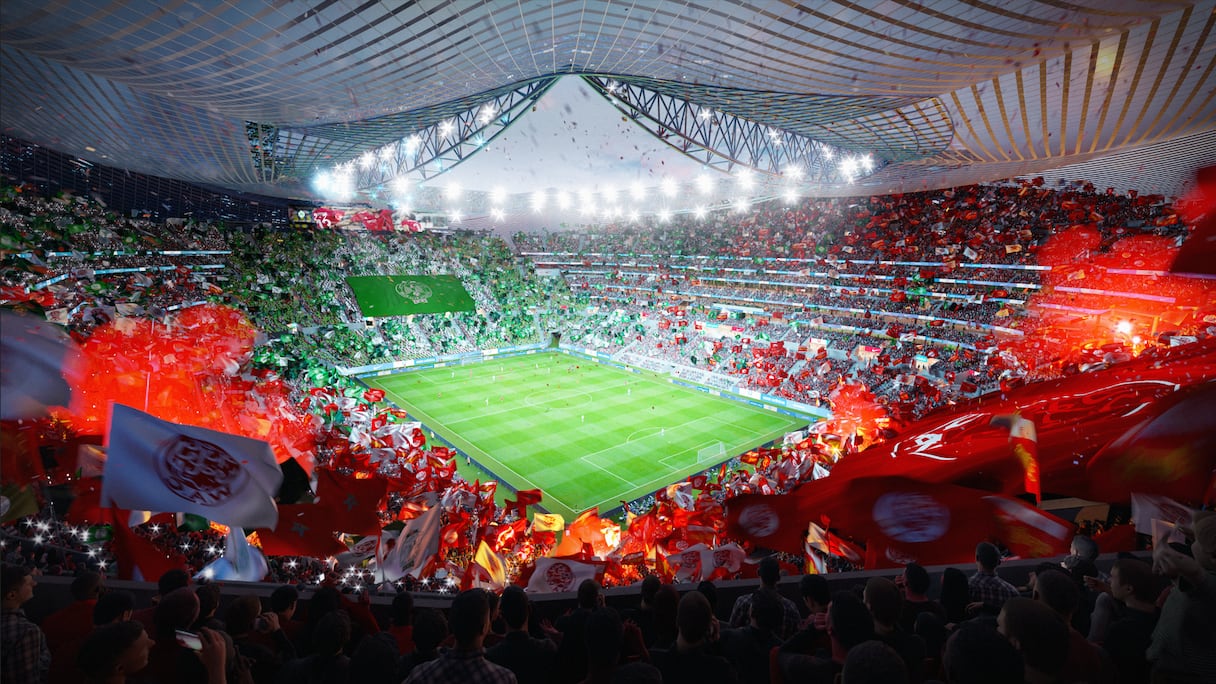
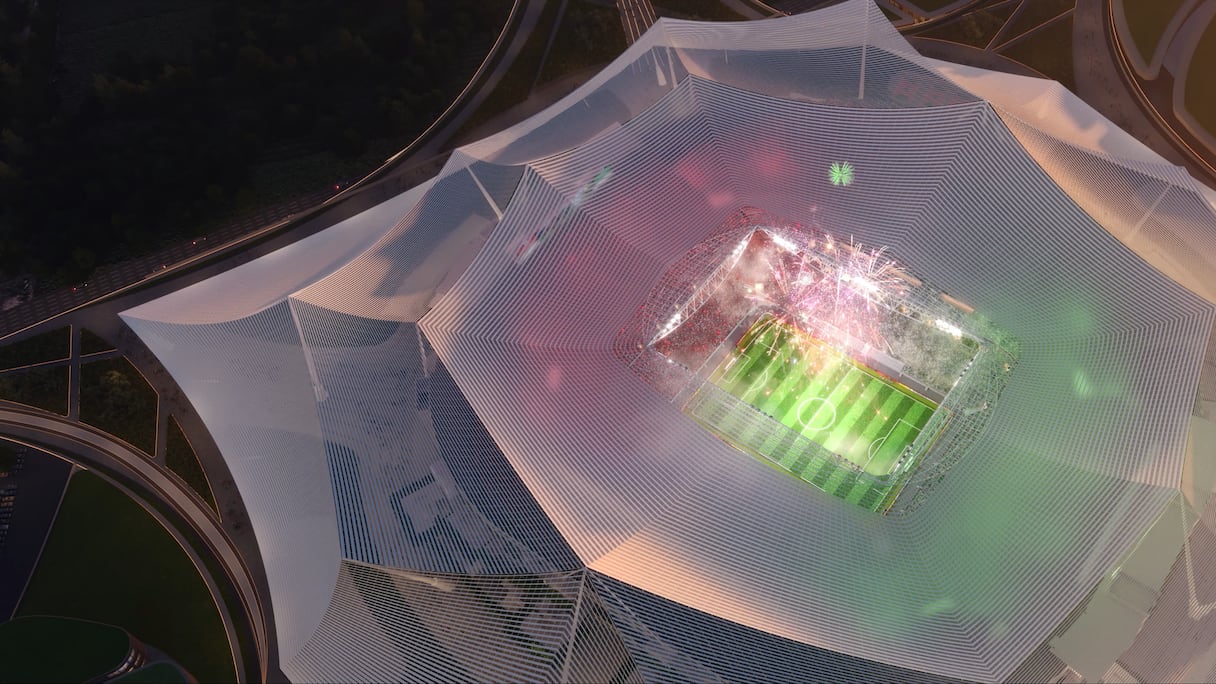
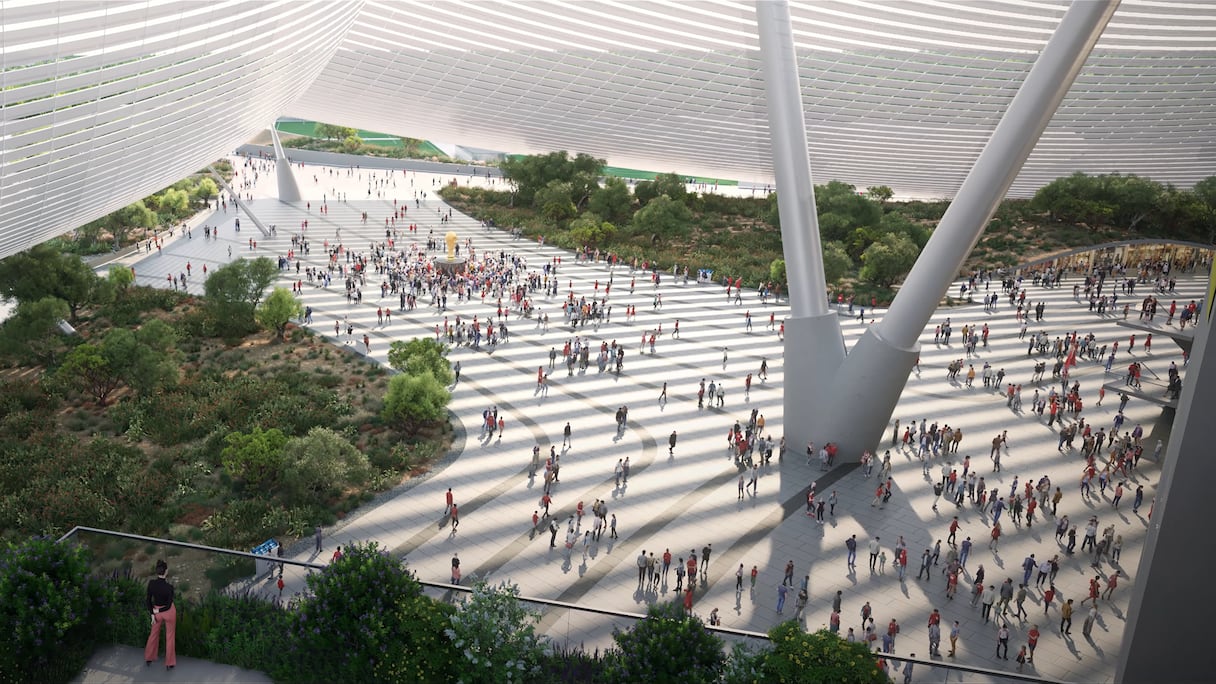
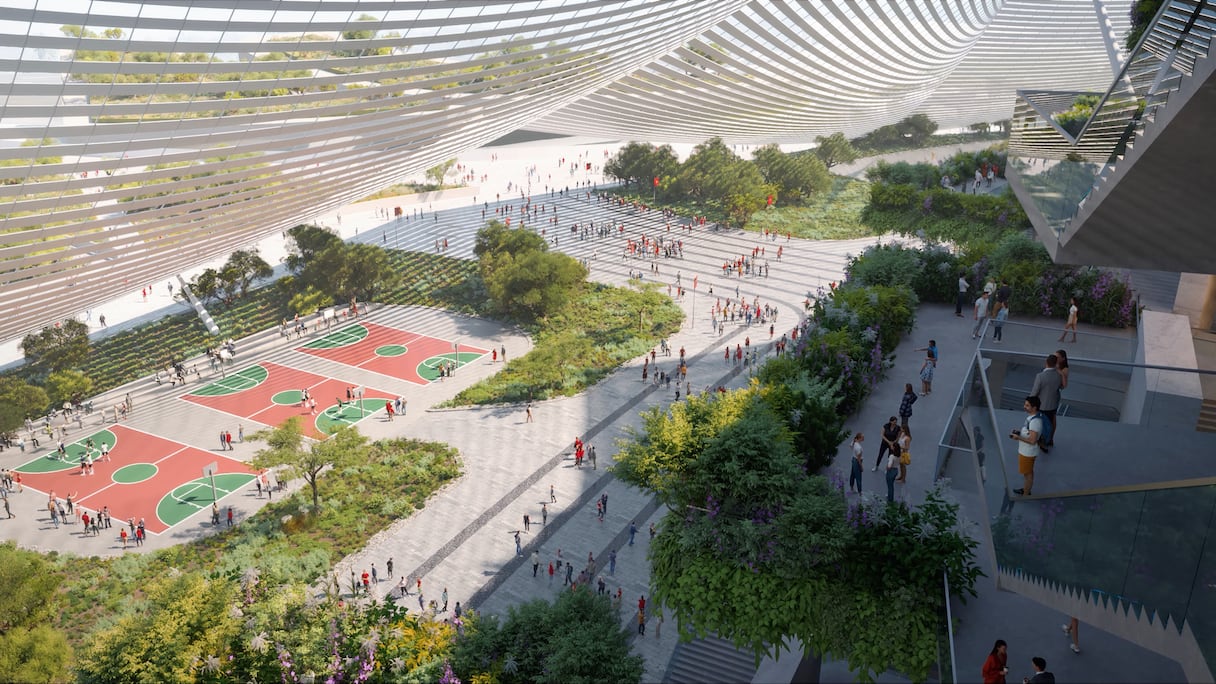
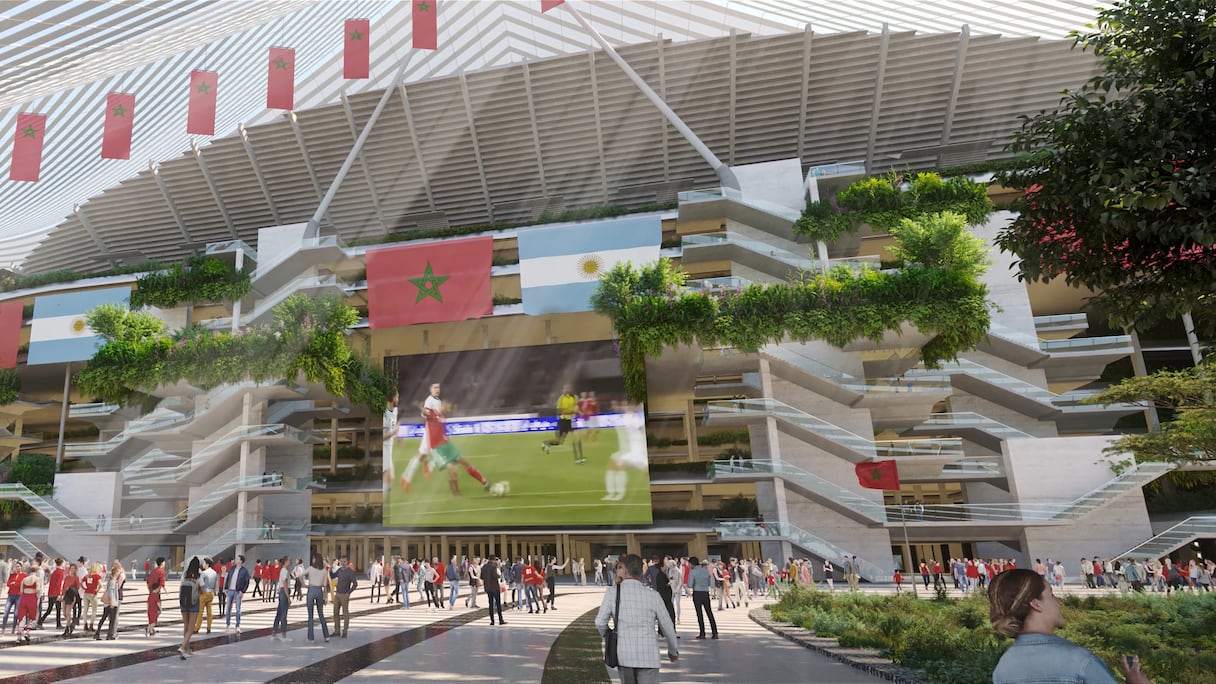
Model of the Grand Hassan II Stadium in Benslimane.
With a planned capacity of around 115,000 spectators, Hassan II Stadium will be one of the largest venues in Morocco, Africa and the world. The stadium itself will cover 226,828 square meters.
The surrounding complex will include training pitches covering 68,898 square meters, as well as several other facilities. These include a hotel spanning 15,030 square meters and two shopping centers covering 10,971 and 12,237 square meters, respectively.
Four additional pitches with FIFA-approved grass will be built beside the main stadium. The complex will also have changing rooms for players and referees, buildings for organizers, additional facilities for spectators, medical services, restaurants, retail outlets, gathering spaces, first-aid facilities and dedicated ambulance parking.
Other planned infrastructure includes emergency and security service centers, parking for players and officials, stadium administration offices, ticketing centers, an international radio and television broadcasting center, storage facilities and a waste management center.
The wider sports complex will also feature an athletics stadium with a capacity of 25,000 spectators, an indoor sports hall, a gymnastics hall, an Olympic swimming pool and a conference and exhibition center.
Prince Moulay Abdellah Stadium: A jewel in Rabat
Crown Prince Moulay El Hassan inaugurated Prince Moulay Abdellah Stadium in Rabat, which has since emerged as a leading example of modern stadium infrastructure in Africa and internationally.
The venue received widespread praise from international media after hosting several Africa Cup of Nations matches, including the final, offering a showcase of Morocco’s sporting capabilities to audiences around the world.


Anas Zabari
The inauguration followed years of work by Moroccan engineers to transform the former stadium into a modern World Cup venue ahead of 2030, while also preparing it to host other international competitions.
Morocco’s engineers and experts redesigned the stadium after demolishing the old structure, bringing its infrastructure into line with FIFA’s requirements for the 2030 tournament. The result is an architectural landmark distinguished by its modern design, sustainability features and advanced facilities.
The Rabat stadium has 68,700 seats and three types of hospitality areas. It includes 110 private boxes and five hospitality lounges with a combined capacity of 5,400 seats.
It also offers extensive facilities for the media, including print, radio and television journalists, with the logistical and technical equipment needed to cover major sporting events.
Tangier Grand Stadium: Record-breaking facilities
The renovated Tangier Grand Stadium, which also opened for the latest Africa Cup of Nations, is considered one of Africa’s leading sporting venues. Its circular design, underground water drainage systems and extensive roof coverage have helped it stand out internationally.
The stadium meets FIFA’s requirements for the 2030 World Cup and is expected to undergo further upgrades in the coming months. Funding for the work has been included in the 2027 budget, with plans to modernize several facilities, including the exterior facade, other stadium infrastructure and the natural grass pitch.
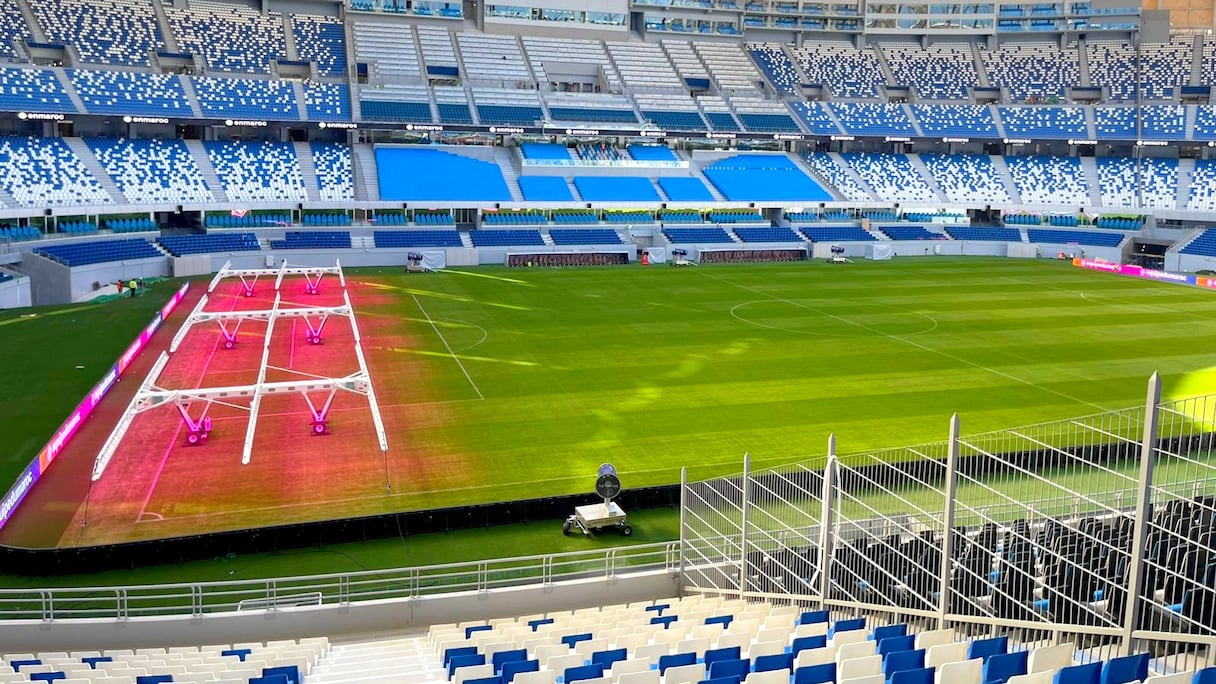
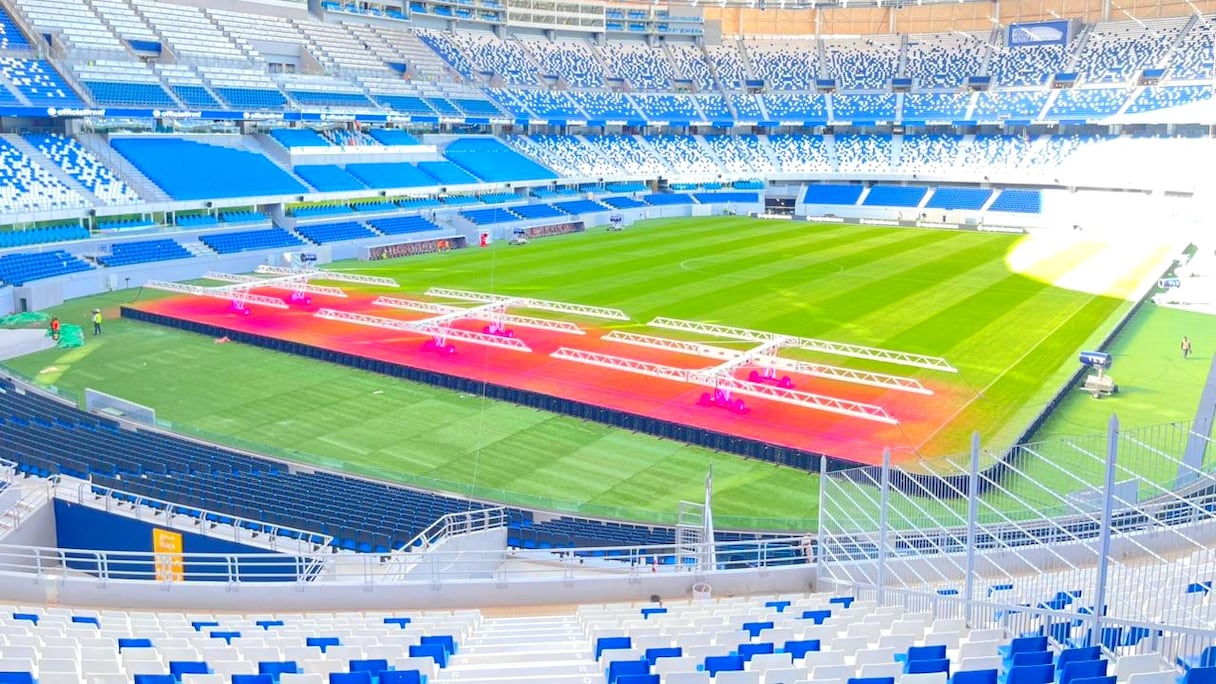

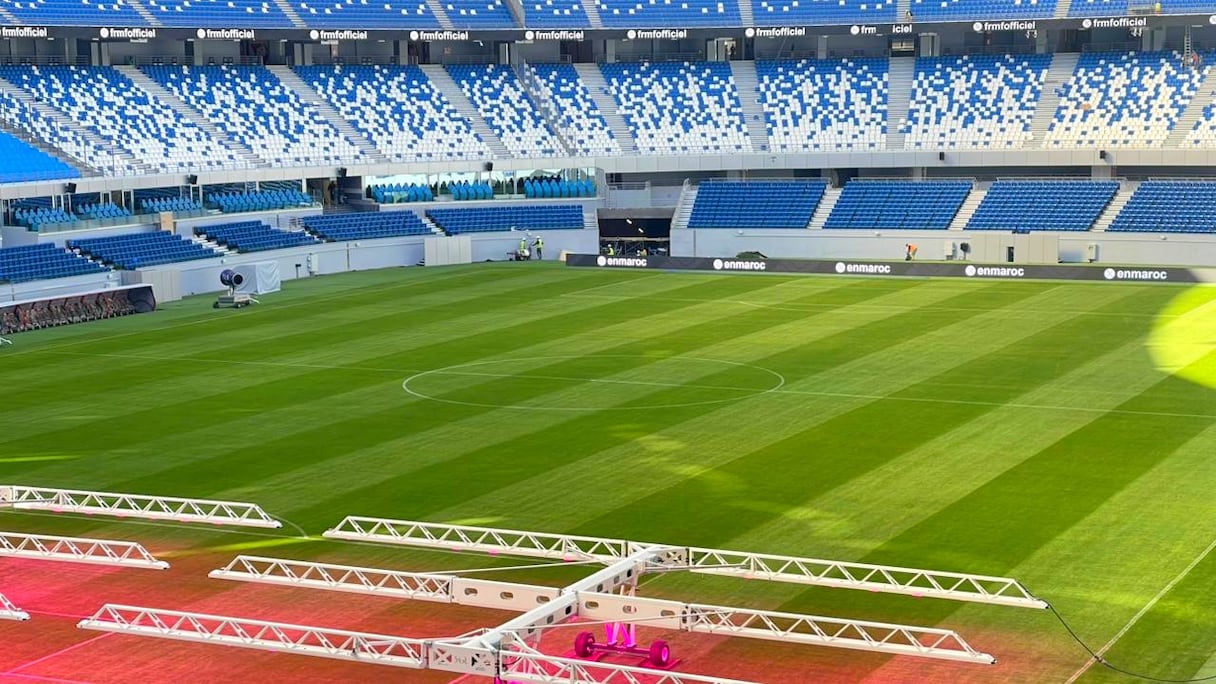
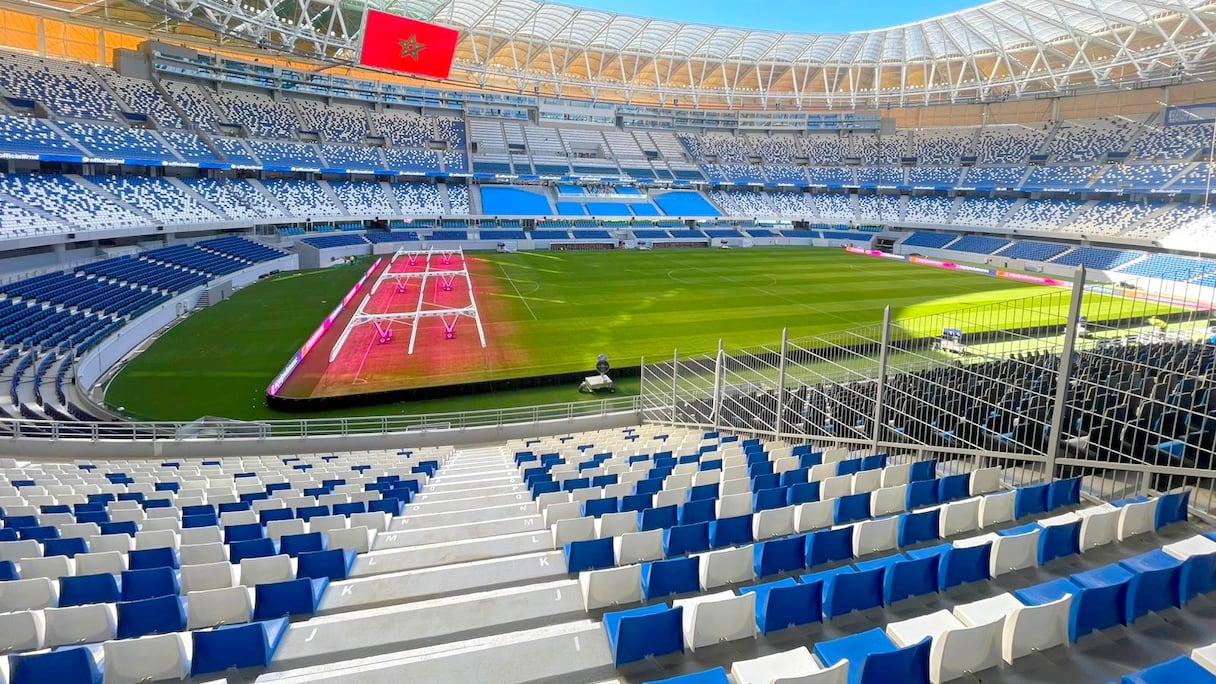
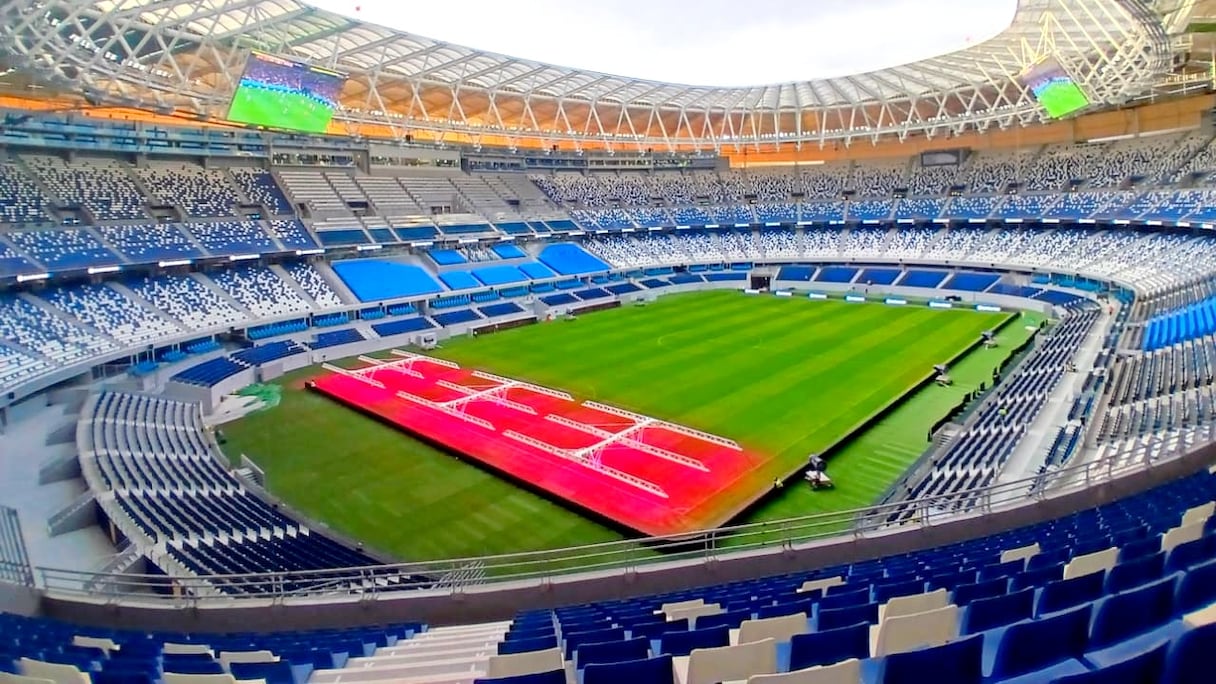
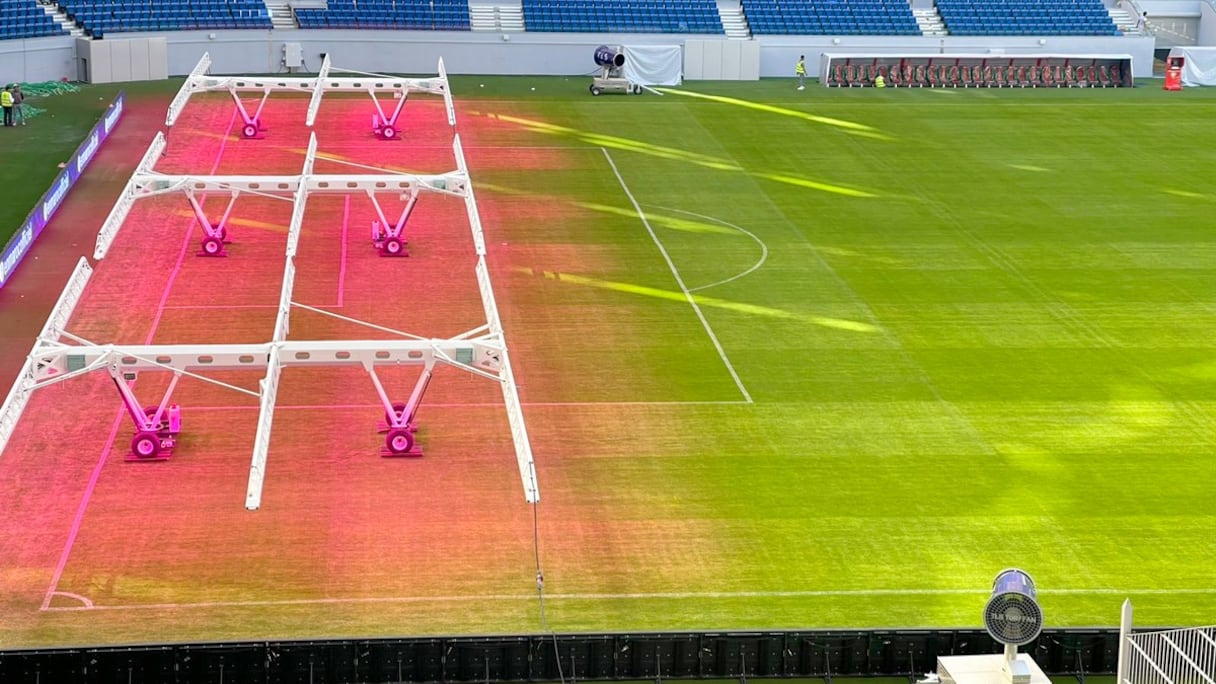
Tangier Grand Stadium.. le360
The front stands may also be expanded, potentially raising the stadium’s capacity to more than 90,000 spectators.
According to sources cited in the report, Tangier Grand Stadium is expected to become a major international sporting venue by 2028, as part of the planned Ziatene Sports Village west of the city. Morocco is counting on the stadium to host high-profile World Cup matches and welcome national teams from around the world.
The stadium currently accommodates more than 75,500 spectators. Its white and blue seats, reflecting Tangier’s visual identity, are distributed across three levels: lower, middle and upper stands. The venue also has a dedicated hospitality section and VIP and VVIP lounges with direct views of the pitch.
The main hospitality platform can accommodate 210 guests, while the stands reserved for special guests have a capacity of 1,300. The stadium also has 142 private boxes, each seating between 10 and 20 people.
One of its main features is a hybrid natural playing surface that combines natural grass with synthetic fibers. The technology is designed to improve drainage, durability and recovery, while maintaining playing quality and supporting player safety. Different grass varieties were grown in the outskirts of Tangier for the pitch.
The stadium’s facilities also place particular emphasis on the comfort of players, spectators and media professionals. It has four team changing rooms, twice the number generally required under standard regulations. Other facilities include post-match recovery areas, physiotherapy and massage rooms, cryotherapy rooms, equipped warm-up areas, offices for coaches and referees, and a mixed zone covering more than 500 square meters.
Its media infrastructure includes a large area dedicated to international television broadcasting, designed to ensure high-quality coverage during evening and night matches. Colored lighting also adds to the appearance of the stadium and its surroundings.
Inside the venue, two giant screens have been installed, each covering 220 square meters. A perimeter screen stretches for more than 700 meters, alongside a high-quality sound system and technical rooms for managing the stadium’s screens and audiovisual systems. Two additional perimeter screens have also been installed at pitch level.
Marrakech Grand Stadium: A 3.4-billion-dirham upgrade
Renovation work at Marrakech Grand Stadium began several weeks ago, with the overall project budget set at 3.4 billion dirhams. The upgrades aim to bring the venue into line with international standards and FIFA requirements ahead of the 2030 World Cup.
The first contract, worth around 903 million dirhams, entered the implementation phase several weeks ago. It has an estimated completion period of 17 months. The stadium is expected to be ready to host international matches next year, with its capacity set to exceed 46,000 seats.
Work has already begun on the stadium’s surroundings and stands. Further operations are expected to start in the coming days to renovate all seating areas, spectator facilities and the surrounding grounds, improving reception conditions and the matchday experience.
The project also covers upgrades to technological and audiovisual equipment used for coverage, broadcasting and advertising, as well as camera systems and other advanced technical infrastructure found in major international stadiums.
Hospitality and VIP areas will also be developed, with new reception facilities planned. Sports and service areas will be upgraded, including changing rooms, media facilities and mixed zones.
Fez Grand Stadium: A new phase of modernization
Fez Grand Stadium is also being prepared to host 2030 World Cup matches, with work continuing to bring the venue up to the required standards.
Contracts announced several weeks ago point to a new phase of technical upgrades. Renovation work has already been carried out inside and outside the stadium, following earlier improvements to parts of the facility, including its facade, stands and other areas.
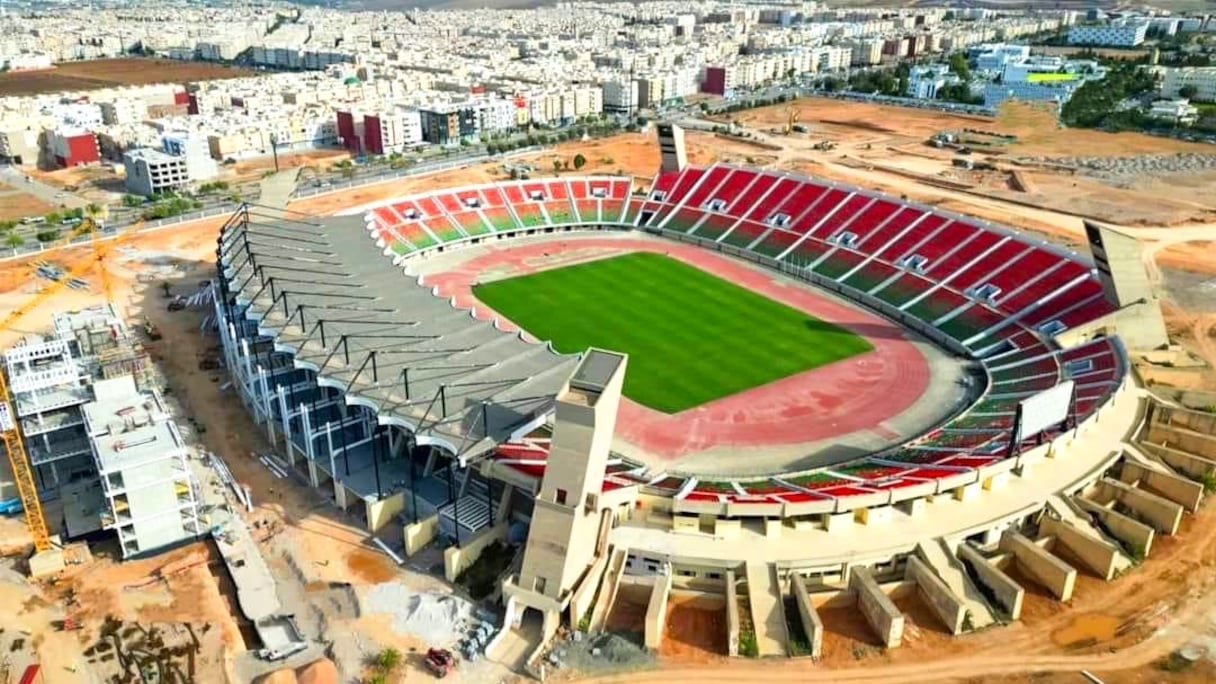
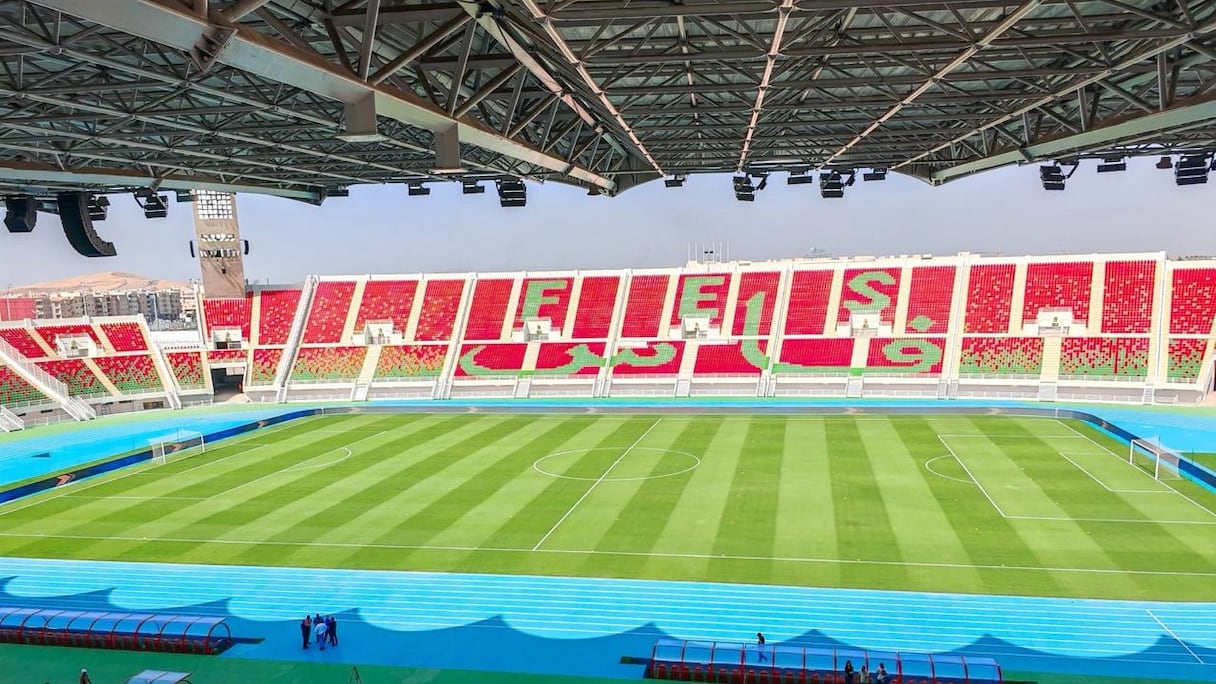
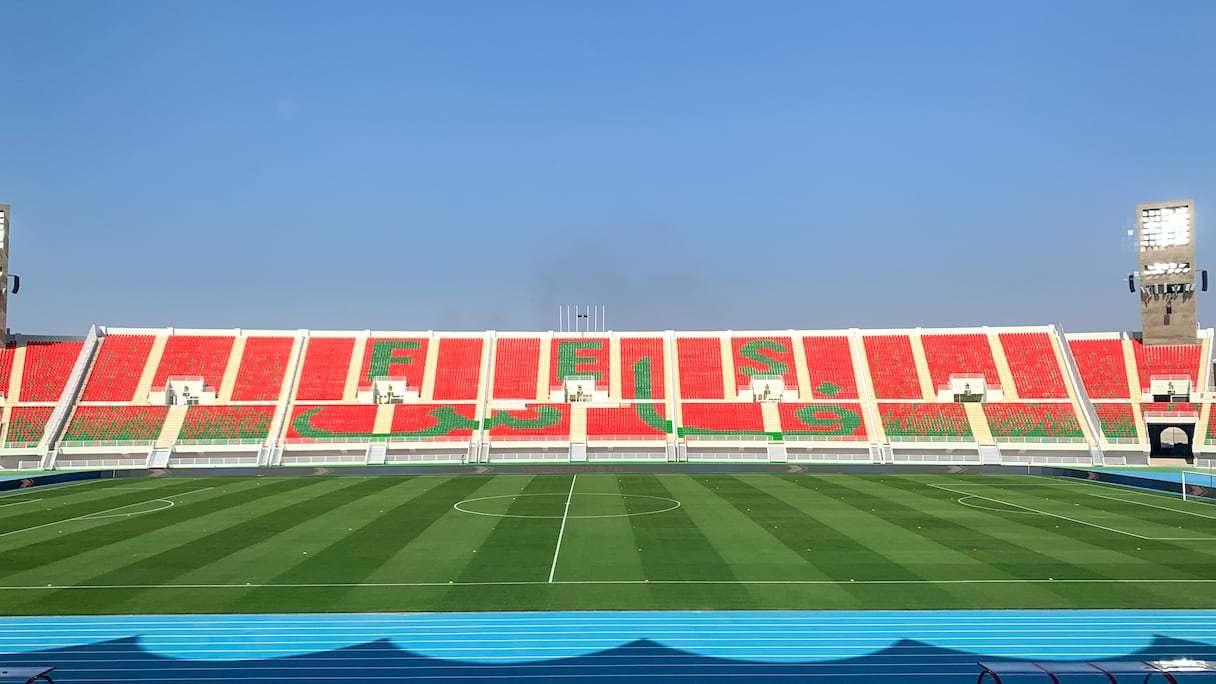
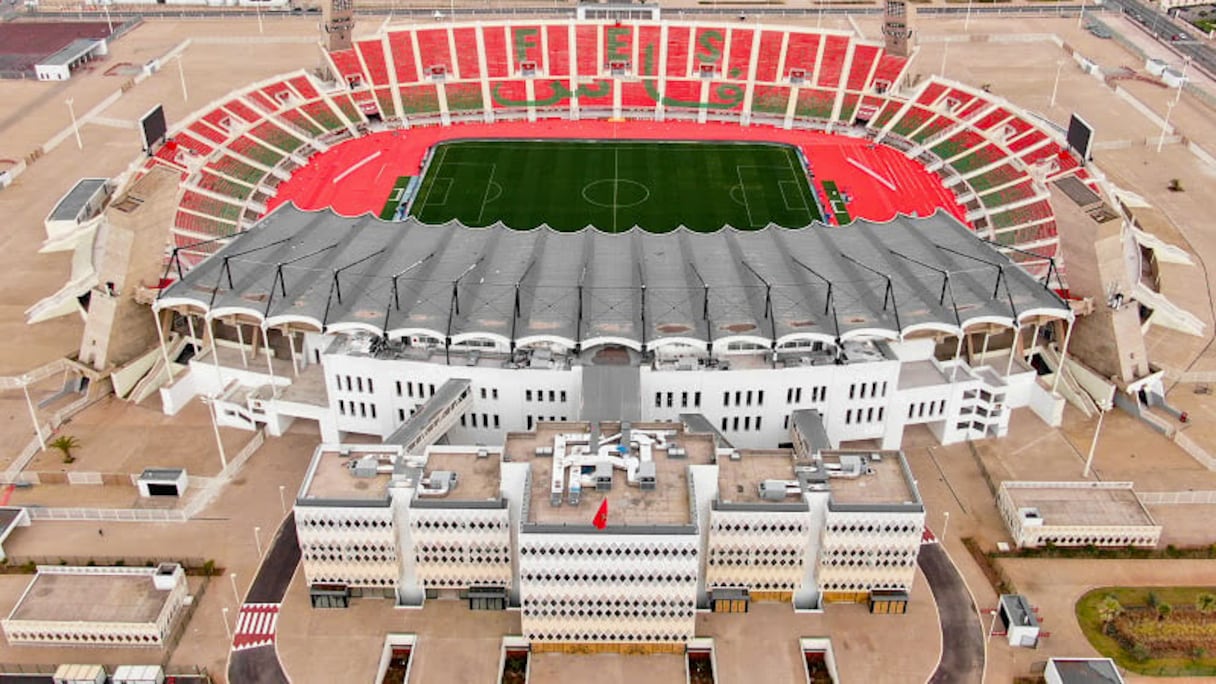
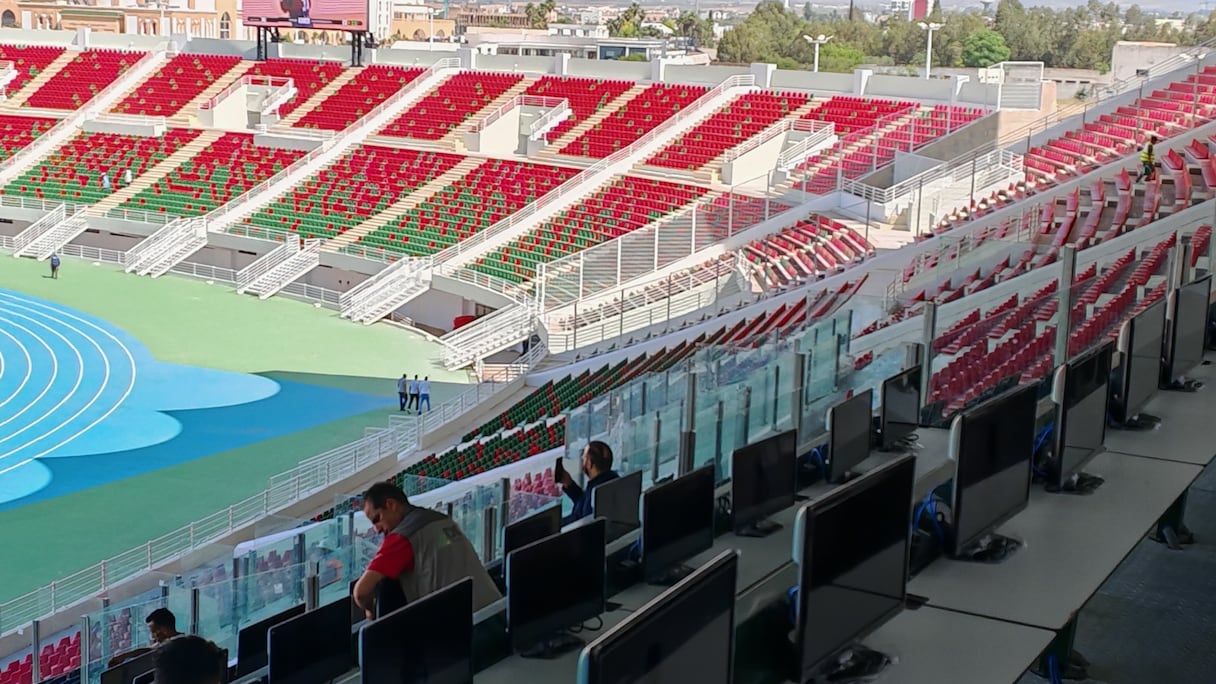
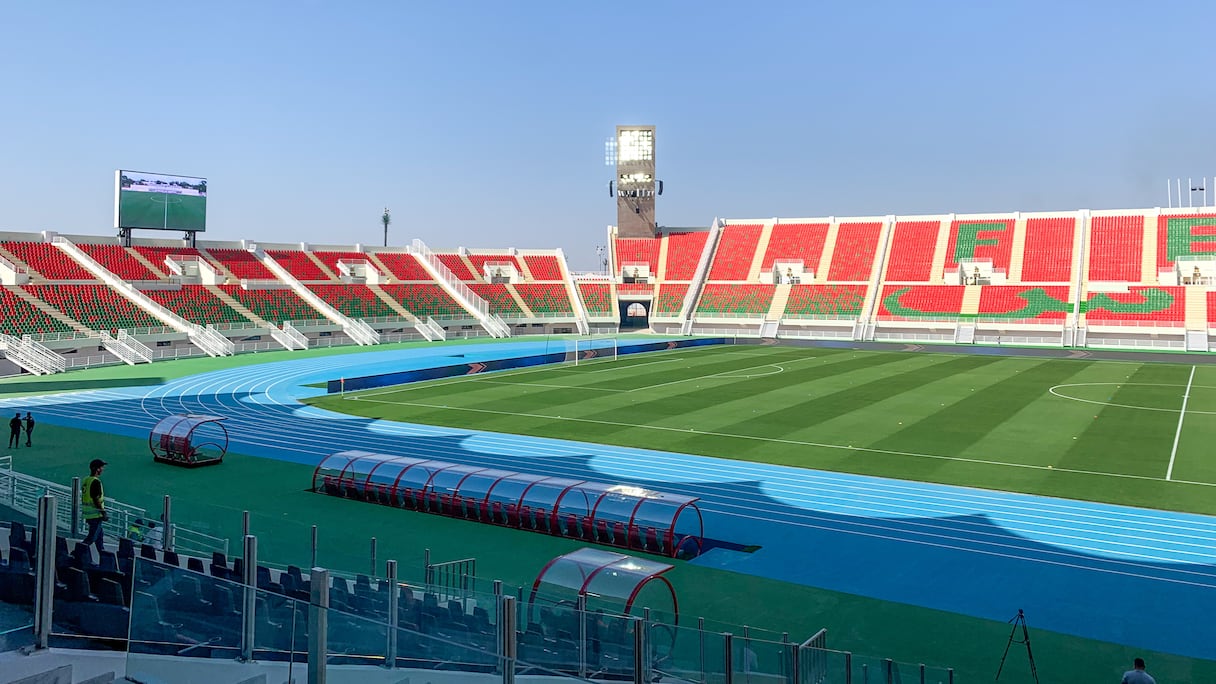
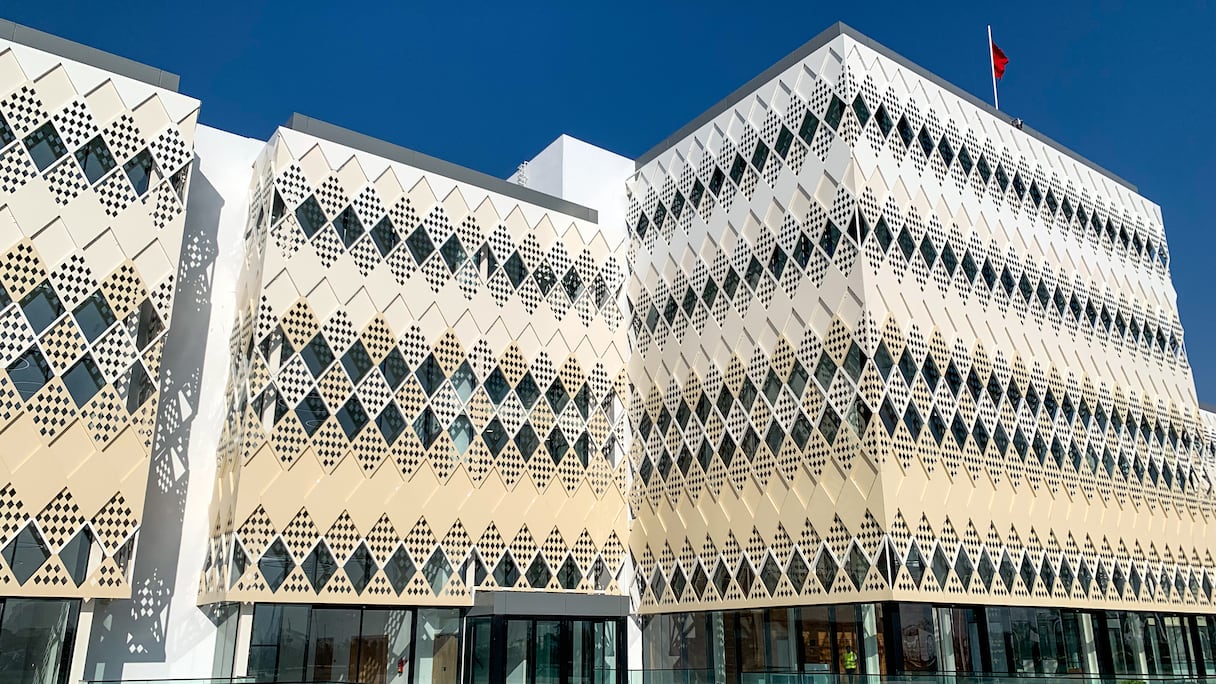
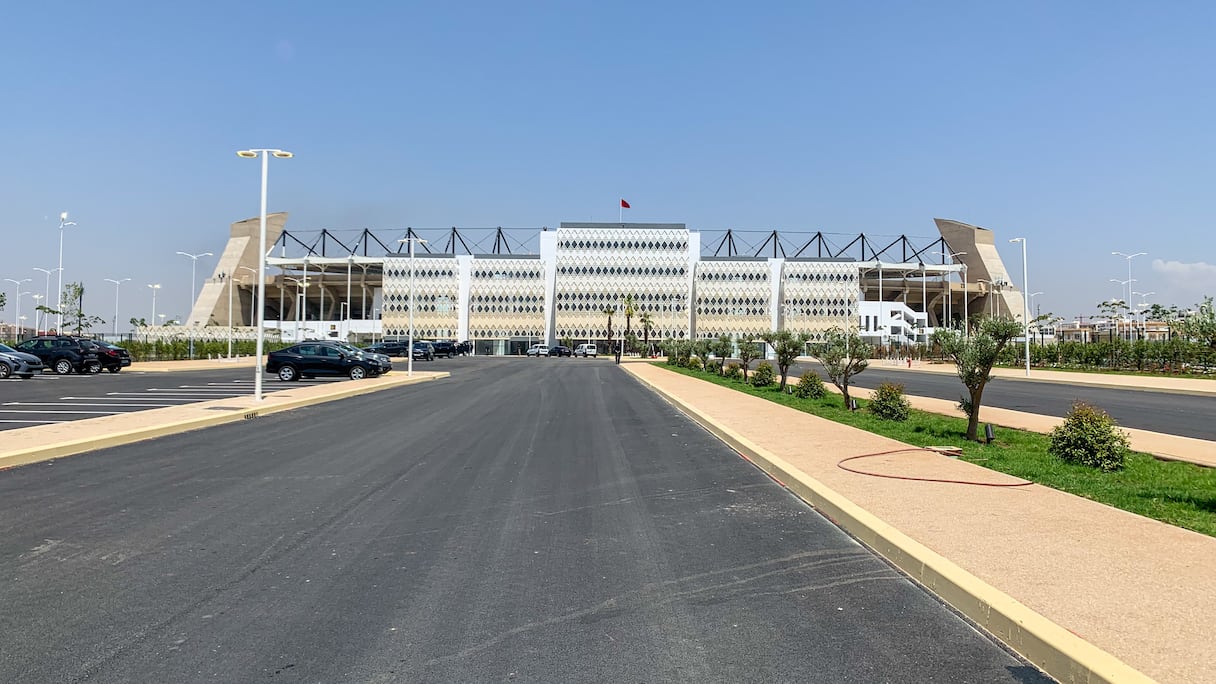
Fez Grand Stadium enters a new phase of upgrades ahead of the 2030 World Cup.. Le360
The next phase will cover several technical systems, including specialized lighting, fire detection and automatic fire suppression, IT and telephone networks, wireless communications and access control. It will also involve technical installations beneath and around the stadium.
Other planned equipment includes LED perimeter screens, sound systems and safety audio systems, a conference hall, broadcasting networks, clocks, centralized technical management systems and television distribution infrastructure.
The National Agency for Public Facilities launched two international tenders several weeks ago, with a combined estimated value of 1.52 billion dirhams. The contracts cover essential equipment needed to modernize the stadium and prepare it to host major sporting events in line with international standards.
The first tender covers high-voltage and low-voltage electrical systems, with an estimated budget of nearly 1.29 billion dirhams. The second concerns fluid systems and has an estimated value of more than 228 million dirhams.
Both contracts are expected to move into the implementation phase once the tender procedures have been completed. Their launch marks another step in the modernization of Fez’s stadium, which is expected to be ready before 2030 to host national and international sporting events.
