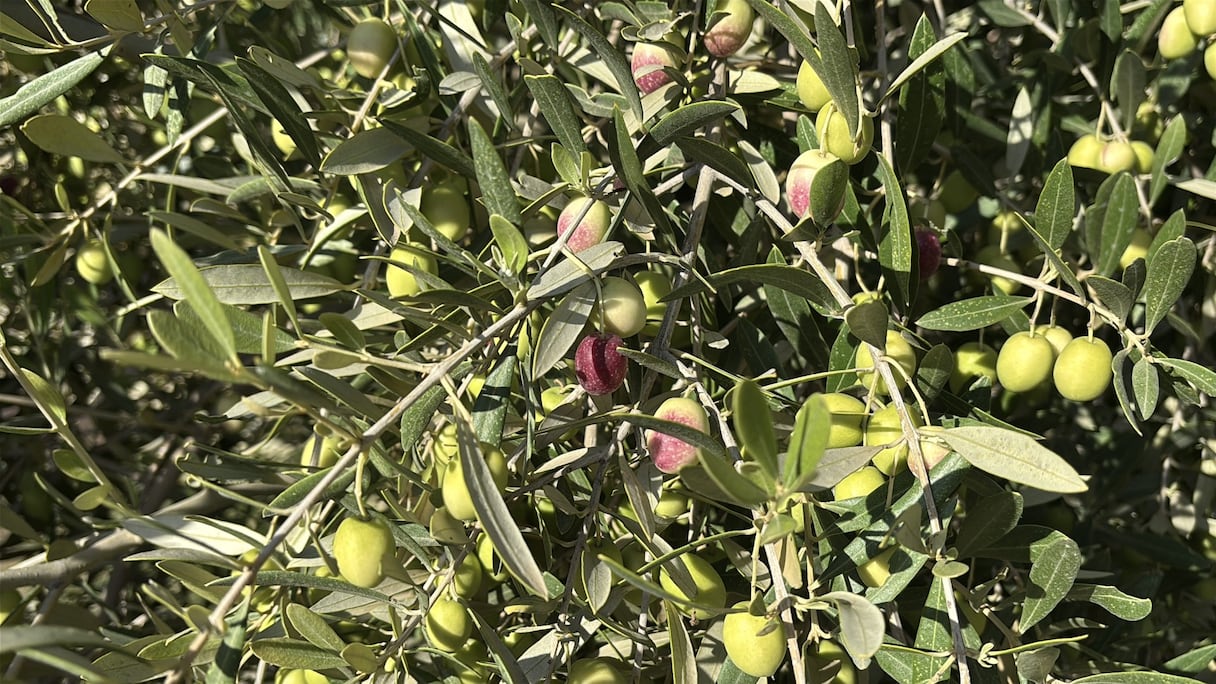
The olive harvest is now underway in Guercif, where farmers initially welcomed this year’s abundant crop with optimism. But higher production does not necessarily mean higher incomes for growers, who continue to face labor shortages, increased harvesting expenses and difficulties selling their olives.
Hammou Hihi, a farmer in the commune of Houara Oulad Raho in Guercif province, says the plentiful harvest stands in contrast to the economic difficulties facing producers. He points to the shortage of agricultural workers as one of the main concerns this season.
Several farmers have been forced to bring in workers from other provinces because they cannot find enough labor locally. This adds to their expenses, as they must cover transportation, accommodation and meals for the workers, raising the overall cost of harvesting.
Marketing is another major challenge. According to Hihi, olives are currently selling for between 3 and 3.5 dirhams per kilogram, while production costs are close to 3 dirhams. This leaves farmers with a very narrow margin, despite the investments they make throughout the year to maintain, irrigate and treat their trees.
Read also : Heat, export demand and rising costs drive up vegetable prices in Casablanca
A widening gap between producer and consumer prices
Hihi also points to a significant gap between the prices farmers receive and those paid by consumers. Some processing facilities reportedly buy olives at relatively low prices before selling them, after processing, for around 10 dirhams per kilogram. Retail prices in markets can then reach between 30 and 37 dirhams.
He argues that the situation hurts both farmers, whose profit margins remain limited, and consumers, who face high prices.
The farmer is calling for better oversight of marketing channels, greater transparency in transactions and stronger promotion of Moroccan olive oil in domestic and international markets. He points to Spain and Tunisia as examples from which Morocco could draw lessons.
