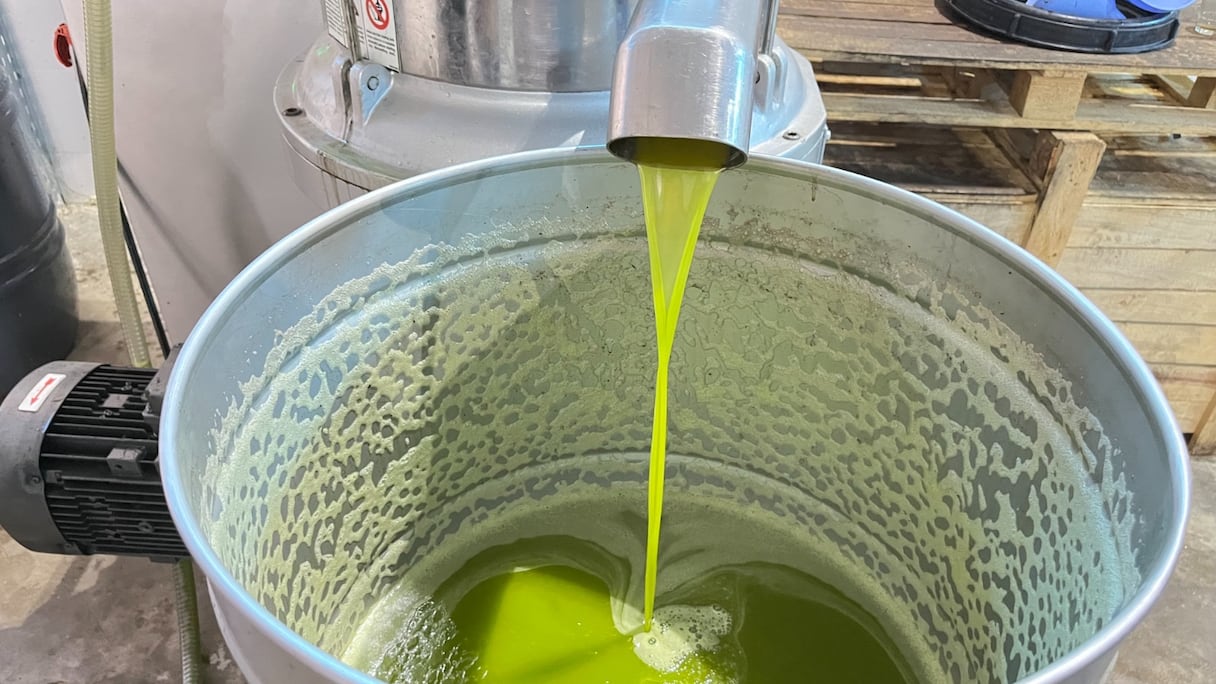
Activity is in full swing in the province’s olive groves and oil mills, where the olive harvesting and pressing season got underway in late October. Initial estimates point to production well above last season’s levels, supported by the substantial rainfall recorded in recent months.
The improved yields are expected to ease olive oil prices in the coming weeks as larger quantities reach the market.
During a visit to several localities in the province, Le360’s camera captured the acceleration of harvesting operations on farms and increased activity at olive presses. From picking the fruit to processing it into oil, the annual campaign mobilizes an entire local economic chain.
Industry professionals explain that processing units use lukewarm water during extraction to preserve the oil’s natural aromas and nutritional properties. Farmers are also hoping for further rainfall in the coming weeks, which would provide more water for the olive trees and help improve yields before the harvest ends.
Abdelmalek El Mabrouki, a trader operating in Moulay Yacoub province, points to the distinctive character of the area’s olive-growing heritage, which includes trees, some more than a century old. The region has preserved several traditional varieties passed down through generations, while some farms continue to use age-old harvesting methods, including beating the branches with sticks to make the olives fall.
On the market, a kilogram of olives currently sells for between MAD 3.5 and MAD 5.5. According to El Mabrouki, 100 kilograms of olives generally yield between 17 and 18 liters of oil, with production occasionally reaching 19 liters.
The quality of the region’s olive oil is also linked to soil characteristics and altitude. At the start of the season, the oil is distinguished by its deep green color and concentrated flavor, qualities appreciated by olive oil enthusiasts.
A liter currently sells for around MAD 40, already below the price recorded during the previous season. El Mabrouki expects rising supply and improved weather conditions to push prices down further.
He forecasts that prices will fall below MAD 30 per liter as the season progresses and the olives reach full maturity. However, he notes that oil extracted early in the season remains particularly attractive to consumers despite its higher price.
Younes Mokrane, another trader in the region, recalls previous seasons marked by scarce production and a sharp rise in prices. Olive oil had reached MAD 70 per liter and even exceeded MAD 90 at some points of sale.
Read also : Heat, export demand and rising costs drive up vegetable prices in Casablanca
Prices could fall to MAD 25 per liter
Against this backdrop, Mokrane considers an opening price of around MAD 40 per liter a sign that the market is returning to balance. He expects the gradual increase in available quantities to put further downward pressure on prices over the coming weeks.
Mokrane does not rule out the possibility of prices reaching MAD 25 per liter in some transactions. He also expects prices could stabilize between MAD 35 and MAD 40, offering households some relief after several years of rising olive oil costs.
To support his forecasts, the trader points to the large quantities of olives arriving at the region’s main markets. The center of Karia Ba Mohamed, in particular, receives shipments ranging from 300 to 600 tons, in addition to the volumes transported daily to weekly markets and surrounding villages.
If industry forecasts prove accurate, this season could gradually bring more affordable prices for consumers following the sharp price pressures recorded in previous years.
