The Ministry of Agriculture, Maritime Fisheries and Food Sovereignty announced the progress in a statement following a field visit to the Dakhla-Oued Eddahab region on Friday, October 30, 2026, led by Minister Khalid Hatimy. The ministry said the seawater desalination plant and the development of a new irrigated agricultural area were nearing completion.
The wind farm is already operational, while construction of the desalination plant and irrigation network has reached 97% and 99% completion, respectively, the ministry said.
Located in the commune of Bir Anzarane, the project has three main components: a seawater desalination plant, a wind farm with an installed capacity of 60 megawatts, and a 130-kilometer irrigation network.
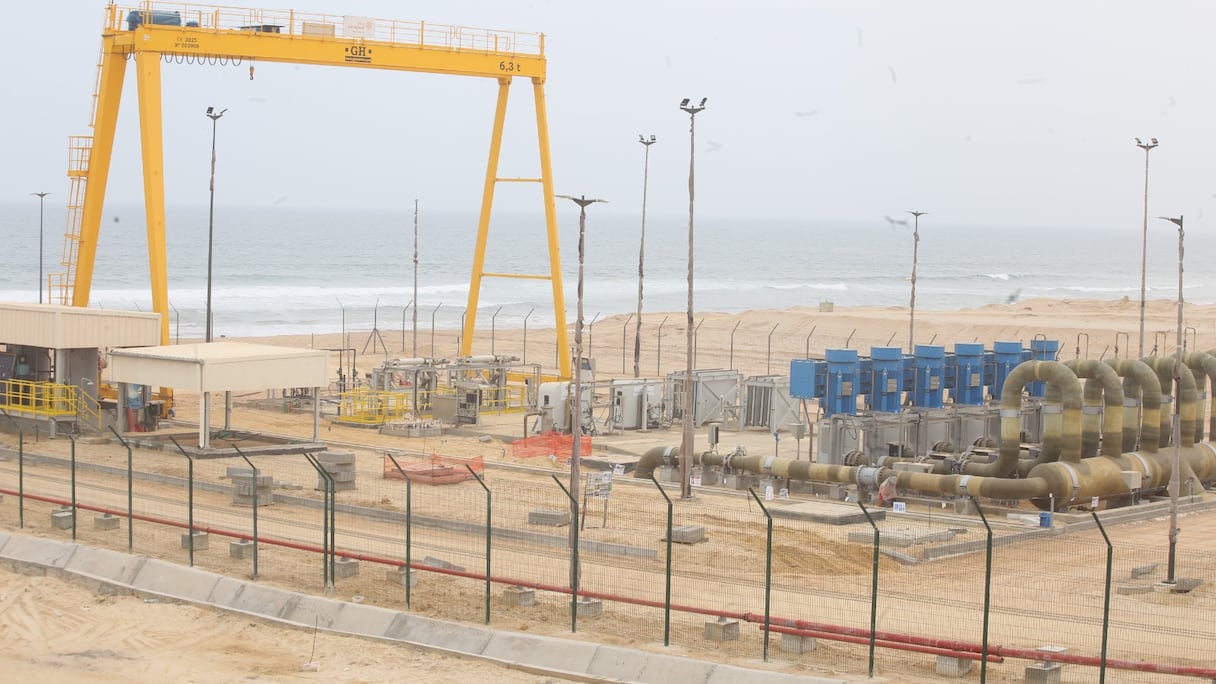
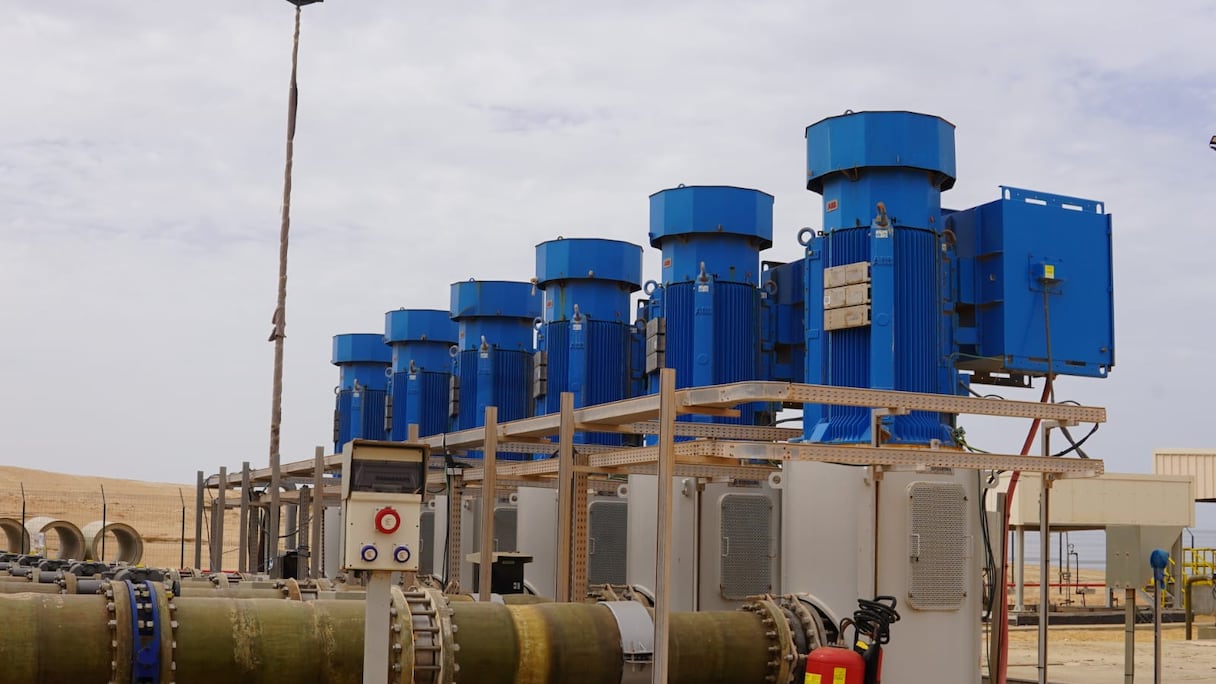
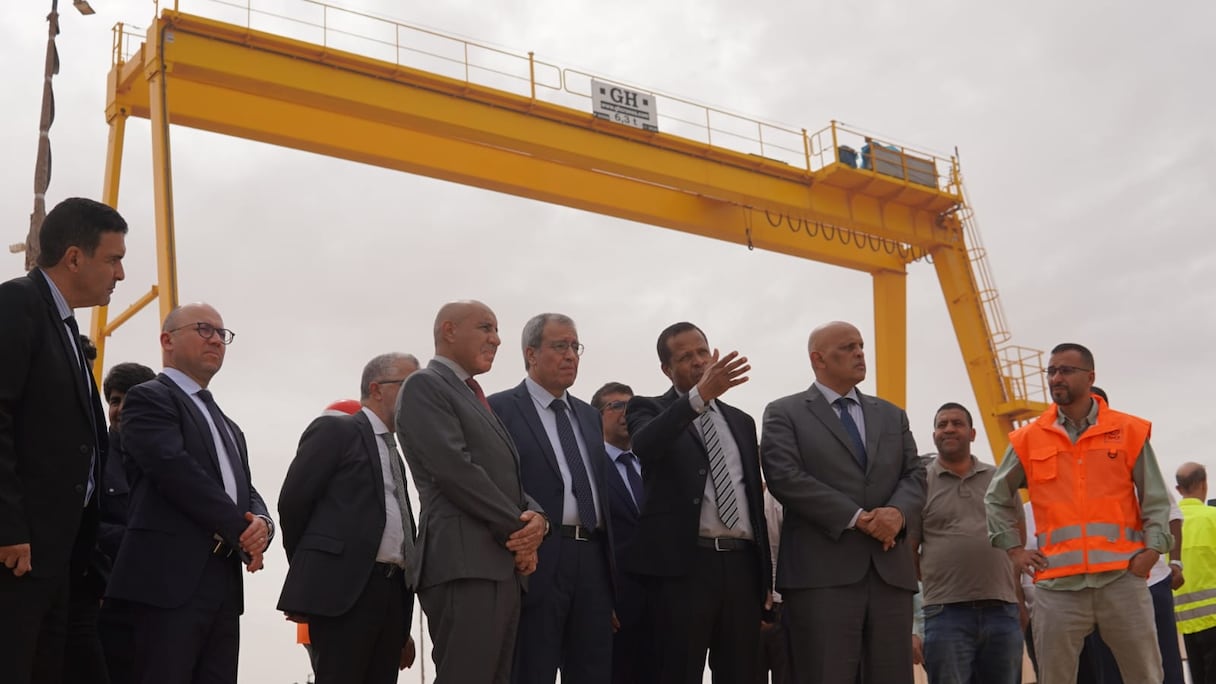
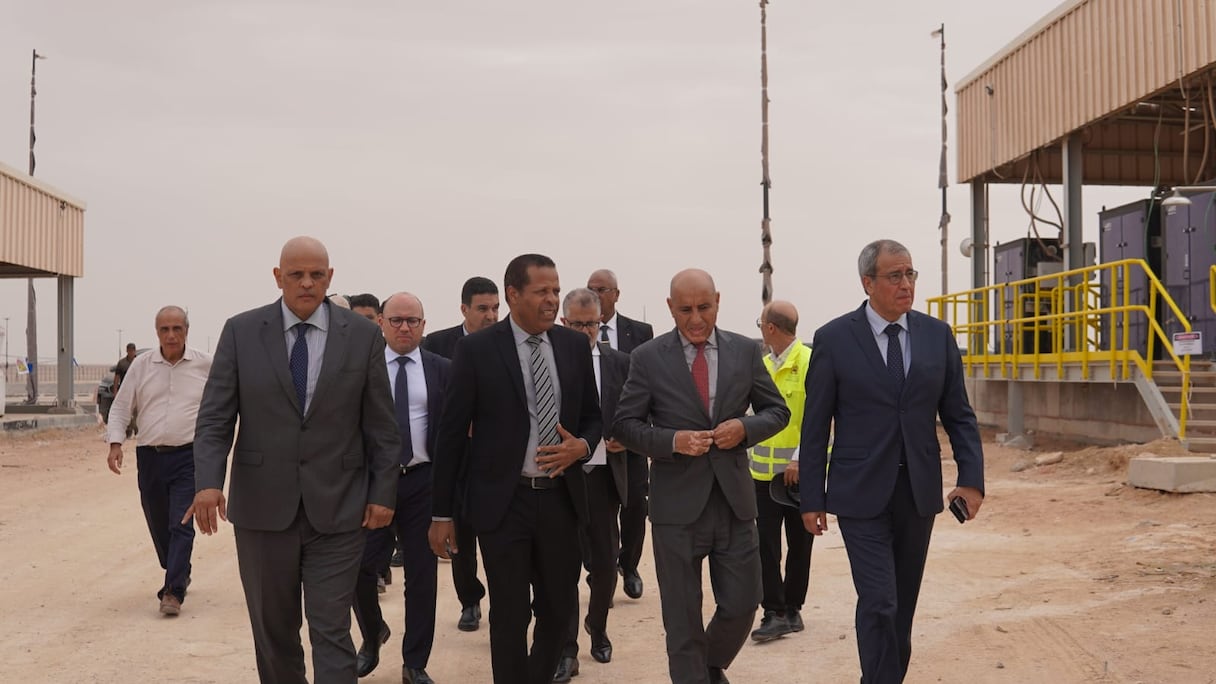
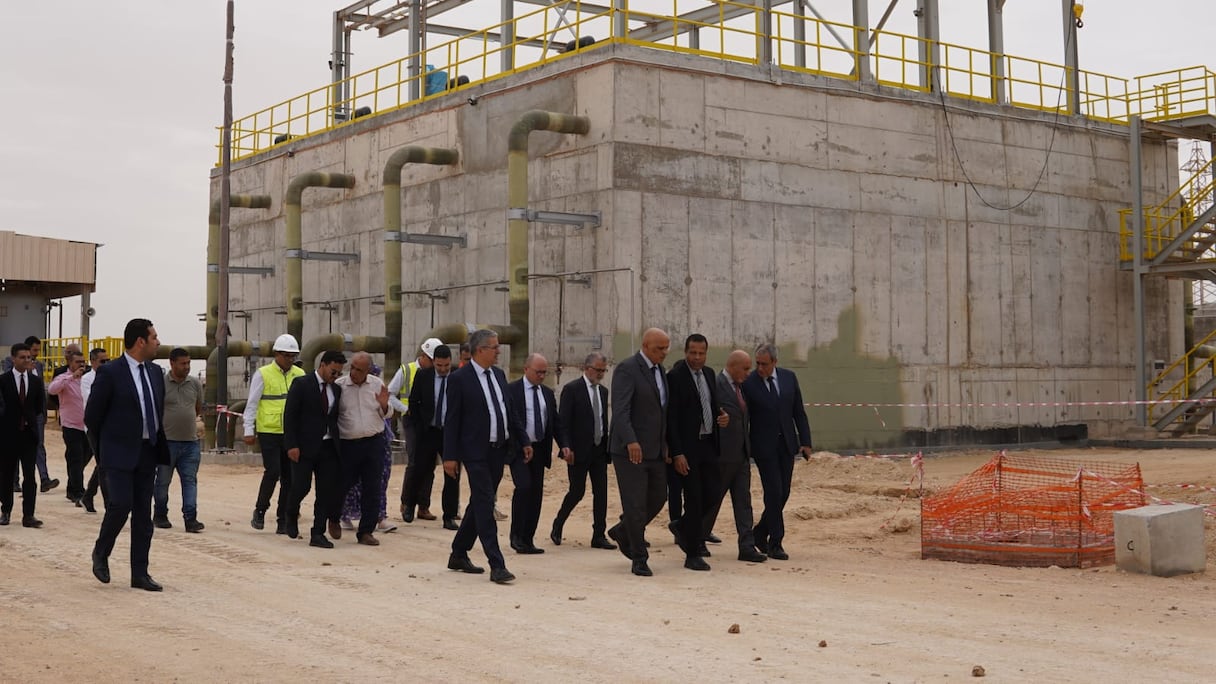
A delegation of officials visits the desalination project in Dakhla.
The visit was part of the monitoring of major strategic projects in the Kingdom’s southern provinces and coincided with Unity Day celebrations. Hatimy was accompanied by the region’s wali, the governor of Oued Eddahab province and a delegation of ministry officials.
King Mohammed VI launched the project on the occasion of the 40th anniversary of the Green March. It forms part of the New Development Model for the Southern Provinces.
An investment of 2.6 billion dirhams
With a total investment of around 2.6 billion dirhams, the project aims to secure a sustainable water supply for irrigation and drinking water. Its annual production capacity of 37 million cubic meters will be divided between 30 million cubic meters for irrigation and seven million cubic meters for drinking water.
The project will provide irrigation for an agricultural area covering 5,000 hectares while helping preserve Dakhla’s groundwater reserves by replacing underground water with a non-conventional water resource.
Read also : Morocco’s 2027 budget: Dam, desalination and irrigation projects, region by region
Designed to support sustainable agricultural development, the project aims to diversify and increase production of high-value crops, strengthen agricultural activity in the region and draw on private-sector expertise to support local development.
As part of the development of the new agricultural area, 100 small-scale projects, each covering between five and 10 hectares, have been earmarked for young people from the region. Those selected will receive comprehensive support to help them establish and develop their projects.
Once fully operational, the project is expected to generate around 500,000 tonnes of early-season crops, create 30,000 permanent jobs and produce more than 1 billion dirhams in added value.
