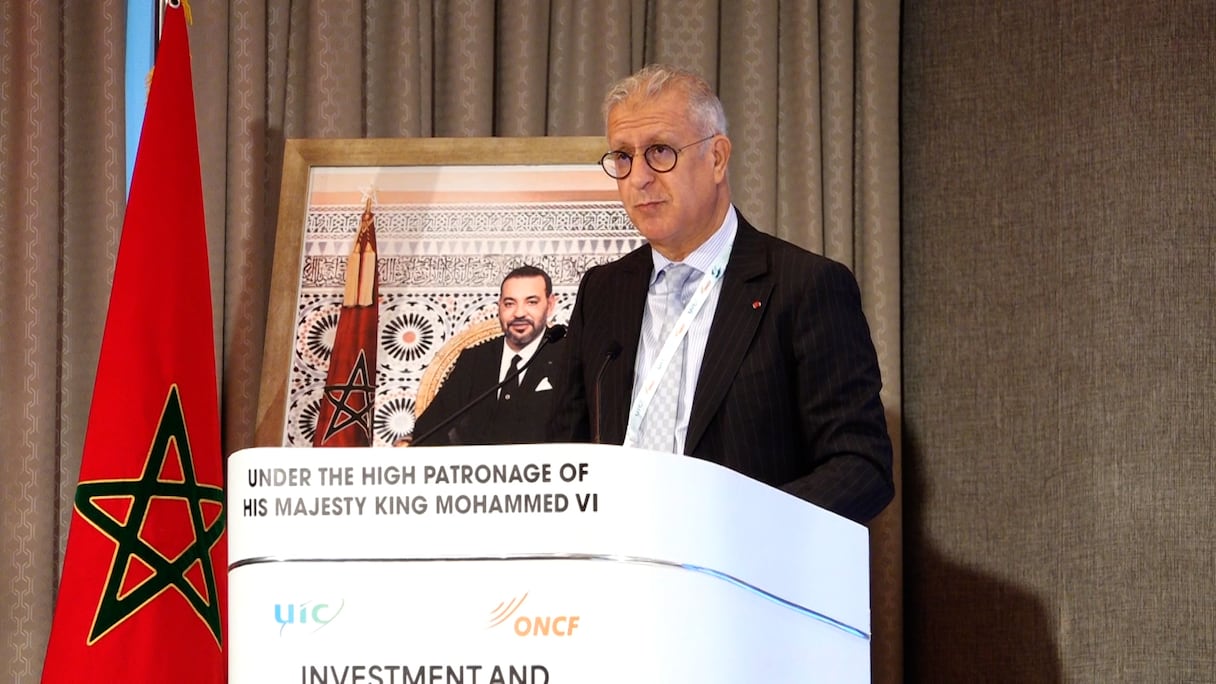
A two-day forum in Rabat is examining how carbon markets and carbon credits can help finance railway projects in Africa, with experts and investors looking at ways to speed up low-carbon investment and strengthen the conditions for rail transport development.
Held under the high patronage of King Mohammed VI, the Forum on Investment and Financing Solutions for the Future of Rail Transport in Africa takes place on October 14 and 15, 2026. It is co-organized by the International Union of Railways (UIC) and Morocco’s National Railway Office (ONCF).
Opening the forum, ONCF Director General Mohamed Rabie Khlie said the momentum launched in Morocco in 2025 would translate into more than 55 million passengers carried annually and a historic investment program exceeding €10 billion by 2030.
The program includes extending the high-speed rail line from Tangier to Marrakech, covering 630 kilometers. ONCF also plans to acquire 168 trains and develop regional express rail services in major urban areas by 2030.
Khlie said he expected experts and investors to put forward recommendations on “innovative financing for faster rail expansion by promoting low-carbon funding.” He stressed that rail transport is environmentally friendly and therefore “eligible for financing linked to carbon emissions reductions.”
“Working with the UIC, we must engage with United Nations bodies and the relevant carbon-regulation authorities to explore ways to mobilize innovative financing focused on reducing carbon dioxide emissions,” he said.
UIC Director General François Davenne told the press that the organization had “a technical role.” He added that making railway infrastructure projects easier to finance was becoming increasingly important, despite the complexity of international mechanisms.
The forum’s program includes roundtable discussions on financing opportunities through international institutions, including the European Union, the World Bank and the African Development Bank.
