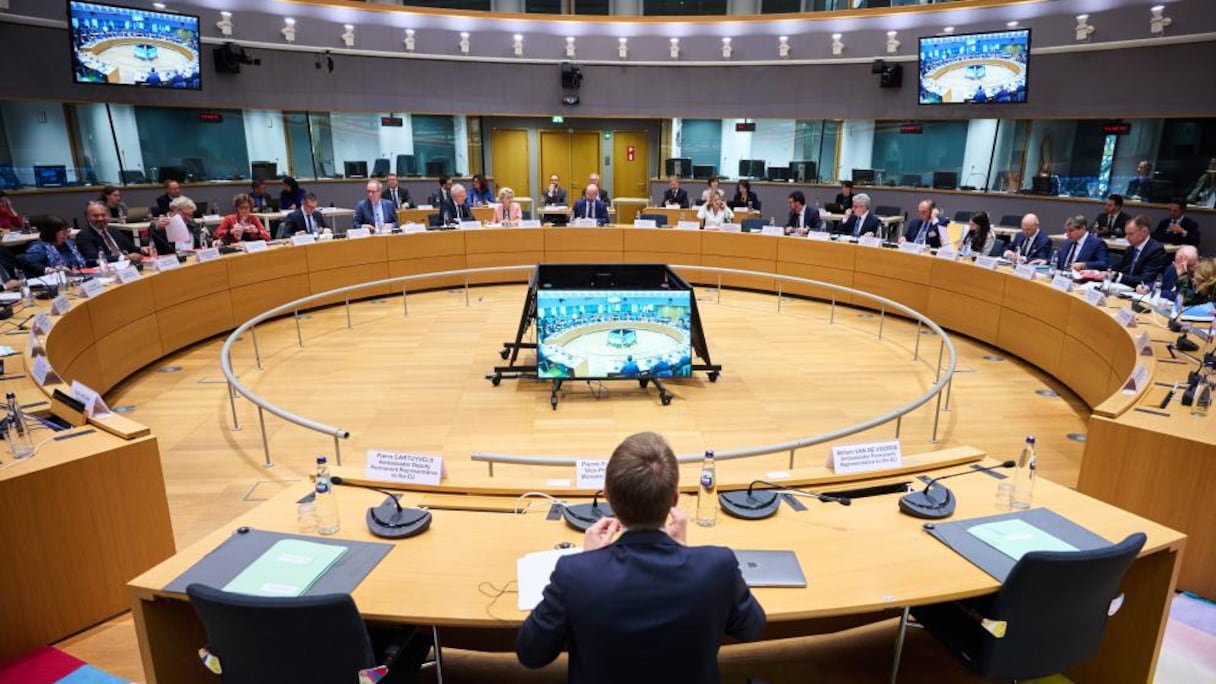
African countries are, by and large, cooperating with the European Union on tax matters, although work remains to be done. On October 9, 2026, the Council of the European Union updated its list of non-cooperative jurisdictions for tax purposes.
Panama and Vietnam were removed from the blacklist. Eight jurisdictions remain on Annex I: American Samoa, Anguilla, Guam, Palau, Russia, the Turks and Caicos Islands, the US Virgin Islands and Vanuatu. None is African. That is the first significant takeaway.
Africa as a whole has avoided the EU blacklist. But Annex II, which covers jurisdictions cooperating with the EU while still working to fulfill certain commitments, keeps Morocco and Eswatini under scrutiny.
Seven other African economies—Botswana, Cabo Verde, Mauritius, Namibia, Seychelles, South Africa and Tunisia—are among the cooperating jurisdictions with no outstanding commitments. The distinction deserves closer examination.
Read also : Digital currencies: What Morocco can learn from Nigeria, Kenya, Mauritius and Egypt
Since the EU began the exercise in 2017, dozens of jurisdictions have moved on and off its lists. The complete absence of African countries from Annex I in October 2026 is therefore significant. The Council explains that the blacklist covers countries that “do not comply with agreed international tax standards or have failed to fulfill their tax good governance commitments within a specified timeframe.”
No African country falls into that category in the Council’s October 9 communication. This does not make the continent a model of impeccable tax governance. It means that, under the EU’s assessment process, the outstanding issues involving African jurisdictions have either been resolved or are being addressed through Annex II.
The Council itself says the latest update “reflects a positive trend towards compliance with international tax good governance standards.” That observation applies to Africa too. It also “particularly welcomes” the fact that several jurisdictions listed since 2017 have met all the criteria for removal. Although Africa is not singled out, the assessment applies to several countries on the continent.
Read also : African Aviation: Top 10 Airports by Seat Capacity in August 2026
Morocco and Eswatini remain on Annex II
Annex II is not a blacklist. It is a monitoring document, reflecting the EU’s continued cooperation with international partners and their commitments to reform domestic legislation in line with agreed standards of good tax governance. Appearing on it is not, in itself, a mark of disgrace. Remaining there indefinitely, however, can become a reputational liability.
Morocco is listed over its implementation of country-by-country reporting, the minimum standard established under Action 13 of the Base Erosion and Profit Shifting (BEPS) framework. BEPS refers to the practice of eroding taxable income and shifting profits between jurisdictions.
The Council says Morocco has committed to addressing shortcomings identified in its domestic framework “in time to be reflected in the BEPS Action 13 peer review report in autumn 2026.”
In other words, the deadline is approaching. Morocco is not being accused of refusing to cooperate; it is working through a technical compliance process. The stakes are nevertheless substantial: country-by-country reporting concerns the transparency of multinational companies and how their profits are allocated.
Eswatini, meanwhile, is listed over a preferential tax regime. The Council notes that the country “committed to amend or abolish a preferential tax regime within the scope of the Forum on Harmful Tax Practices (FHTP) by 31 December 2023” and is “awaiting a final FHTP assessment.”
The regime in question concerns a special economic zone. It is a sensitive issue. Such zones are frequently used to attract investment, but they can also facilitate tax avoidance when economic substance requirements are not met. Eswatini is therefore awaiting an assessment, rather than refusing to address the problem.
Seven African countries with no outstanding commitments
Alongside these two cases, Botswana, Cabo Verde, Mauritius, Namibia, Seychelles, South Africa and Tunisia appear among jurisdictions that “cooperate with the EU and have no outstanding commitments.” They are covered by the European screening process but appear on neither Annex I nor Annex II. Once a jurisdiction has fulfilled all its commitments, “its name is removed from the annex.”
This is not a ranking of countries by absolute tax integrity. It means only that, under the EU’s criteria—tax transparency, fair taxation and measures to prevent base erosion and profit shifting—these seven countries have no commitments awaiting fulfillment. For African economies that often depend heavily on foreign investment, that sends a reassuring signal about regulatory stability.
The Council’s timeline shows that progress has not followed a straight line. Namibia was removed from the list in November 2018, while Tunisia came off in January 2018. Morocco was deemed to have fulfilled all its commitments in February 2021, before being placed on Annex II again in October 2025 over country-by-country reporting.
Read also : African airlines weighed down by 10 burdens holding back their growth
Seychelles was removed from the blacklist in October 2021, subsequently placed on Annex II and then blacklisted again in October 2023 before being removed in February 2024. Eswatini came off Annex II in October 2021 after implementing the necessary reforms but returned in 2026 pending the final assessment of its special economic zone.
These changes in status are not necessarily evidence of failure. They show that the list is a living instrument, reviewed twice a year. The Council has scheduled its next review for February 2027. For African countries, the challenge is to avoid becoming permanent fixtures on Annex II.
Statements by European officials help explain the thinking behind the exercise. Peter Kažimír, then Slovakia’s finance minister and president of the Council, said the EU wanted “to encourage, not punish.” It is an important distinction for African countries. The list is intended not as a tribunal but as a means of encouraging dialogue.
In 2020, Zdravko Marić, Croatia’s deputy prime minister and finance minister, made a similar point: “Work on the list of non-cooperative tax jurisdictions is based on a rigorous process of assessment, monitoring and dialogue with around 70 third-country jurisdictions. Since the launch of this initiative, 49 countries have implemented the necessary tax reforms to comply with EU criteria. This is an undeniable success. But it is also an ongoing effort and a dynamic process in which our methodology and criteria are constantly reviewed.” The same assessment applies to Africa. Several countries have introduced reforms, but the standards themselves continue to evolve.
Read also : Investment freedom in Africa: The 20 best-ranked countries in 2026
The Council sets out its criteria in detail. Criterion 1.1 concerns the automatic exchange of information. Criterion 1.2 covers membership of the Global Forum and a satisfactory rating for the exchange of information on request. Criterion 2.1 addresses harmful tax regimes, while criterion 2.2 concerns economic substance requirements. Morocco’s case falls under BEPS Action 13 and therefore country-by-country reporting. Eswatini’s concerns criterion 2.1. Crucially, no African country appears on Annex I for any of these reasons in October 2026.
Turkey’s case, involving the automatic exchange of information with an EU member state, shows that Brussels is prepared to maintain pressure even over longstanding issues. For Africa, the message is that commitments must be honored on time. The Code of Conduct Group, chaired since September 2026 by Cezary Krysiak, continues its dialogue with the jurisdictions concerned.
In a world where taxation has become a matter of both sovereignty and economic competitiveness, Africa has much at stake. Its absence from the EU blacklist is welcome news. But with two African countries still under scrutiny, the lesson is clear: good tax governance is a marathon, not a sprint.
