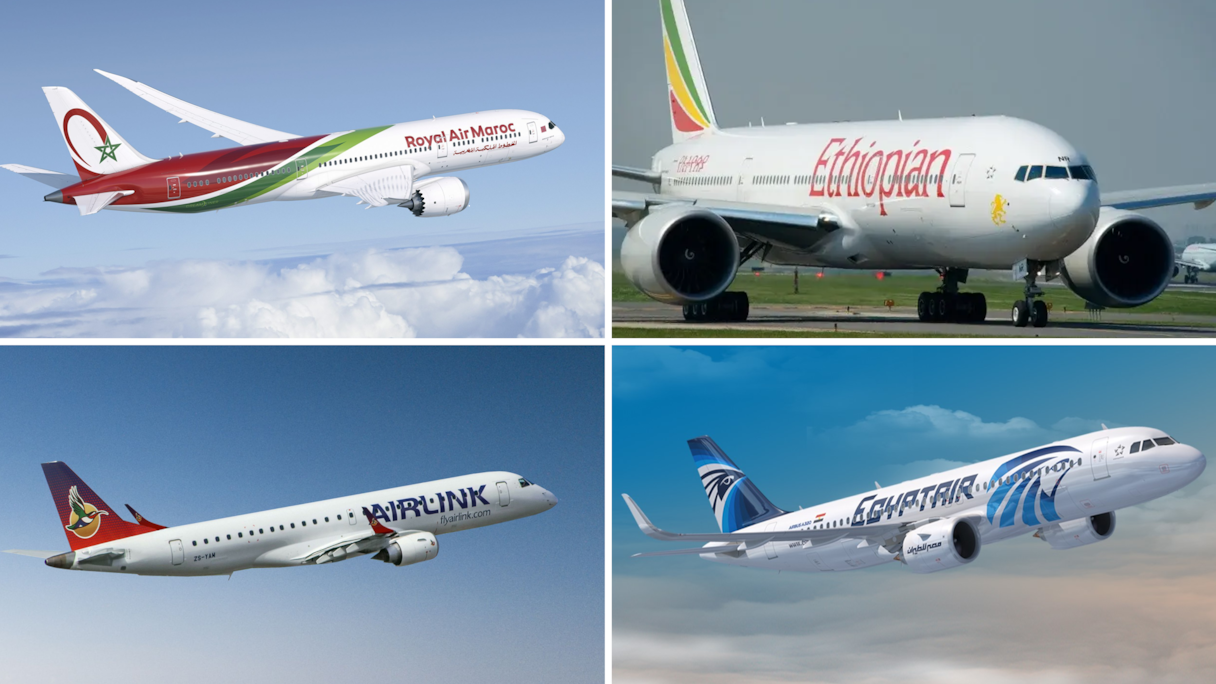
African airlines carried 113 million passengers in 2025, and that figure is expected to jump to 137.3 million this year, a 21.5% increase. Yet despite this rapid growth in passenger traffic, their average net profit margin is expected to stand at just 0.2%.
With passenger traffic rising sharply while profit margins remain extremely thin, the African Airlines Association (AFRAA) brought together governments, regional institutions and financial partners on September 10, 2026, at Nairobi’s Sarit Expo Centre under the theme “Resilient African Aviation: Partnerships, Empowerment, Profitability.”
AFRAA’s 50 member airlines, which carry more than 85% of international traffic on the continent, are facing record demand while struggling with some of the most difficult financial conditions in the global aviation industry. Passenger traffic is expected to reach 137.3 million in 2026, up 21.5% from 2025.
Yet the airlines are expected to record an average net margin of just 0.2% in 2026, while an AFRAA publication projects an average net margin of 1.3%. The two figures differ by 1.1 percentage points, with the 0.2% estimate being 6.5 times lower than the 1.3% projection.
In either case, African carriers are operating with one of the thinnest profit margins in the world, leaving airlines with almost no room to absorb additional costs. The situation is particularly difficult given that the International Air Transport Association (IATA) sharply downgraded its outlook for African airline profitability during the first half of 2026.
In December 2025, IATA forecast a profit of $1.30 per passenger for African carriers, compared with a global average of $7.90. By June 2026, it had revised that figure down to 40 cents per passenger.
The region’s net margin fell from 1.0% to 0.2% over the same period, while total regional profit was almost halved, dropping from around $200 million to approximately $100 million.
The contrast is particularly striking for a continent with a population of 1.58 billion, a median age of 19 and economies growing by 4.3% a year, while air transport reaches only 7% of the population.
The 10 burdens and their impact
| No. | Burden | Data cited | Impact on airlines |
|---|---|---|---|
| 1 | Taxes and airport charges | 35% to 40% of ticket prices in Africa, compared with around 20% globally | Reduces demand, squeezes net revenue and weakens competitiveness |
| 2 | Funds blocked by governments | $774 million held in March 2026, the highest share worldwide | Drains cash flow, increases financing costs and reduces investment |
| 3 | Supply growth outpacing demand | Available seats are increasing faster than passenger numbers | Puts pressure on prices, strains load factors and squeezes margins |
| 4 | Fuel price volatility | A major and unstable operating cost | Makes fare and financial planning difficult and directly affects accounts |
| 5 | Airspace closures linked to conflicts | A flight-free corridor of around 4,000 km crossing Niger, Mali, Sudan and Libya | Forces rerouting, increasing fuel consumption and operating costs |
| 6 | Dependence on global aircraft deliveries | Africa: 2% of deliveries; Asia-Pacific: 35.6%; Europe: 24% | Limits fleet modernization, reduces energy efficiency and restricts access to financing |
| 7 | Airport and air navigation infrastructure deficit | Estimated need of $25 billion to $30 billion over 10 years | Creates a physical ceiling on growth and contributes to charges, delays and inefficiencies |
| 8 | Long-haul capacity deficit | African airlines account for only 37.6% of intercontinental capacity | Creates direct lost revenue and increases dependence on foreign operators |
| 9 | Aircraft maintenance carried out abroad | $1.8 billion spent each year | Sends value and jobs abroad and weakens the local value chain |
| 10 | Low air transport penetration | Only 7% of the population travels by air | Limits the revenue base and creates a structural loss of potential income |
Source: AFRAA.
“African aviation is ready to deliver on its promise to connect our economies, move our trade and drive the growth that the continent’s youth and businesses are already generating. But being ready does not mean having the capacity. Our airlines are being asked to deliver on this promise while operating with some of the thinnest margins in the world and absorbing costs, blocked funds and shocks that carriers elsewhere do not face. We call on governments to release what is owed, reduce the tax burden on air transport and turn the liberalization commitments they have already signed into reality,” said Abdérahmane Berthé, AFRAA secretary general.
Berthé’s statement reflects AFRAA’s broader assessment of the financial and structural pressures facing African aviation.
The first three burdens identified by the association are taxes and airport charges, funds blocked by governments and supply growth that is outpacing demand.
Taxes, fees and charges account for 35% to 40% of ticket prices in Africa, compared with around 20% globally.
The difference is substantial and affects more than passengers, as it reduces demand, squeezes airlines’ net revenue and makes African air transport less competitive. For carriers operating with almost no profit margin, every additional charge becomes a structural disadvantage.
Funds blocked by governments are another major pressure. Around $774 million belonging to airlines was being held in March 2026, the highest amount among all regions of the world.
These sums are not profits but revenue that has already been generated and remains unavailable to the airlines, draining cash flow, increasing financing costs and reducing investment capacity.
Recently, Algeria’s new Finance Minister, Mohamed Lamine Lebbou, issued a statement concerning the transfer of revenues belonging to foreign airlines, assuring them that their blocked funds would be transferred within a “24-hour period.” At the end of December 2025, Algeria ranked first in the world for blocked airline funds, with more than $307 million immobilized.
At the end of October 2025, 10 countries accounted for 89% of the total amount of airline funds blocked worldwide. Seven of them were in Africa, including Algeria with $307 million in first place, the XAF zone, referring to the monetary area of Central Africa using the Central African CFA franc, with $179 million in second place, Mozambique with $91 million in fourth place, Angola with $81 million in fifth place, Eritrea with $78 million in sixth place, Zimbabwe with $67 million in seventh place and Ethiopia with $54 million in eighth place.
AFRAA also points to a growing imbalance between available capacity and passenger demand. Available seats are increasing faster than the number of passengers, putting greater pressure on prices, straining load factors and squeezing margins. Record demand is therefore not enough to generate record profits, creating another major challenge for African aviation.
The next group of burdens comes from external pressures, starting with fuel price volatility, airspace closures linked to conflicts and dependence on global aircraft deliveries.
For airlines, fuel is a major operating cost, and its volatility makes fare and financial planning difficult. The impact is even greater for carriers whose margins are already among the lowest in the world, as every unexpected increase in fuel prices directly affects their financial results.
Regarding airspace closures linked to conflicts, AFRAA notes that a flight-free corridor of around 4,000 km crosses Niger, Mali, Sudan and Libya. The resulting rerouting increases fuel consumption and operating costs.
Every additional kilometer adds to flight times, aircraft wear and operating uncertainty. These costs further narrow margins and force African airlines to absorb disruptions that carriers in other regions do not face to the same extent.
Another burden is the continent’s dependence on global aircraft deliveries. Africa receives only 2% of aircraft delivered worldwide, compared with 35.6% for Asia-Pacific and 24% for Europe. This imbalance limits fleet modernization, reduces potential gains in fuel efficiency and restricts airlines’ ability to respond to demand. It also affects financing because access to aircraft remains limited.
The third group of burdens includes the shortage of airport and air navigation infrastructure, the long-haul capacity deficit and aircraft maintenance carried out abroad.
Africa needs an estimated $25 billion to $30 billion in investment over the next 10 years to address its airport and air navigation infrastructure deficit. Without suitable airports, navigation systems and capacity, the sector faces a physical ceiling on growth. The cost is not limited to public investment, as airlines also bear it through charges, delays and inefficiencies, making infrastructure a key factor in airline profitability.
African airlines account for only 37.6% of intercontinental capacity, leaving most long-haul traffic to carriers from outside the continent. This represents a direct loss of revenue as well as greater dependence on foreign operators to connect Africa with the rest of the world. Each long-haul seat not operated by an African airline represents value generated elsewhere.
Aircraft maintenance carried out abroad is another source of lost value. African airlines spend $1.8 billion each year on aircraft maintenance outside the continent, sending money abroad instead of using it to support local capacity, jobs and a domestic value chain. AFRAA is calling for this flow to be reversed so that a larger share of that value remains on the continent.
The 10th burden is the low penetration of air transport. Only 7% of the population travels by air, leaving Africa among the least penetrated regions. With a population of 1.58 billion, a median age of 19 and economies growing by 4.3% a year, the potential is substantial. Yet this potential has not translated into sufficient revenues, creating a structural loss of income that continues to weigh on airline profitability.
These 10 burdens are closely connected. Taxes increase ticket prices, blocked funds restrict airlines’ cash flow, excess capacity puts pressure on fares and conflicts make routes more expensive. Limited investment in fleets and infrastructure also constrains growth, while foreign maintenance and the limited share of long-haul capacity send value outside the continent. At the same time, low air transport penetration limits the potential revenue base.
AFRAA’s six proposals
| No. | Area | Content / partner / deadline |
|---|---|---|
| 1 | Develop financing solutions for aircraft acquisition | Afreximbank, African Development Bank and African Union Commission before the July 2027 AU summit |
| 2 | Advance the African Airlines Cooperation Framework | To address the long-haul capacity deficit |
| 3 | Push governments to turn SAATM commitments into action | Effective liberalization on the ground |
| 4 | Expand investment in safety | Capacity building with the Flight Safety Foundation |
| 5 | Improve airspace efficiency | Free Route Airspace program extended to Eastern and Southern Africa |
| 6 | Develop local maintenance | Retain a greater share of the $1.8 billion currently spent abroad |
Source: AFRAA.
The association’s assessment does not stop at identifying the problems. AFRAA has also put forward six proposals aimed at addressing some of the structural constraints holding back the sector, from aircraft financing and air transport liberalization to safety, airspace efficiency and local maintenance capacity.
AFRAA is first calling for financing solutions for aircraft acquisition, with Afreximbank, the African Development Bank and the African Union Commission involved ahead of the July 2027 AU summit.
It also wants progress on the African Airlines Cooperation Framework to address the long-haul capacity deficit.
Beyond this, the association is calling on governments to turn their SAATM commitments into effective liberalization while expanding investment in safety, airspace efficiency and local maintenance.
On safety, capacity-building work carried out with the Flight Safety Foundation contributed to a 35% improvement in Africa’s accident rate in 2025, bringing it down to 7.86 accidents per million flights from 12.13 in 2024. The Free Route Airspace program, which has already saved around 5,000 tonnes of fuel per year in West and Central Africa, is now being extended to Eastern and Southern Africa.
The same approach applies to aircraft maintenance, where AFRAA is calling for greater local investment to retain a larger share of the $1.8 billion that African airlines currently spend on maintenance abroad.
“With this support at scale, African airlines can do what they do best, driving the growth, resilience and connectivity that our continent needs,” Berthé said.
Africa has the passenger demand, a young population and economies that continue to grow, but AFRAA argues that these advantages cannot translate into stronger aviation without a financial, fiscal and infrastructure environment that allows airlines to operate sustainably and support the continent’s wider development.