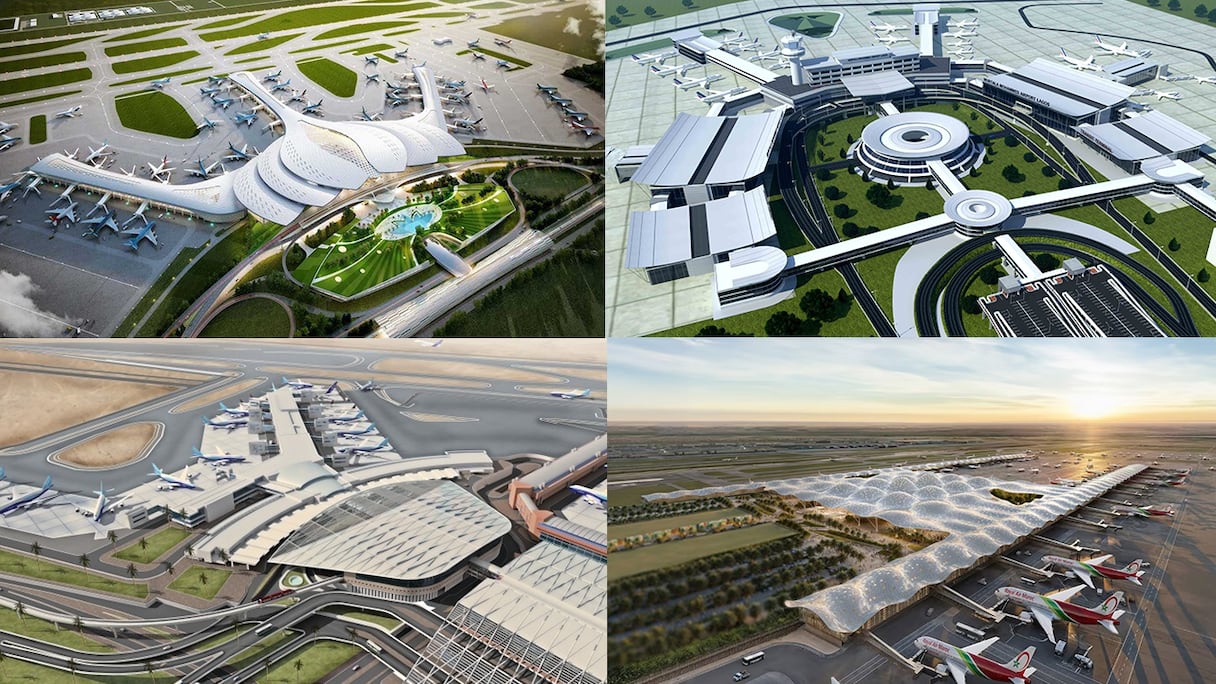
In August 2026, the ranking of African airports by seat capacity paints a picture of a continent on the move. Cairo leads the field by a wide margin, with 1,850,926 seats. Addis Ababa, with 1,251,909, and Johannesburg, with 1,148,652, complete the top three. Casablanca (803,579), Algiers (676,242), Nairobi (567,644), Cape Town (557,503), Tunis (526,444), Lagos (483,103) and Marrakech (480,112) round out the top 10.
Behind the ranking lies another reality: capacity is growing faster than profitability, and hubs are concentrating growth that African airlines are struggling to convert into margins.
Read also : African airlines weighed down by 10 burdens holding back their growth
The African Airlines Association (AFRAA), in its September 15, 2026 publication, confirmed the trend: in August 2026, seat capacity across Africa increased by 8.8% compared with August 2025.
Intra-African routes recorded a 10.5% increase in available seats, driven by network expansion, the opening of new routes and initiatives to increase aircraft capacity. This is significant. It shows that connectivity within the continent is becoming denser.
Top 10 African Airports by Seat Capacity (August 2026)
| Rank | Airport | City | Country | Seat capacity |
|---|---|---|---|---|
| 1 | Cairo International Airport | Cairo | Egypt | 1,850,926 |
| 2 | Addis Ababa Bole International Airport | Addis Ababa | Ethiopia | 1,251,909 |
| 3 | O. R. Tambo International Airport | Johannesburg | South Africa | 1,148,652 |
| 4 | Mohammed V International Airport | Casablanca | Morocco | 803,579 |
| 5 | Houari Boumediene Airport | Algiers | Algeria | 676,242 |
| 6 | Jomo Kenyatta International Airport | Nairobi | Kenya | 567,644 |
| 7 | Cape Town International Airport | Cape Town | South Africa | 557,503 |
| 8 | Tunis-Carthage International Airport | Tunis | Tunisia | 526,444 |
| 9 | Murtala Muhammed International Airport | Lagos | Nigeria | 483,103 |
| 10 | Marrakesh Menara Airport | Marrakech | Morocco | 480,112 |
Source: African Airlines Association (AFRAA).
The top 10 reveals a highly uneven map. North Africa dominates, with Cairo, Casablanca, Algiers, Tunis and Marrakech accounting for five airports. The regional distribution of seat capacity confirms this: North Africa accounts for 41.9% of the total. East Africa follows with 22.7%, Southern Africa with 18.3%, and Central and West Africa with 17.1%.
In other words, the northern half of the continent captures most of the capacity, although Addis Ababa and Nairobi show that East Africa has strong hubs. Southern Africa has two airports, Johannesburg and Cape Town, accounting for 18.3% of capacity. Central and West Africa, despite Lagos, account for just 17.1%. No Central African airport appears in the top 10.
Read also : Why only 2% of Africans fly: Tax predators, states that block airline funds and open skies champions
This hierarchy is more than symbolic. It shows where traffic, investment and opportunities are concentrated. Cairo, with nearly 1.85 million seats, is more than 600,000 seats ahead of Addis Ababa. Casablanca, Algiers and Tunis form a powerful North African corridor.
Marrakech, with 480,112 seats, confirms that Morocco has two airports in the ranking, as does South Africa. Nigeria appears only with Lagos, in ninth place. Kenya and Ethiopia rely on a single but strategically important hub each.
Capacity and Traffic: A Growing Gap
The picture becomes more nuanced when capacity and traffic are considered together. In August 2026, African airlines accounted for 47.2% of international capacity, including both regional and intercontinental operations, compared with 52.8% for non-African carriers.
For intercontinental services, AFRAA’s publication states that African carriers held 62.4% of capacity, compared with 37.6% for non-African operators. However, a previous article points out that African airlines hold only 37.6% of intercontinental capacity. The two figures reflect the same underlying tension: the position of African airlines in the long-haul market remains a strategic challenge.
Regional Distribution of Seat Capacity (August 2026)
| Region | Share of capacity |
|---|---|
| CWA – Central & Western Africa | 17.1% |
| SA – Southern Africa | 18.3% |
| EA – Eastern Africa | 22.7% |
| NA – North Africa | 41.9% |
Source: African Airlines Association (AFRAA).
In terms of international traffic, African airlines accounted for 51.1% of total traffic in June 2026, compared with 48.9% for non-African carriers. But for intercontinental traffic, they held just 36.7%, compared with 63.3% for non-African airlines.
The message is clear: Africa generates traffic, but it has yet to capture most of the value of long-haul travel. The seats offered by African airlines do not always translate into market shares that match their ambitions.
Production indicators confirm this. In July 2026, ASK increased by 9% compared with July 2025. ASK, or Available Seat Kilometers, is a measure of the capacity offered by an airline or group of airlines.
Read also : Investment freedom in Africa: The 20 best-ranked countries in 2026
RPK, or Revenue Passenger Kilometers, a measure of actual demand for air transport, rose by around 5.8% over the same period. Supply is therefore growing faster than demand. This is a classic imbalance. When capacity grows faster than traffic, fares come under pressure and load factors become more vulnerable. AFRAA states this explicitly: capacity growth continues to outpace demand growth.
Intra-African connectivity, based on capacity, was distributed as follows in August 2026: 39% for third-freedom traffic rights, 38% for fourth-freedom rights and 23% for fifth-freedom rights. Third-freedom rights allow an airline to carry passengers from its home country to a foreign country.
Fourth-freedom rights allow it to carry passengers back to its home country. Fifth-freedom rights allow an airline to carry traffic between two foreign countries as part of a flight connecting with its home territory. These freedoms of the air govern permitted stopovers and traffic rights. Within intra-African connectivity, these rights determine access to routes.
This structure shows that most traffic relies on traditional traffic rights, while the more flexible fifth-freedom right remains a minority. For a continent seeking to expand its air links, this is significant.
Effective liberalization, particularly through SAATM, the Single African Air Transport Market, remains a key lever. AFRAA is calling on governments to turn their commitments into action.
Read also : MCC 2027: Which African countries are eligible for US assistance?
Air freight paints a different geographic picture. In July 2026, analysis by subregion showed that African imports exceeded exports in most regions. East Africa was the exception, with export volumes higher than imports.
Overall, air freight in Africa increased by 2.8% in July 2026 compared with July 2025. The market share held by African airlines in air freight remains a major strategic priority. The continent continues to trade, but much of the logistics value remains to be captured.
For the week ending August 21, 2026, the global average jet fuel price stood at $163.87 per barrel, up 3.1% from the previous week. In Africa, the weekly average reached $169.01 per barrel. In an industry operating on almost no margins, that difference is significant.
Production, Connectivity and Cost Indicators
| Indicator | Value/ change |
|---|---|
| ASK, July 2026 vs. July 2025 | +9% |
| RPK, July 2026 vs. July 2025 | +5.8% |
| Air freight in Africa, July 2026 vs. July 2025 | +2.8% |
| Passenger revenue, July 2026 vs. June 2025 | +5.6% |
| Intra-African connectivity, third freedom | 39% |
| Intra-African connectivity, fourth freedom | 38% |
| Intra-African connectivity, fifth freedom | 23% |
| Jet fuel, global average, week ending August 21, 2026 | $163.87/barrel |
| Jet fuel, African average, same period | $169.01/barrel |
Source: African Airlines Association (AFRAA).
The airport ranking is therefore more than a simple league table. It reveals a North Africa that concentrates capacity, an East Africa built around Addis Ababa and Nairobi, a Southern Africa anchored by Johannesburg and Cape Town, and a Central and West Africa that remains underrepresented at the top of the table despite Lagos. It also shows that capacity growth alone is not enough. Without an appropriate fiscal, financial and infrastructure environment, takeoff will remain difficult.
The top 10 African airports tell another story: the demand is there, the young population is there, and the growth is there. What is missing is an environment that stops treating aviation as a source of revenue extraction and starts seeing it as an engine of development.