Harmattan AI unveiled IRIFI, its sovereign Moroccan autonomous deep-strike system, on Wednesday, October 7. The system was presented during a plenary session at the Marrakech Air Show, where a letter of intent covering its development was also signed.
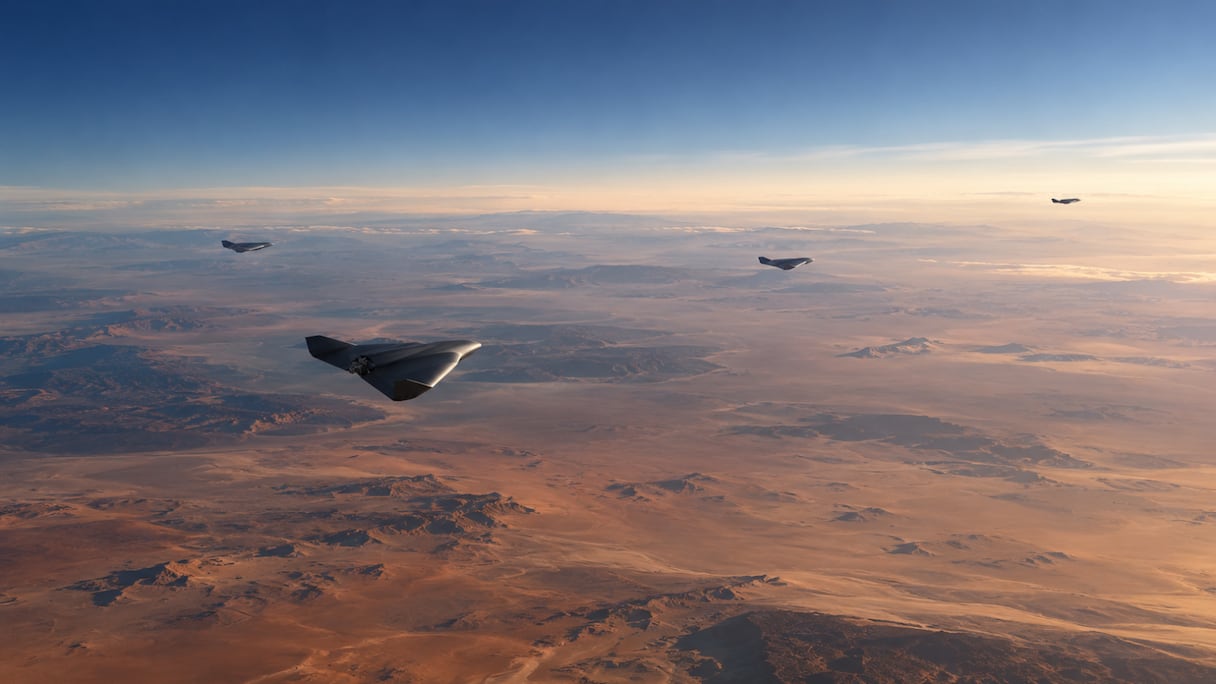
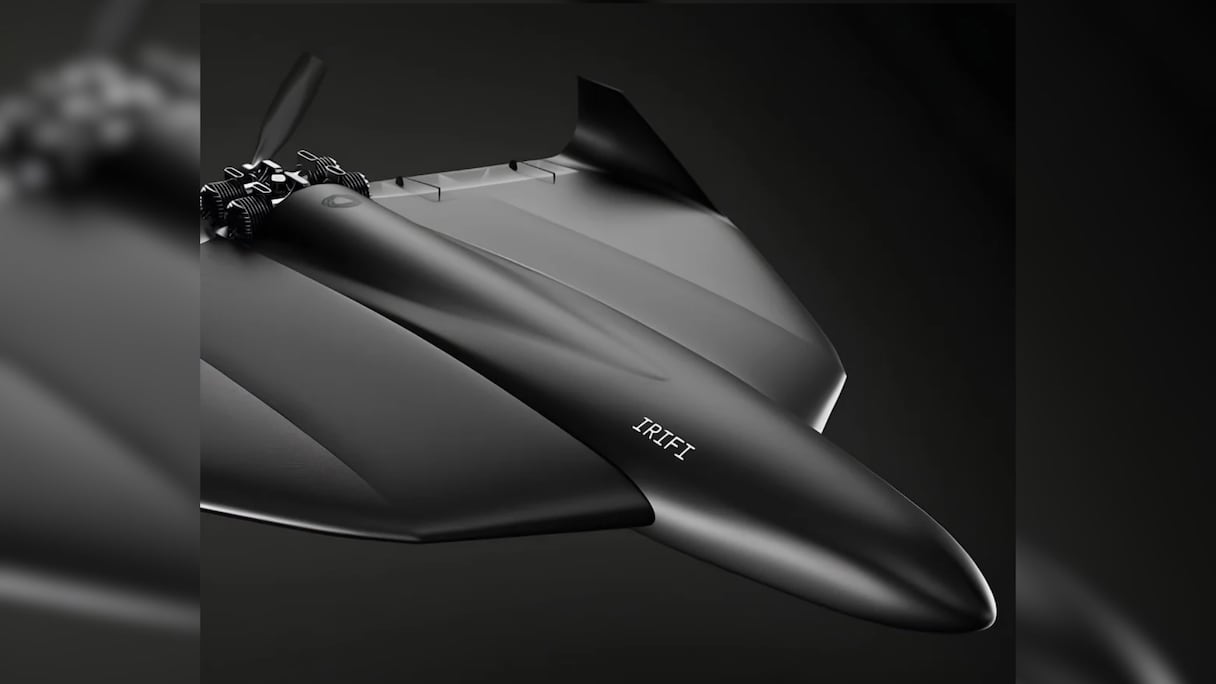
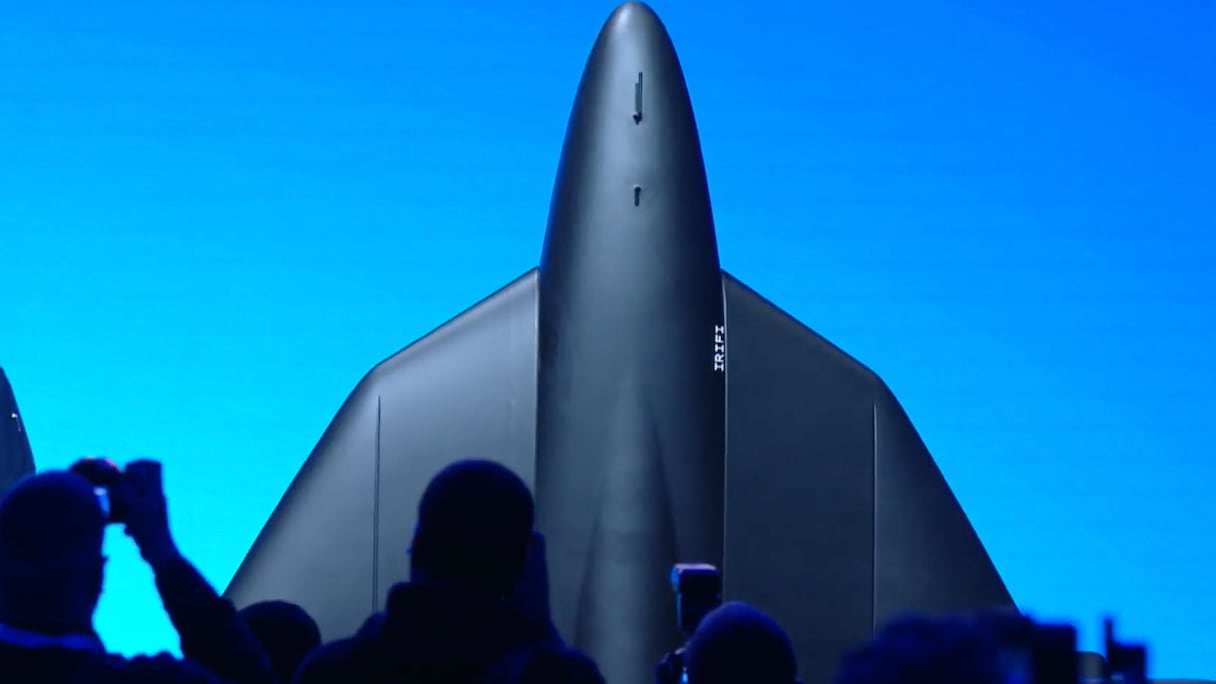
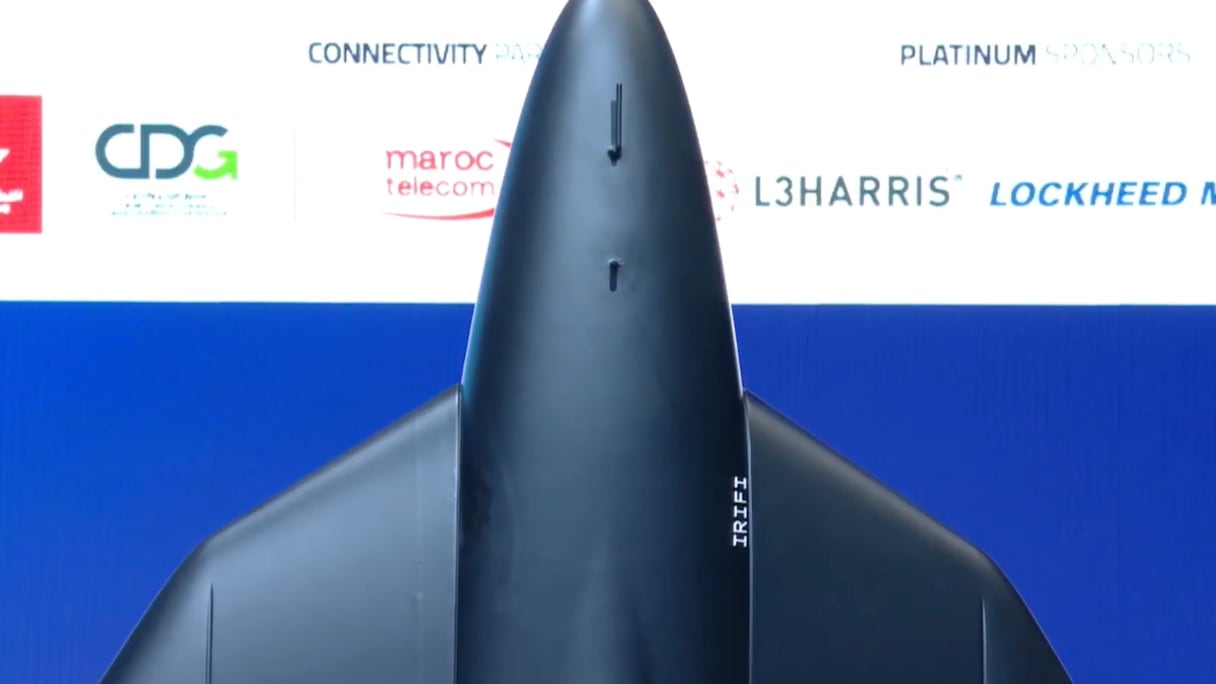
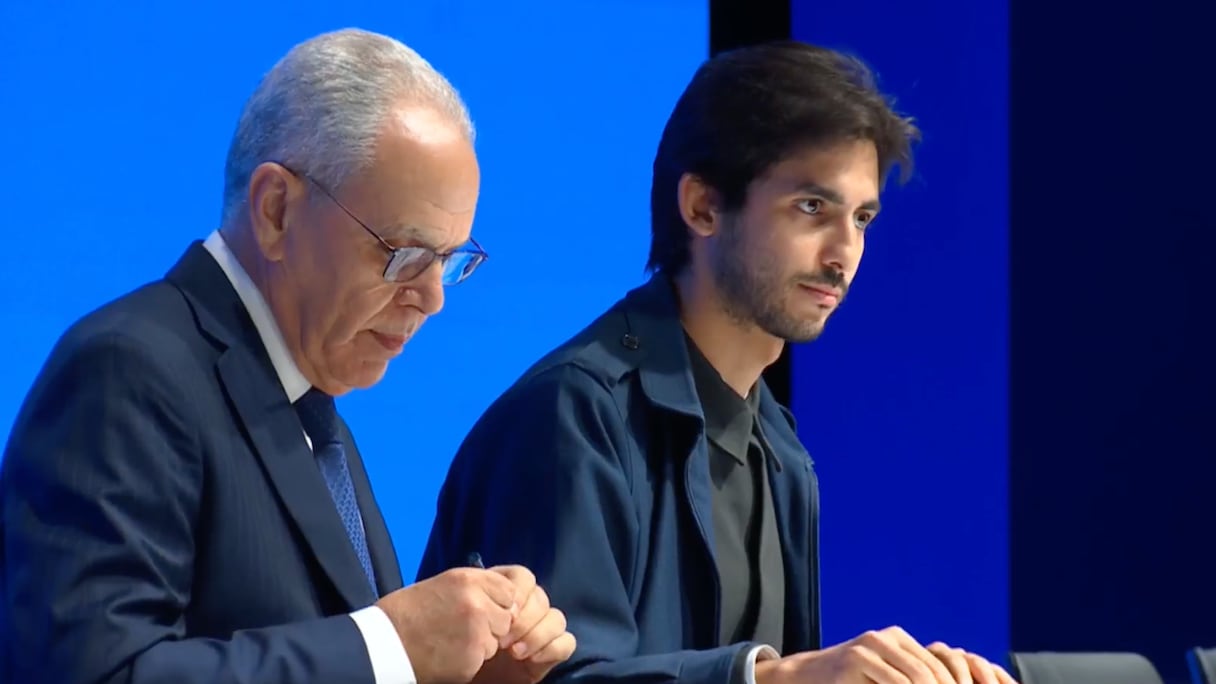
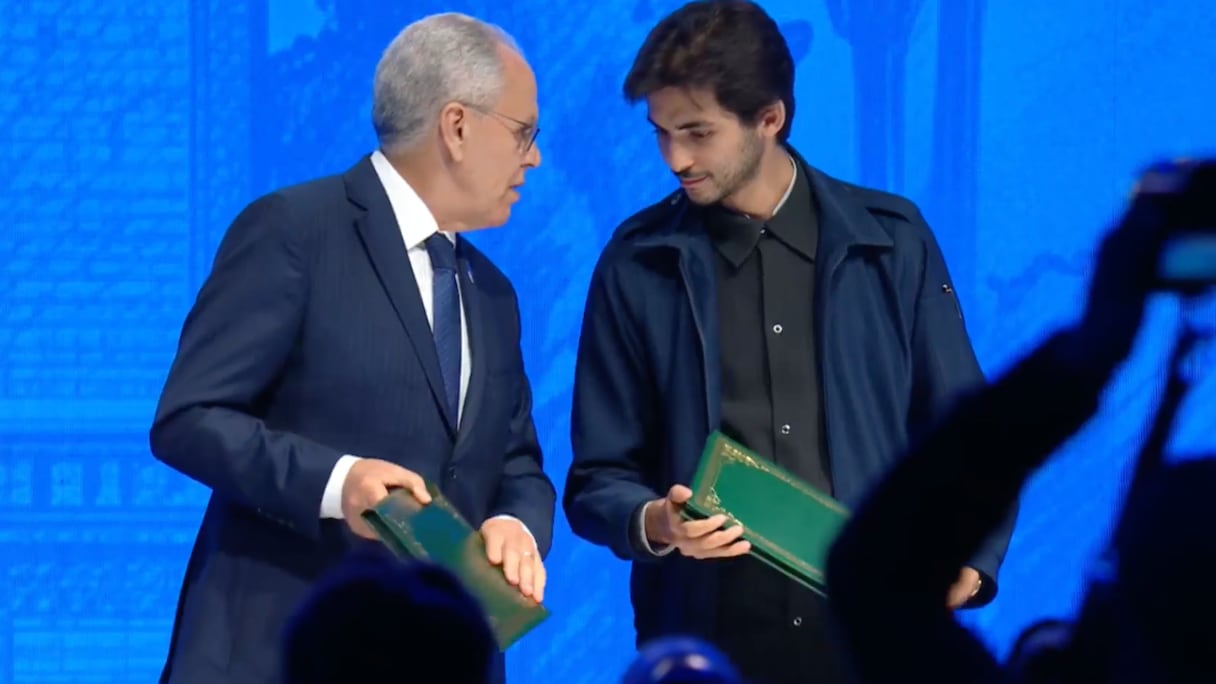
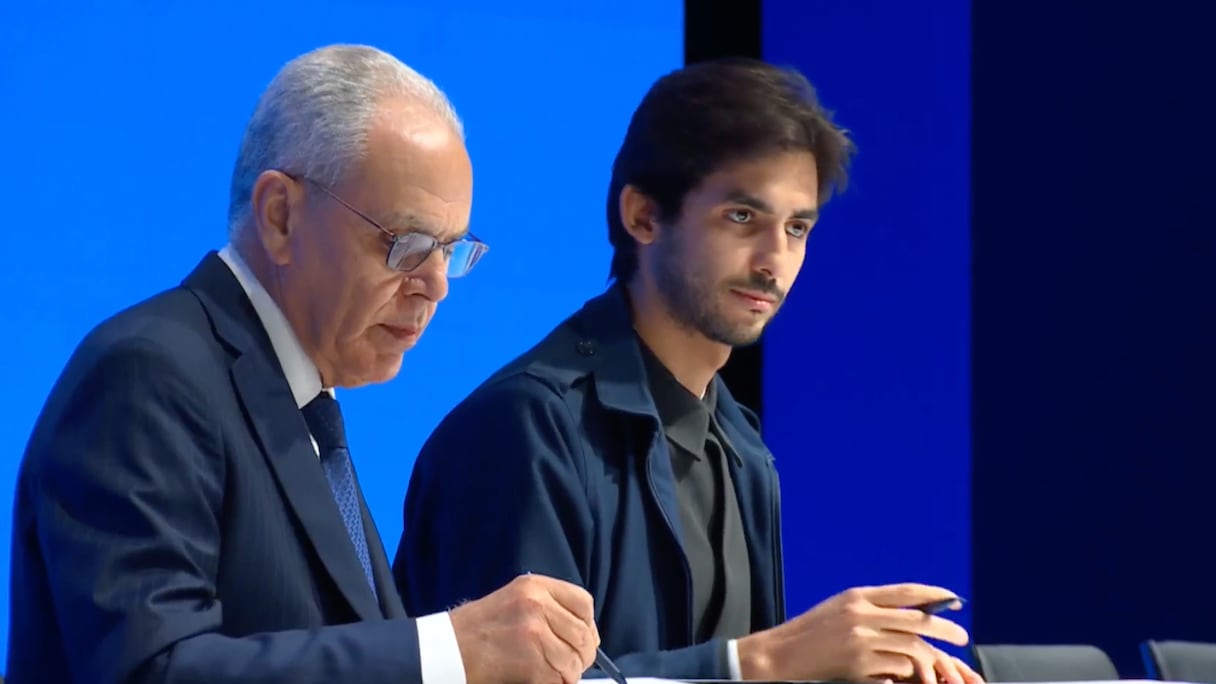
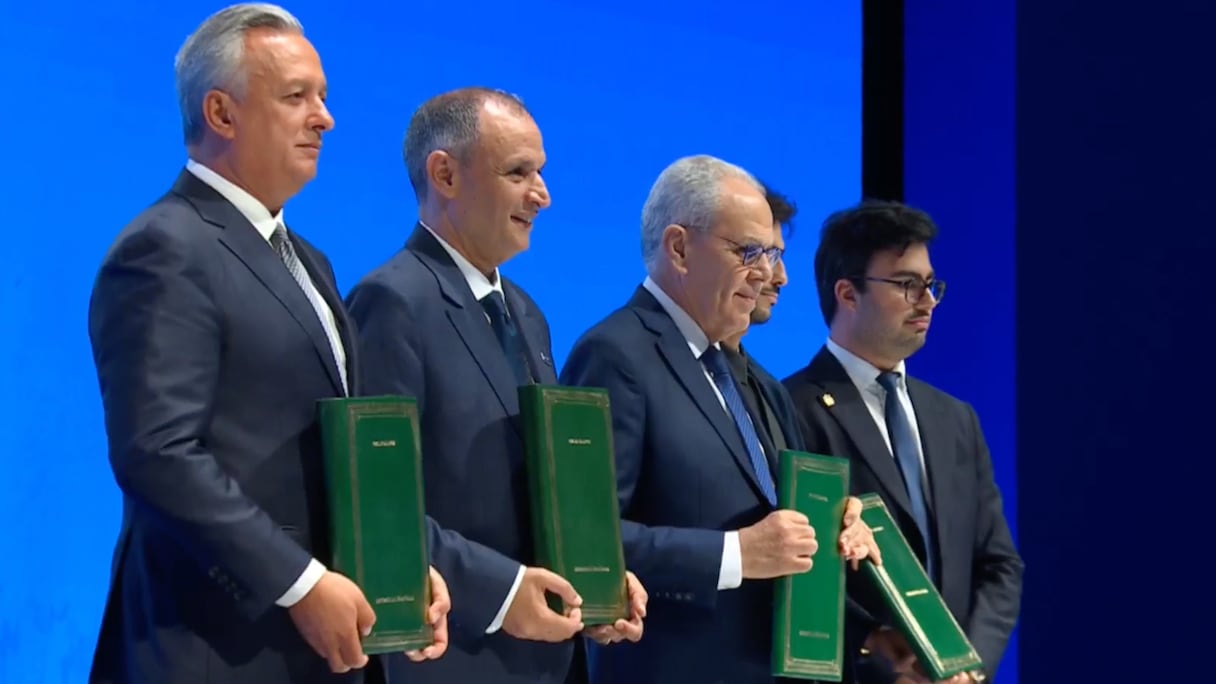


IRIFI. (PHOTO: Harmattan AI)
The signing took place in the presence of Abdeltif Loudyi, Minister Delegate to the Head of Government in charge of the National Defense Administration, and Lieutenant General Mohammed Berrid, Inspector General of the Royal Armed Forces (FAR) and Commander of the Southern Zone. Harmattan AI CEO Mouad M’Ghari and Amir Benmahjoub, the company’s Morocco managing director, also attended, alongside senior National Defense Administration officials and high-ranking military officers.
A drone designed to operate without supervision
IRIFI is designed to conduct deep strikes—long-range attacks launched far beyond the front line, where opposing forces face one another, and aimed at targets deep within the enemy’s rear. The drone has a range of up to 2,000 kilometers and a high degree of autonomy. The operator selects the target and makes the decision to strike. From that point, the drone handles the execution of the mission.
Its onboard navigation system does not rely on GNSS, or Global Navigation Satellite System, and is paired with optical terminal guidance. Together, these capabilities allow IRIFI to navigate, process information and achieve meter-level accuracy, including during low-altitude flight. The system incorporates an undisclosed payload, a canisterized mobile launcher and an attritable architecture designed for rapid, agile deployment at scale.
Read also : Morocco’s first F-16 Block 72 completes inaugural flight
Before launch, commanders designate authorized targets and set the mission parameters. Once the mission has been approved and launched, IRIFI carries it out autonomously within the boundaries set by its human commander.
Harmattan AI says the technology is intended to allow military personnel to focus on higher-value tasks such as planning and strategic decision-making. The autonomous system handles the full execution of the mission, with the aim of maximizing operational effectiveness.
Why deep strike is changing?
A deep strike is a long-range attack conducted far inside enemy territory, away from the front line. It typically targets critical infrastructure such as logistics hubs, ammunition depots, air bases or industrial facilities, with the aim of degrading the adversary’s ability to respond.
Until recently, such strategic strikes largely depended on sophisticated and costly missiles such as the Tomahawk. While highly effective, these weapons are expensive and require a substantial logistical footprint.
Recent conflicts in Ukraine and Iran have brought about a new, far more attritable class of deep-strike systems. According to Harmattan AI, armed forces can now field weapons costing 10 to 100 times less than conventional missiles. They can be manufactured at scale, sometimes in improvised and discreet production facilities. Their logistical footprint is also considerably smaller, with launch sites that can be established within hours and rapidly dismantled afterwards.
This shift has triggered a transformation in warfare that most defense manufacturers are now seeking to address. One major obstacle remains, however: the accuracy and survivability of these systems can be compromised in contested environments. Jamming and spoofing can disrupt or sever communications with the operator, while access to GNSS can be degraded or denied altogether.
The new challenge, therefore, is to enable these systems to operate autonomously. In practical terms, they must be capable of carrying out a human-authorized mission from start to finish without continuous operator supervision.
Critical technologies to be developed in Morocco
Harmattan AI says IRIFI’s critical technology components will be developed and manufactured in Morocco, primarily by Moroccan personnel. The company says this reflects its commitment to sovereign defense systems and to expanding Morocco’s defense industrial and technological base towards higher-end technological capabilities.
The program follows a partnership signed in June 2026 between Harmattan AI, the National Defence Administration and the Royal Armed Forces. The agreement is intended to support the development of a sovereign Moroccan defense industrial and technological base and the establishment of a Harmattan AI research and development center in Rabat.
“This announcement demonstrates our commitment to innovating as quickly as possible to develop critical defense technologies. Four months after establishing our presence in Morocco, it is an honor for Harmattan AI to stand alongside the Royal Armed Forces in developing a sovereign program,” said Harmattan AI CEO Mouad M’Ghari.
“Since our founding, we have focused all our efforts on building autonomous defense technologies. With IRIFI, Harmattan AI is positioning itself at the forefront of deep-strike system development by introducing a system with a very high degree of operational autonomy,” he added.
A three-pillar partnership with the Royal Armed Forces
In June 2026, Harmattan AI and the Royal Armed Forces signed a strategic partnership built around three pillars. The first involves establishing manufacturing capabilities in Morocco to produce autonomous defense systems. The second covers the creation of an ambitious research and development center dedicated to artificial intelligence for defense systems. The third focuses on partnerships with Moroccan higher education and research institutions.
According to Amir Benmahjoub, the objective is to build a talent base across the entire value chain, from R&D through to final production. Harmattan AI aims to attract top talent from around the world, while Benmahjoub describes Morocco as having a vast pool of engineering talent. The company plans to recruit Moroccan engineers for high-value R&D work and train operators so that Moroccan talent can build defense systems on Moroccan soil. Partnerships with higher education institutions are intended to train the next generation and support research into defense applications of artificial intelligence.
The factory will be located near Casablanca, with the timetable to be announced in due course. Le360 spoke to Amir Benmahjoub.

Le360: Where does Harmattan AI currently stand in the defense and artificial intelligence market?
Amir Benmahjoub: Harmattan AI was founded in April 2024 with a very clear objective: to build autonomous defense systems and a coordinated army of robots.
We develop both the hardware and the software, which gives us sovereignty and agility. Our objective is to build AI-enhanced defense systems. Artificial intelligence can significantly improve reconnaissance and threat analysis, mission execution and terminal guidance. Humans remain at the heart of mission planning, the definition of mission parameters and engagement decisions. That allows people to focus on what they do best—planning and decision-making—while using AI for execution.
What are Harmattan AI’s main areas of expertise? Could you describe your portfolio and your current customers?
Our portfolio includes:
- Sonora and Barkhane, systems for training, intelligence, surveillance and reconnaissance (ISR), and strike missions;
- Gobi, a kinetic interceptor, and Tempest, an explosive interceptor, for very-short-range air defense;
- Sahara, an ISR system using synthetic aperture radar technology;
- IRIFI, a deep-strike system;
- NAMIB, an electronic warfare system;
- Kalahari, a C2, or command-and-control, system.
We are both a global company—our ambition is the same in every country: to build autonomous systems—and a sovereign one, meaning that we adapt to the local realities of each country to provide defense systems tailored as closely as possible to the needs of the forces that place their trust in us.
That is why we reject low-value-added final assembly. Our partnership with Morocco follows precisely this approach. We are opening an R&D center and a factory while building partnerships with universities. Our objective is to train a new generation of engineers and operators in AI and defense and help expand a sovereign Moroccan defense industrial base focused on technological excellence.
Could you tell us more about your partnership with the Royal Armed Forces? How did the relationship develop, and how was Morocco identified as a strategic partner for this regional expansion?
The Royal Armed Forces have a strong understanding of the technological challenges involved and want to equip themselves with defense systems at the forefront of the latest technological advances. For us, that makes them an ideal partner for developing cutting-edge autonomous systems and obtaining highly precise feedback on operational requirements.
They are therefore a key partner for Harmattan AI. Working with them gives us direct insight into military requirements at the operational level.
The partnership rests on three pillars: manufacturing in Morocco, an R&D center, and academic partnerships. Could you explain the rationale behind these three components and how they fit together?
The objective is to build a talent base across every stage of the process, from R&D through to final production. Harmattan AI wants to attract the best talent in the world, and Morocco has an enormous pool of talent, particularly engineers. It therefore made perfect sense for us to look to Morocco.
We want to recruit Moroccan engineers for high-value R&D work. We want to train operators so that Moroccan talent can build its own defense systems on Moroccan soil. And through our partnerships with higher education institutions, we want to train the next generation and contribute to research into defense applications of artificial intelligence.
As for establishing manufacturing capabilities in Morocco, can you give us a timetable? Where will the facility be located?
We will provide details of the timetable in due course. The factory will be located near Casablanca.
What exactly will be produced there? Full manufacturing, assembly or systems integration?
Full manufacturing. Sovereignty is our guiding principle.
What can you tell us about the R&D center for defense applications of artificial intelligence, from its purpose to where it will be located?
As far as research is concerned, we have many more announcements to come...
