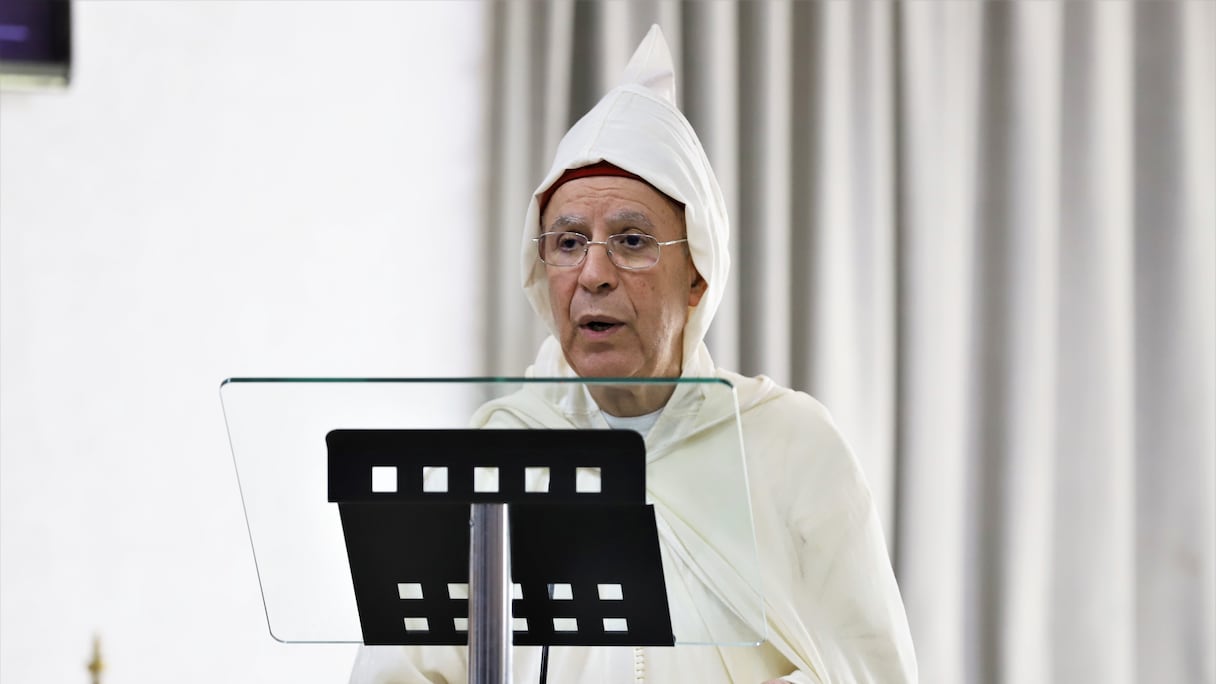
Before King Mohammed VI, Minister of Endowments and Islamic Affairs Ahmed Toufiq traced the tradition of works that have expressed Moroccans’ “heartfelt” devotion to the Prophet during a religious vigil held yesterday to commemorate Eid Al-Mawlid Annabawi.
He referred in particular to works by Moroccan theologians and historians from Ceuta.
“As for the heartfelt expression of this devotion, it is reflected in their excellence in recounting the virtues of the Prophet, beginning with Ash-Shifa (‘Healing by the Recognition of the Rights of the Chosen One’) by Cadi Ayyad, followed by Ad-Durr Al-Munazzam (‘An Anthology of Poems Composed in Celebration of the Birth of the Noble Prophet’) by Al-Azafi, both scholars from the city of Ceuta, and Dala’il al-Khayrat (‘Guides to the Paths of Good’) by Imam Al-Jazuli,” he said.
Read also : King Mohammed VI chairs religious evening in Rabat, commemorating Eid Al-Mawlid Annabawi Asharif
“The latter book became a symbol for Moroccans in their mobilization to liberate the occupied cities along the Atlantic coast at the beginning of the modern era,” he continued.
According to the minister, this heartfelt devotion constitutes one of the two pillars shaping Moroccans’ attachment to the Prophet, alongside its political expression.
“The Moroccan nation’s attachment to the noble person of the Prophet takes two forms: a political expression and a heartfelt expression, both of which rest on a legal foundation,” he said.
The political expression lies in the attribution of the Great Imamate to the Chorfa, descendants of the Prophet, on the basis of the Bay’a, or pledge of allegiance. This allegiance guarantees the preservation of the homeland and its sacred values while ensuring fair arbitration among the components of the nation.
Ahmed Toufiq placed this interpretation within the framework of efforts to guide religious discourse. Drawing on the Prophet’s words, “Have I conveyed the message?”, which he said remain a reference for Moroccan scholars, the approach seeks to promote the idea that Tawhid, or the oneness of God, around which the Quran and the Sunnah are centered, translates into moral liberation from individual and collective selfishness.
The vigil was held yesterday at the Royal Palace in Rabat in the presence of Crown Prince Moulay El Hassan, Prince Moulay Rachid and Prince Moulay Ahmed. It featured Quranic recitations and chants in praise of the Prophet.
Ahmed Toufiq also presented the annual report on the activities of the Supreme Council of Ulema and local religious councils.
