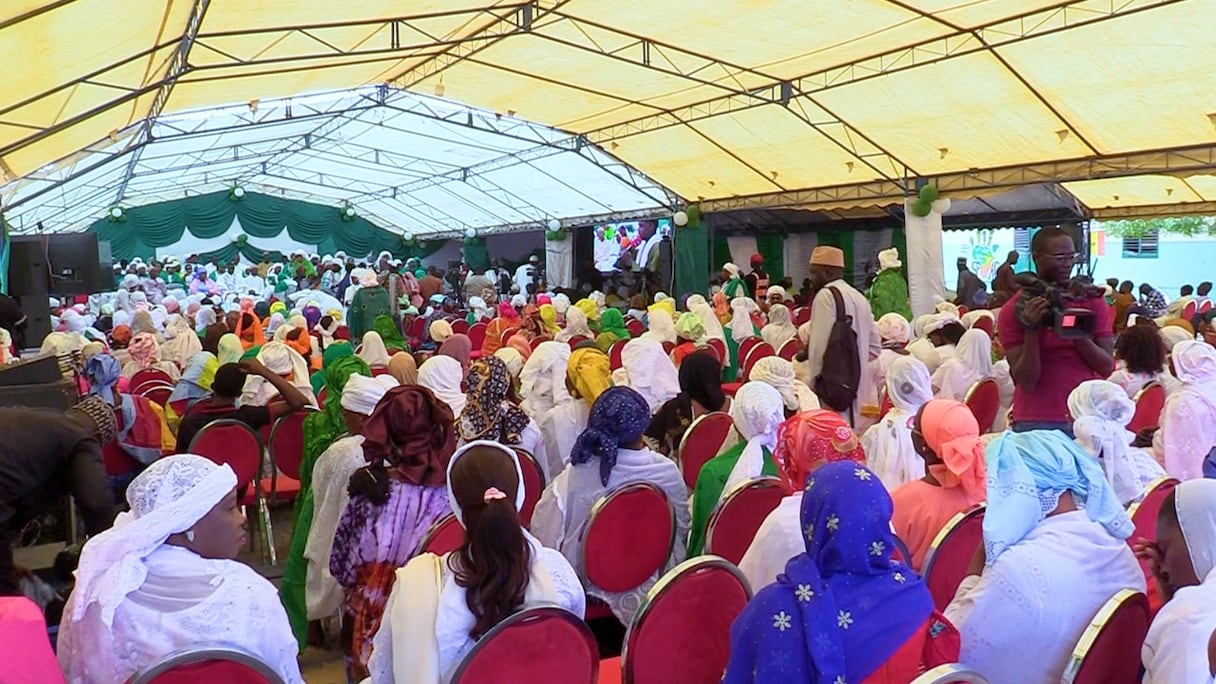
More than a religious occasion, Mawlid offers an opportunity to revisit the centuries-old ties between Dakar and Rabat, shaped by spirituality, cooperation, and exchanges between the two peoples. Tijaniyya is now one of the most influential Sufi orders in Senegal.
Introduced to West Africa by El Hadj Omar Tall and later consolidated by figures such as El Hadji Malick Sy, Cheikh Ibrahim Niass, and religious leaders in Thiénaba, the order has several million followers.
They all draw on the spiritual legacy of Cheikh Ahmed Tidiane Chérif, whose mausoleum in Fez is considered an essential place of pilgrimage. Every year, thousands of Senegalese travel there to perform the ziara, which they see as a return to the roots of their faith.
For Imam Abdoul Aziz Ndoye, an imam and mouqaddam of Cheikh Ahmed Tidiane Chérif, this spiritual lineage explains the deep attachment of Senegalese people to Morocco.
“Cheikh Ahmed Tidiane Chérif, born in 1155 AH, truly won the hearts of Senegalese people through his mouqaddams. One of them was Cheikh Oumar Foutiyou Tall, one of the pioneers of Tijaniyya in sub-Saharan Africa. Other religious leaders followed, including Alpha Mayoro, then El Hadji Malick Sy, who is known for celebrating the Bourda ahead of Mawlid, commemorating the birth of the Prophet Mohammed (PBUH).”
In Senegal, this tradition continues from one generation to the next. In daaras, zawiyas, and Tijani families, the name of Fez resonates as that of a land of reference. For many young followers, setting foot in Morocco is not simply a journey but an act of faith.
Babacar Diop is part of a generation that dreams of one day paying their respects at the mausoleum of Cheikh Ahmed Tidiane Chérif.
“Today, many Senegalese Tijanis dream of going to Morocco to perform the ziara at the mausoleum of Cheikh Ahmed Tidiane Chérif. It is a return to the roots of our order. Tijaniyya in Senegal is carried by figures such as Cheikh Ibrahim Niass, El Hadji Malick Sy, and the Thiénaba community, but they all trace their origins back to Morocco. Going to Fez strengthens your faith, brings you closer to God and the Prophet Mohammed (PBUH), and allows you to follow in the footsteps of the founder of our spiritual path.”
But these close ties extend far beyond religion. For decades, Morocco and Senegal have maintained close relations. University cooperation, scholarships, imam training, Arabic-language education, economic investment, and the presence of Moroccan banks, insurance companies, and businesses in Senegal have gradually expanded the relationship into almost every sector.
For Abdoul Aziz Ndoye, this relationship continues to have an impact well beyond the religious sphere.
“In Morocco, many Senegalese people, particularly professionals and teachers, have received training through language immersion programs to improve their command of Arabic. Thanks to these centuries-old ties, many mutually beneficial partnerships have been developed, first under the reign of Mohammed V, then Hassan II, and today under His Majesty Mohammed VI. We are proud to be in Morocco. After Mawlid, during Gamou Waate, meaning the baptism, we will also celebrate this event with our group, God willing, before attending Gamou Waate in Morocco.”
In a few days, the chants of the Bourda will echo through Senegal’s religious households. Behind the Mawlid celebrations lies a history stretching back more than two centuries: that of a Sufi order that crossed borders and forged a unique relationship between Senegal and Morocco—a bond rooted in faith, strengthened by history, and kept alive by generations of followers year after year.
