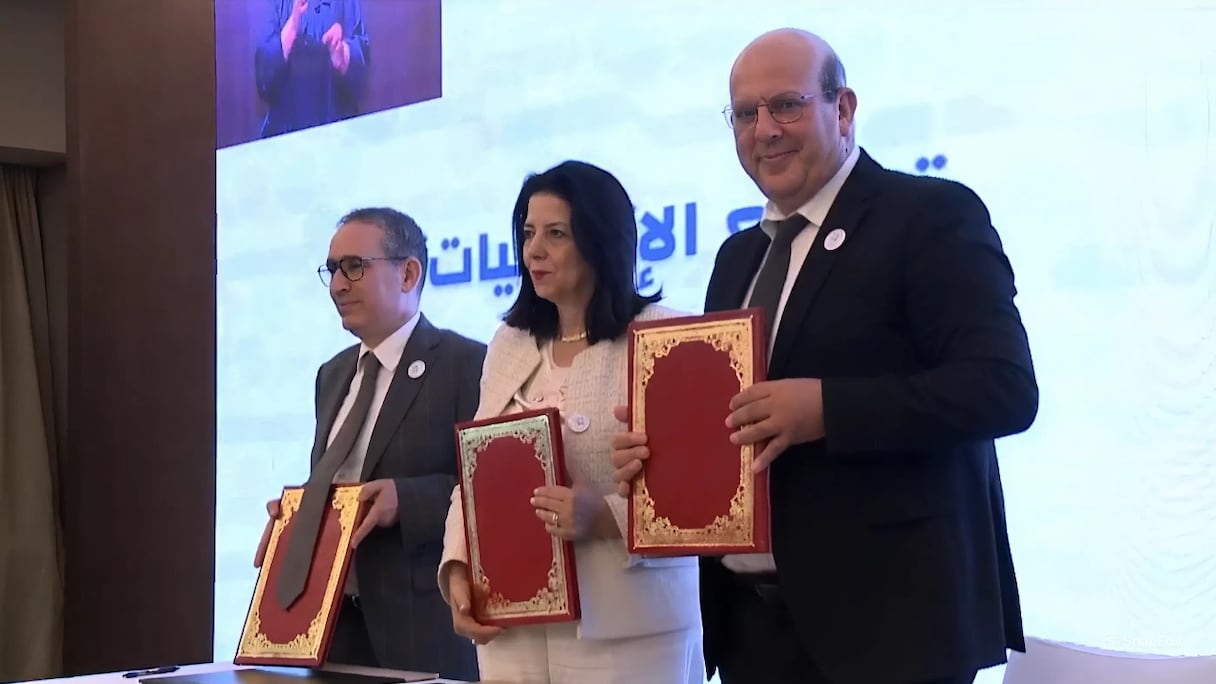
The agreement, which is intended in particular to promote the rights of people with disabilities, was signed by Abdeljebbar Rachidi, Secretary of State in charge of Social Inclusion, and Amal El Fellah Seghrouchni, Delegate Minister for Digital Transition and Administrative Reform.
Launched in April 2025 by Abdeljebbar Rachidi’s department, the campaign aimed to actively support “the strengthening of their economic and social rights.” It also sought “to dismantle certain negative perceptions and prejudices that some people may hold toward people with disabilities,” the Secretary of State said.
“We are concluding this campaign, which was marked in particular by the organization of several workshops in four regions, but the work in support of the rights of these people will continue,” Abdeljebbar Rachidi added.
In his opening remarks, the government official recalled the launch in January 2026 of a national survey on people with disabilities. It is the third operation of its kind, following the one conducted in 2014, which estimated that nearly 2.5 million people in Morocco were living with disabilities.
Through the new survey, the public authorities seek to take a decisive step toward improving knowledge of disability in Morocco. The objective is to obtain reliable, up-to-date, and geographically detailed data in order to better guide public policies and strengthen the social, economic, and digital inclusion of the people concerned.
Read also : Morocco launches first national program to combat gender stereotypes and promote equality by 2035
For her part, Amal El Fellah Seghrouchni welcomed the bilateral agreement signed with the department in charge of Social Inclusion. According to her, the cooperation will facilitate access to public services for people with disabilities and help them exercise their rights across several areas.
Through this agreement, the government seeks to make digital technology an additional tool for the inclusion of people with disabilities. Following the awareness campaign and the launch of the national survey, the focus now is on turning institutional commitments into accessible, practical services adapted to the actual needs of the people concerned.
