As the 2026 FIFA World Cup concluded, marked by another strong campaign from the Atlas Lions, Morocco’s Ambassador to the United States, Youssef Amrani, offered a broader perspective on the significance of the country’s sporting achievements.
Speaking on the Brookings Institution’s Foresight Africa podcast with Landry Signé, Senior Fellow at the Africa Growth Initiative, Amrani discussed how Morocco is leveraging sporting success as a powerful tool for diplomacy, socio-economic integration, and Euro-African cooperation in the lead-up to the 2030 FIFA World Cup.
Morocco’s remarkable performances on football’s biggest stage—including its historic run to the semifinals in Qatar in 2022, a quarterfinal appearance at the 2026 World Cup, and its ascent to sixth in the latest FIFA world rankings—are, according to the ambassador, the result of a long-term national strategy rather than mere coincidence.
Amrani emphasized that Morocco’s sporting rise is rooted in a public policy launched over two decades ago under the leadership of King Mohammed VI. This policy integrates elite player development, quality education, and world-class sports infrastructure.
“It was not a coincidence. It was the result of the vision and ambition of King Mohammed VI, who made sport and education a priority by creating numerous institutions. If we achieved these important results at the World Cup, it is because we did our homework,” Amrani stated.
Central to this strategy is the Mohammed VI Football Academy in Rabat. By combining academic excellence with modern sporting facilities, the academy has become one of Morocco’s leading talent development centers, providing young players with the conditions to reach their potential while supplying highly trained footballers to both Moroccan and European clubs.
Beyond sporting success, Amrani argued that football has become an effective instrument of soft power, helping to challenge long-standing stereotypes about Africa.
The ambassador noted that African teams collectively delivered an unprecedented performance at the 2026 World Cup, with nine of the ten qualified nations progressing beyond the group stage.
According to Amrani, these performances have earned Africa greater respect from the world’s traditional football powers. By establishing itself as a model of sporting and organizational success, Morocco is pursuing an ambition that extends beyond its own borders, demonstrating that Africa is no longer merely a source of football talent but a continent capable of exercising leadership on the global stage.
People-to-people diplomacy
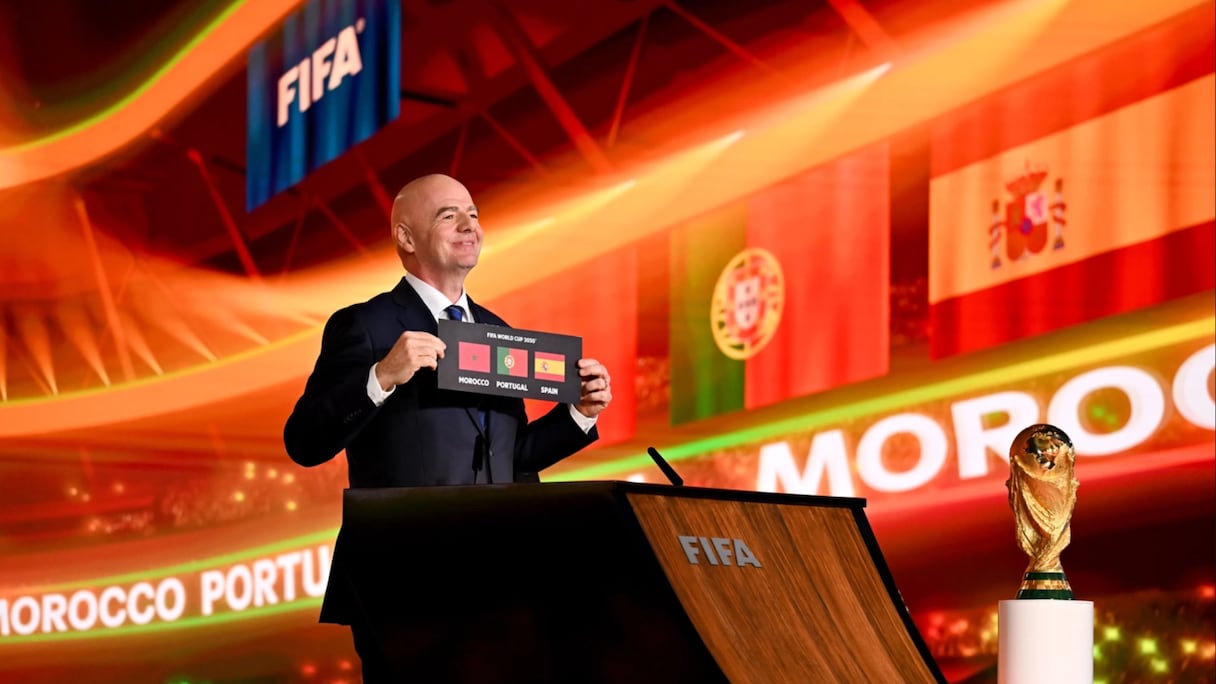
Morocco’s role as co-host of the 2030 FIFA World Cup, alongside Spain and Portugal, carries significant geopolitical weight.
This marks the first time the tournament will be jointly hosted by countries from two continents, linked by the Strait of Gibraltar, creating a tangible bridge between Africa and Europe.
For the ambassador, the tournament transcends football, serving as a platform for intercultural dialogue and strategic partnership.
“Ultimately, what matters is achieving greater understanding and stronger interaction with a continent—Africa—that has ambition and tremendous potential to play a major geopolitical role in the region,” he stated.
Amrani further argued that international diplomacy should not be solely defined by structural challenges like migration, desertification, or climate change. Instead, he emphasized the importance of “people-to-people” diplomacy, asserting that major sporting events offer invaluable opportunities to overcome mutual misunderstandings and strengthen cooperation across the Mediterranean.
When asked how Morocco plans to avoid “white elephant” projects—costly stadiums and infrastructure with limited long-term use after the 2030 World Cup—Amrani explained that the solution lies in an “integrated development ecosystem.”
He clarified that building world-class stadiums is part of a broader national strategy to modernize transport, logistics, and economic infrastructure.
As an example, he cited the Al Boraq high-speed rail line connecting Tangier and Casablanca, noting that preparations for both the 2025 Africa Cup of Nations and the 2030 World Cup are accelerating major investments in railways, roads, ports, and digital infrastructure.
The ambassador also connected Morocco’s sports diplomacy to wider continental initiatives led by the Kingdom, including the Nigeria-Morocco gas pipeline agreement and the Royal Atlantic Initiative. He explained that these connectivity projects aim to address the structural causes of underdevelopment by improving energy and logistical links, while also providing landlocked countries, particularly in the Sahel, greater access to international markets.
“Our young generations in Africa want jobs and better living conditions. Through projects such as the Atlantic Initiative promoted by Morocco, with the creation of energy networks and transport corridors, we will build a positive environment for employment, growth and stability,” Amrani concluded.
Celebrating 250 years of Morocco-U.S. relations
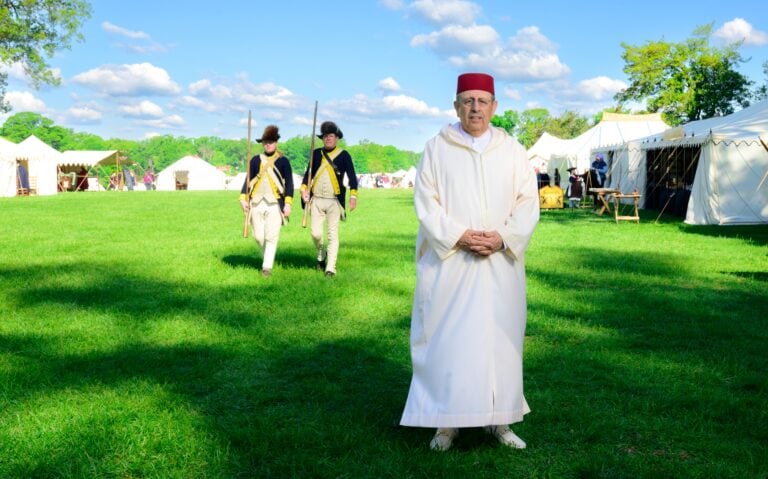
The discussion at the Brookings Institution also came as Morocco and the United States mark 250 years of diplomatic relations.
Morocco was the first country to recognize U.S. independence in 1777, laying the foundation for what Amrani described as a multidimensional strategic partnership that continues today. He said the 2026 FIFA World Cup in North America provided an opportunity to strengthen those ties beyond politics through culture and people-to-people exchanges.
Throughout the tournament, Morocco’s diplomatic missions worked closely with the White House Task Force, FIFA, U.S. governors and the mayors of host cities including Los Angeles, Miami, Boston and Washington, D.C., to support activities linked to the competition.
Amrani also pointed to the launch of Royal Air Maroc’s new direct service between Los Angeles and Casablanca as another step in strengthening transatlantic connectivity. He said the route complements an already extensive bilateral partnership that includes the Morocco-U.S. Free Trade Agreement—the only such agreement between the United States and an African country—the annual African Lion military exercises and ongoing political dialogue.
Looking beyond the tournament itself, Amrani said the true legacy of the 2030 World Cup should not be measured solely by sporting achievements or economic gains. Instead, he argued, its lasting impact should be its ability to demonstrate that cooperation between Africa and Europe can create shared prosperity.
“What I would like to see after the 2030 World Cup is that Morocco, together with Portugal and Spain, has demonstrated that cooperation across cultures, languages and continents is not only possible, but powerful,” he said.
He added that Morocco’s combination of sporting ambition, infrastructure development and diplomatic engagement reflects the country’s broader vision of serving as a bridge between Africa, the Mediterranean and the Americas while creating new opportunities for future generations across the African continent.