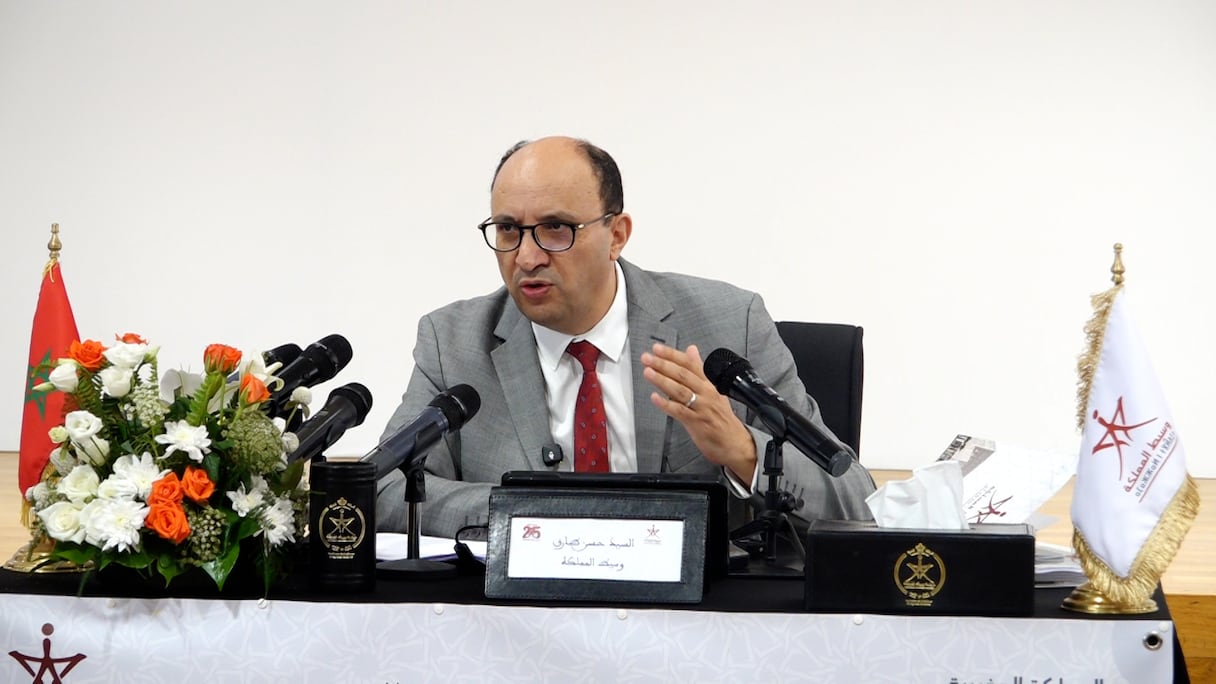
With legislative elections a month away, Morocco’s Ombudsman Institution has brought administrative and civil service reform back to the center of public debate. In a vigilance note published Monday, August 24, the institution called for broad public dialogue on the future of the reform process. It advocated for clearly identified government leadership capable of ensuring “unity of vision, convergence of interventions, continuity of programs, and clarity of responsibilities for their results.”
The note, titled “Administrative Reform Policies and the Need for Broad Public Dialogue and Clear Government Positioning,” comes as the country approaches the next legislative elections and debates the priorities that should guide the future government’s work.
The institution bases its initiative on its constitutional and functional role in relation to the administration and the protection of public-service users’ rights. It also draws on its experience handling complaints and preparing annual reports, which allows it to assess how the organization and functioning of the administration affect the effective exercise of these rights.
Read also : Morocco’s Ombudsman says the interior, justice, and Finance Ministries drew most citizen complaints in 2025
Beyond individual complaints, the Ombudsman points to structural problems that continue to affect relations between citizens and the administration. For the institution, the administration is “the daily face of the state”: it is through their dealings with public services that users assess whether their rights are effectively upheld, deadlines are respected, responsibilities are clear, and their complaints are properly heard and handled.
The note also revisits difficulties identified in the institution’s reports during government transitions. Such periods can affect the continuity of administrative action and lengthen the time needed to process cases, with direct consequences for users’ rights and legitimate interests.
The Ombudsman therefore stresses the principle of continuity of public services, which should be maintained regardless of changes in government or administrative leadership.
The institution also advocates a comprehensive approach to administrative reform that goes beyond restructuring. It should also address management methods, public-service culture, the quality of relations with users, and the administration’s ability to listen, explain its decisions, and correct its shortcomings.
The reform should also bring together several areas of work, including administrative organization, decentralization of government services, streamlining of structures, simplification of procedures, strengthening integrity in public administration, and improving the quality of public services.
According to the Ombudsman, these interconnected areas require governance capable of coordinating and monitoring them, while ensuring close links between administrative reform and the modernization of the civil service.
The institution therefore proposes making administrative reform a genuine cross-cutting public policy, led by clearly identified government authorities and supported by a stable institutional framework. The aim is to ensure continuity and coordination across the different reform programs, particularly those involving the simplification of procedures, digitalization of services, administrative decentralization, and strengthening integrity in public action.
The timing of the note is significant. It comes as political parties finalize their programs ahead of the September 2026 legislative elections. By bringing the issue into the pre-election debate, the Ombudsman seeks to make the quality of public services and relations between the administration and users among the priorities of the next government cycle.
Figures from its latest annual report highlight the scale of the issue. In 2025, the Ombudsman Institution registered 9,958 cases, compared with 7,948 in 2024, an increase of 25.29%. The total included 6,770 complaints, representing 67.99% of all cases received, 3,157 requests for guidance, and 31 requests for amicable settlement.
Financial disputes accounted for the largest share of complaints, with 2,528 cases, followed by administrative matters with 2,387, social assistance programs with 623, land-related cases with 544, and the administration’s failure to enforce court decisions with 337.
The rise in complaints reflects both growing use of institutional mediation by citizens and the persistence of problems in their dealings with the administration. The findings reinforce the Ombudsman’s call, just weeks before the legislative elections, to make administrative and civil service reform a lasting priority for government action.