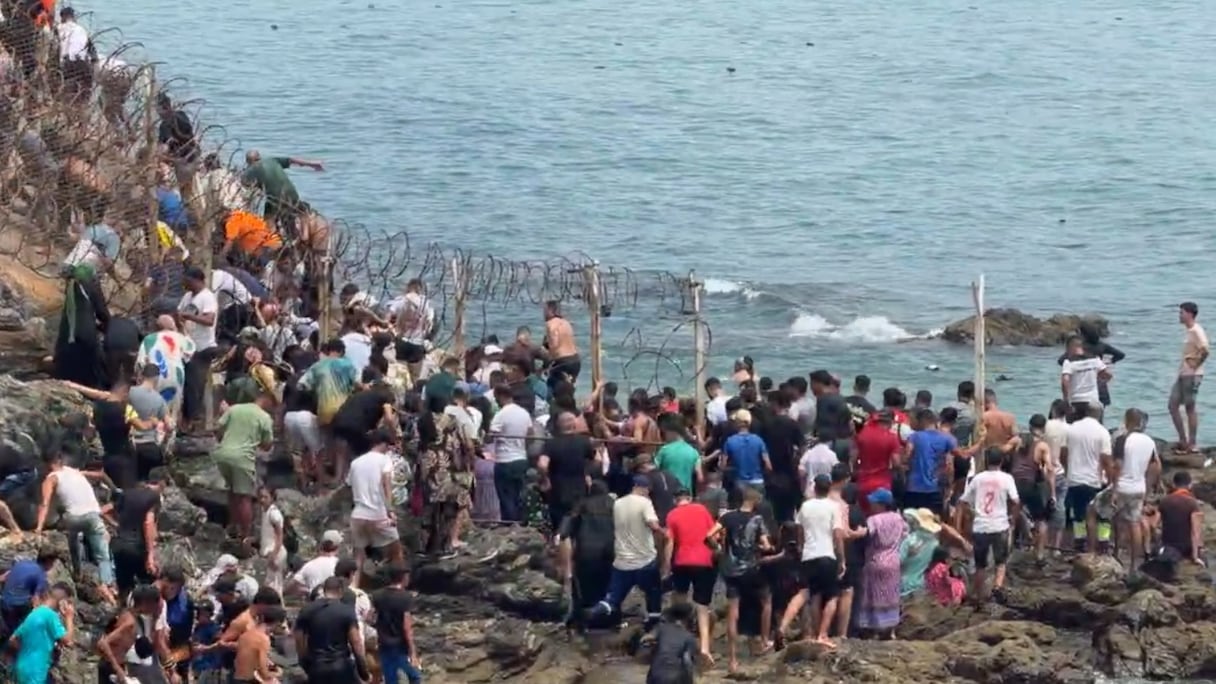
The “Touche pas à mon enfant” association expressed deep concern Monday, August 10, over the situation of children and minors in Ceuta following the recent wave of crossings. In a statement, the NGO referred to reports of several minor girls being sexually assaulted, as well as the presence of vulnerable children and young girls without adequate protection measures.
The organization stressed that its concerns extend beyond the conditions of the crossings to the period following arrival. An unaccompanied or inadequately protected minor can then be exposed to multiple risks, including violence, exploitation, trafficking, blackmail and sexual assault.
“Reported cases of sexual assaults against minors must be treated with the utmost seriousness and urgency and must be subject to rigorous and independent investigations,” the association said, while urging caution over the circulation of unverified figures concerning the number of victims.
The NGO made several specific demands. It called for all minors present in Ceuta to be identified and for their legal and social situations to be assessed. It also called for safe and appropriate accommodation for minor girls and unaccompanied children, as well as medical, psychological and social support for any child who may have experienced violence or exploitation. Finally, it called for judicial investigations into all reports of sexual assault and for anyone found responsible to be prosecuted.
Read also : OMDH raises concerns over humanitarian situation in Ceuta
The association also called for efforts to locate families and facilitate family reunification when this is in the child’s best interests, as well as stronger coordination between Moroccan and Spanish authorities to ensure the protection, rights and dignity of the Moroccan minors concerned.
“Touche pas à mon enfant” stressed that a child remains, above all, a child, with fundamental rights to protection, safety and dignity. For the NGO, protecting minors in such circumstances is a shared human and legal responsibility: no child should be left without protection between borders, administrative procedures or disputes over jurisdiction.
