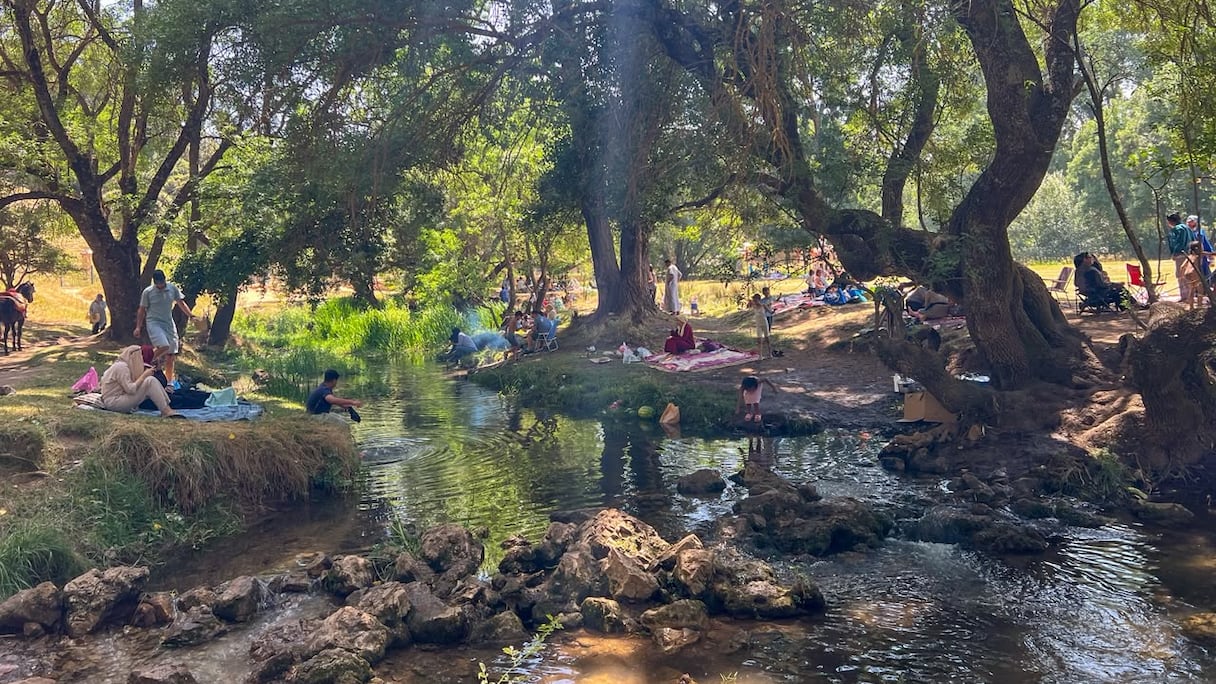
As a prolonged heat wave pushes temperatures above 40 degrees Celsius across much of Morocco, the mountain province of Ifrane is drawing growing numbers of visitors seeking cooler weather, with its natural springs and cedar forests becoming popular weekend destinations for families and young people.
Le360 observed heavy visitor traffic at Ain Vittel, Ain Zrouqa, and several other natural sites across the province, where families gathered along spring-fed streams and shaded picnic areas to escape the summer heat. Visitors had traveled from cities including Fez, Meknes, Kénitra, Marrakech, and Imouzzer Kandar.
The area’s appeal extends beyond families. Groups of young people have also been flocking to the region to cool off in its spring waters and enjoy the dense forest cover, offering a stark contrast to the scorching conditions affecting many inland cities.
Abdelali Adnane, president of the UNESCO Atlas Morocco Club, said the recent heat waves have prompted more Moroccans to seek mountain destinations offering cooler temperatures and natural surroundings.
“The region’s appeal extends far beyond Ain Vittel and Ain Zrouqa,” he told Le360, pointing to attractions including the Tizguite River, Ain Aghbal in Azrou, Ras El Ma in Ben Smim, the region’s cedar forests, and Lake Ouiouane and Lake Tifounassine within Ifrane National Park.
He said visitors are arriving not only from the nearby Fez-Meknes region but also from more distant provinces such as Guercif, Driouch, and Nador, as well as Morocco’s coastal cities.
According to Adnane, the growing influx reflects increasing interest among Moroccan travelers in mountain tourism as an alternative to traditional seaside destinations during periods of extreme heat.
He also warned, however, that the surge in visitors continues to be accompanied by environmental challenges, particularly litter left behind at natural sites after picnics and day trips.
Adnane called for stronger public awareness campaigns encouraging visitors to preserve the cleanliness of the area’s forests, springs, and lakes to help protect one of Morocco’s most important natural tourism destinations.
