“He was kind,” “he had a stable job,” “he never caused trouble,” “justice must be done!” These words have echoed repeatedly since the death of Abderrahim Fakir, a 42-year-old Moroccan man pinned to the ground by two police officers during his arrest in Bologna, northern Italy. An investigation was opened on Monday by Italian prosecutors, a day after the tragedy, which has sparked public outrage and reopened painful wounds for his family.
Footage recorded by a local resident and widely shared by Italian media shows Fakir being held face down on the ground for several minutes. Having moved to Italy at the age of five, he can be heard repeatedly shouting, “Help, help!” as the two officers restrain him, while two men in paramedic uniforms stand nearby without intervening. Groaning in pain, Fakir is later seen lying motionless, face down on the pavement, as police bind his hands and feet. One officer eventually taps him on the shoulder to check whether he is still conscious. He is not.
In a statement, the Bologna police said that footage from the body cameras worn by the two officers had been handed over to the judicial authorities. The officers had responded after residents reported that a man was experiencing what they described as “a violent outburst.”
Italian Prime Minister Giorgia Meloni reacted on X, calling what happened in Bologna “unacceptable.” “It is essential that any responsibilities be established with the utmost rigor. The truth must be sought to the very end, without prejudice and without indulgence toward anyone,” she wrote.
Bologna’s center-left mayor, Matteo Lepore, also called for “full clarity” over the events. A rally held Monday in the city center drew several hundred people, according to local media. Demonstrators carried banners demanding “justice and truth for Fakir” and denouncing “murderers,” amid a mixture of anger and grief.
Read also : Protests erupt in Italy after Moroccan man dies in police restraint; Meloni urges ‘truth’
Opposition senator Ilaria Cucchi, whose brother died in police custody in 2009, expressed disgust at some messages of " solidarity " directed at the police. She accused Italy’s governing coalition of having "encouraged this type of behavior " through policies "driven entirely by hatred and racism. "
Speaking to Le360, Barbara Spinelli, a lawyer registered with the Bologna Bar Association, a specialist in asylum law and co-president of the European Association of Lawyers for Democracy and Human Rights, said she had assisted Abderrahim Fakir last year with the renewal of his residence permit.
Her voice still trembles when recalling the circumstances of his death. “We do not yet know all the details, but what we do know is that he died while in police custody,” she said.
“The police used a restraint technique that has been heavily criticized by the European Court of Human Rights because the risk of death is extremely high with this method,” she added.
She described a man far removed from the image some have sought to portray. “His entire family is here. He always treated me with great respect. He had dignity and was deeply responsible, both in his work and toward his colleagues. He was a very kind person,” Spinelli recalled.
She noted that Fakir had lived in Italy for more than thirty years, where he had grown up, studied and worked, yet the fear of deportation had never entirely left him in what she sees as an increasingly hostile environment. “I am deeply saddened by what happened to him... No one should ever have to go through what he went through,” she said.
Spinelli drew parallels with an earlier Italian case that, in her view, should have changed everything. “The European Court condemned Italy in the case of Riccardo Magherini, who died in Florence in 2014 after being restrained by four carabinieri while begging for help. This technique should not be used on someone in a state of agitation, and Italian police should receive specific training and apply the principle of proportionality,” she said.
She also referred to the investigation opened into the paramedics present at the scene, who, she says, remained inactive. “The world needs humanity. I am truly shocked. I have enormous respect for all the foreigners who come to my country, and he was a wonderful person,” she said, visibly emotional.
“Racism cuts across society; it affects everyone. Public debate needs to return to human rights because racist rhetoric benefits no one,” she concluded.
Fabio Anselmo, the lawyer appointed by Fakir’s family, published an emotional statement on Facebook, urging people not to forget Abderrahim Fakir’s name. “Remember this name. He died during a police arrest while being restrained on the ground. The images show his body crushed against the asphalt, the weight of the officers on his chest, his face pressed to the ground,” he wrote.
“I am deeply distressed because this story is not new,” he continued, again invoking the Magherini case and posing what he considers an unavoidable question. “Why did a man die precisely while being held on the ground, in a position that, judging by the images, appears to have prevented him from breathing? The state has a duty of care toward every citizen,” he insisted, “even toward someone who is agitated, even toward someone who has committed an offense.”
He called for all footage, including body-camera recordings, to be fully preserved and for a “rigorous, independent and transparent” investigation.
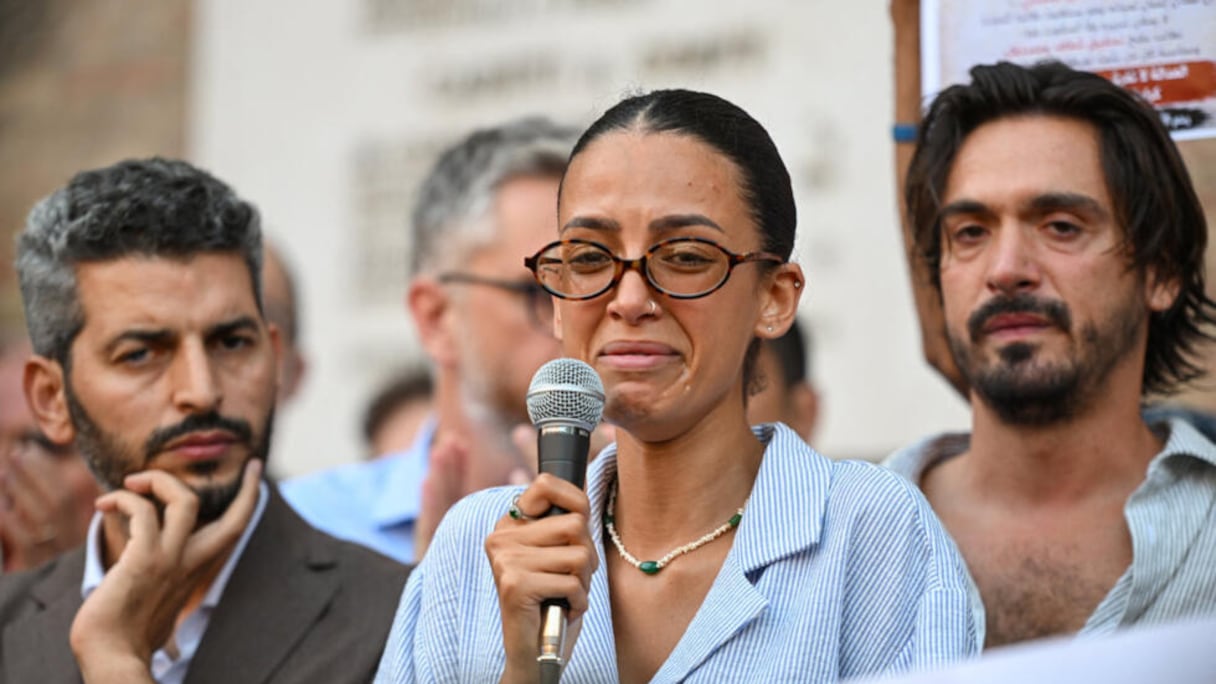
The victim’s niece, Yossra Fakir, spoke publicly through tears to demand truth and justice. “His name was Abderrahim Fakir and he was my uncle. He was not a number, he was not a headline, he was not a case file,” she said.
“He was a life, he was a loved one, and yesterday someone decided to take him away from me. Conscience! Where? Where is conscience? Abderrahim was not a news story. He was a man with a history, with feelings and with people who loved him deeply,” she continued. She stressed that any wrongdoing must be established “with the utmost rigor” and that anyone who failed in their duty should no longer hold a position that requires public trust and respect for the truth.
Fakir’s sister, Khadija Fakir, could not hold back either her tears or her anger in comments to Corriere della Sera. “You cannot die like this! The police are supposed to protect us. If someone is agitated, you calm them down—you do not kill them like a dog,” she said in a widely circulated video, encapsulating the grief and incomprehension of a family determined that Abderrahim Fakir’s death will not be forgotten.
The Embassy of the Kingdom of Morocco in Italy reacted swiftly. On Monday, it said it had been following developments in the case “from the very first moments, with the utmost attention and deep concern.”
According to a statement issued by the Moroccan ambassador to Italy, instructions were immediately given to the Moroccan consulate general with territorial jurisdiction to provide Fakir’s family with all necessary moral support and consular assistance in light of the gravity of the circumstances.
The consulate general was also instructed to maintain constant contact with the Italian judicial authorities leading the investigation, in full compliance with the relevant international conventions and Italian legal procedures.
“It is in everyone’s interest that the full truth about this tragedy be established, through a rigorous, impartial and transparent determination of all the circumstances surrounding the events,” the diplomat said, while reiterating the embassy’s full confidence in the Italian judicial system.
“We are convinced that the ongoing investigations will establish the complete truth about the circumstances of this tragedy,” he added.