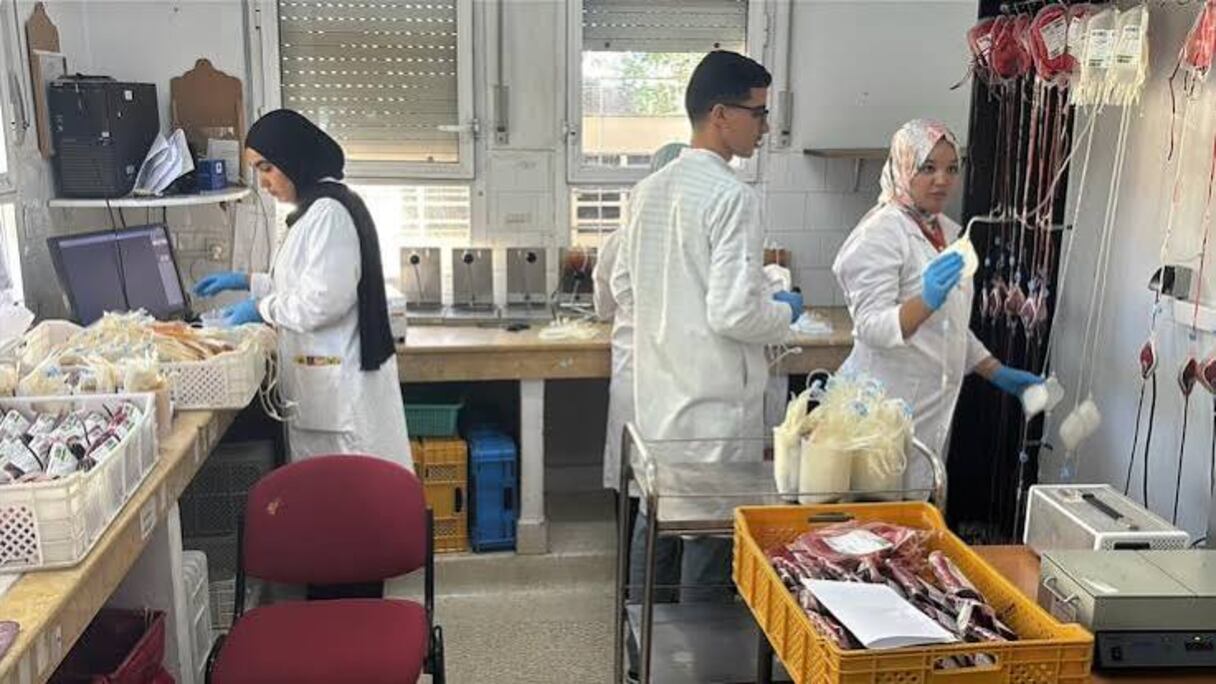
Behind every bag of blood delivered to a patient lies a carefully controlled process involving technical procedures and laboratory tests, all essential to ensuring the safety and quality of this vital resource.
In Oujda, the Blood and Blood Derivatives Processing Center plays a central role in this process, using advanced equipment and modern technology while adhering to quality and safety standards.
The center helps ensure that safe blood meeting current standards is available to patients and injured people across the region’s provinces. At its blood qualification and management laboratory, donated blood undergoes a series of technical procedures overseen by specialized staff.
These include weighing the bags, separating the main blood components and preparing red blood cells, platelets and plasma under strict scientific conditions tailored to each component and its intended therapeutic use.
These steps are crucial. The center’s work goes beyond processing blood and separating its components to include detailed laboratory tests and examinations, notably blood grouping and compatibility testing against the patient’s blood, before the blood is authorized for therapeutic use.
These procedures form part of an integrated control system designed to ensure the safety of blood and its derivatives. The process can take up to 48 hours before the blood is ready for use.
Dr. Sanaa Ismail, the Moroccan Agency for Blood and Blood Derivatives’ representative in the Oriental region, said the center relies on advanced equipment and high-precision technology to detect potential biological and viral markers. She added that every stage of the process is subject to continuous monitoring and must comply with recognized quality and safety standards.
ISO 9001 certification and quality standards
Speaking to Le360, Dr. Sanaa Ismail said the center’s ISO 9001:2015 quality certification reflects its commitment to implementing a quality management system and improving working conditions in line with specific standards. The certification reinforces the center’s role as a key part of the healthcare system, helping ensure that patients have access to blood and blood derivatives that meet safety and quality requirements.
For her part, Dr. Hasnaa Bendaha, who works in the blood qualification and management laboratory, explained that the laboratory prepares blood units through a rigorous technical process involving several stages designed to ensure the safety and quality of blood products.
Continuous efforts
She said all blood collected from donors first undergoes separation into its three main components: red blood cell concentrates, platelet concentrates and plasma. Each component is then processed separately under specific technical conditions.
“This process requires a series of precise procedures and continuous efforts overseen by specialized staff and technicians. It begins with weighing the whole-blood bags, followed by separation and preparation using dedicated equipment and techniques,” the health official said.
“Blood units are distributed to patients only after all control and testing stages have been completed, including blood grouping and compatibility testing against patient samples, as part of an integrated system that ensures blood safety,” she added.
Bendaha stressed that matching blood groups and carrying out the necessary laboratory tests are fundamental to ensuring safe transfusions, protecting patients and achieving the best possible treatment outcomes.
Every donor matters
With increasingly advanced equipment, precise laboratory testing and skilled specialists, Oujda’s Blood and Blood Derivatives Processing Center continues to help safeguard this vital resource. Its work relies on quality and safety standards designed to strengthen confidence in the services provided to patients.
However, maintaining this system depends on more than technical and human resources. It also requires citizens to commit to regular, voluntary blood donation. This act of solidarity can help save lives and makes every donor an essential link in the healthcare chain.
