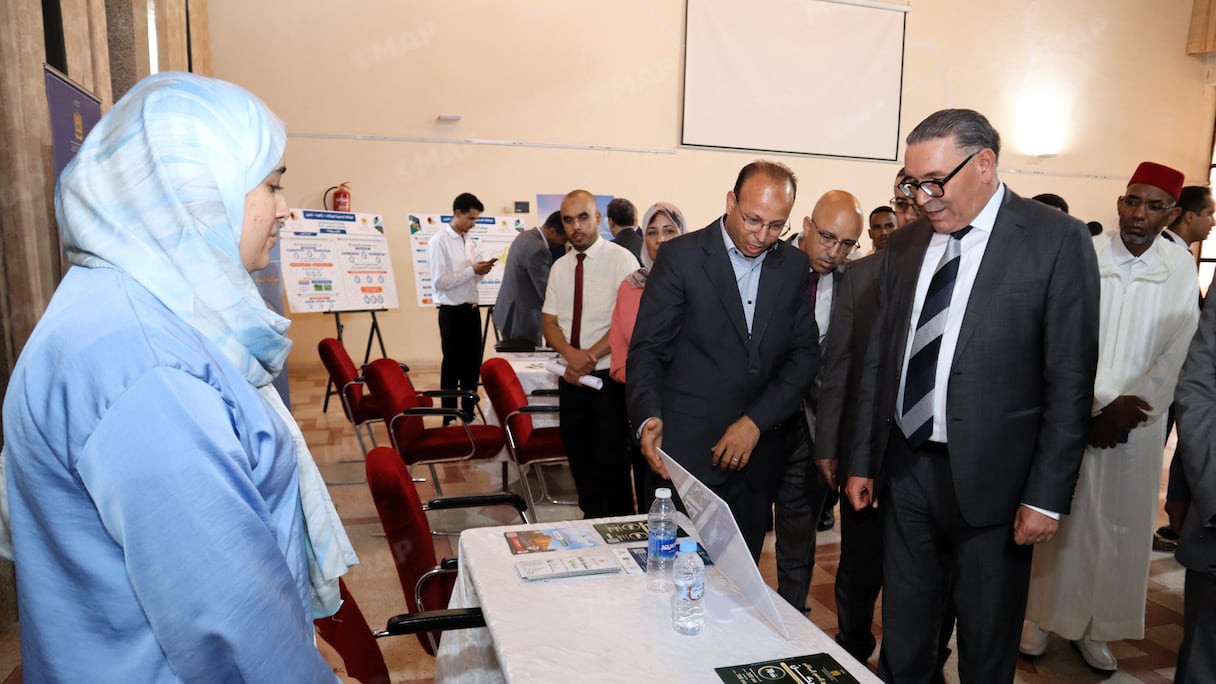
Organized by the Ouarzazate-based Association Energie pour le Développement et Culture Renouvelable, with the support of the Drâa-Tafilalet Regional Council and in partnership with Ouarzazate Province, the festival runs through August 16 and provides a platform to discuss the role of Moroccans living abroad in the implementation of major projects launched by Morocco ahead of the 2030 World Cup.
The opening ceremony, held alongside the National Day of Moroccans Residing Abroad (MRE), was chaired by Ouarzazate Governor Abdellah Jahid at the city’s convention center. Officials, elected representatives, local stakeholders and members of the Moroccan diaspora attended the event.
In his opening remarks, Jahid highlighted the relevance of this year’s theme, which he said reflects the central role of Moroccan talent abroad in supporting strategic projects launched by Morocco under the leadership of King Mohammed VI.
The governor also noted that the annual celebration of the National Day of Moroccans Residing Abroad on Aug. 10 reflects the importance placed on maintaining ties between Moroccans around the world and their home country and promoting their contribution to Morocco’s development.
The expertise of Moroccans living abroad represents a major asset for Morocco, given their academic and professional backgrounds and experience across economic, technological, industrial, cultural and social fields, Jahid said.
With major sporting events scheduled to take place in Morocco in 2030, mobilizing Moroccan skills and talent both inside and outside the country is more important than ever, he added. Such efforts can contribute to the success of major strategic projects, strengthen the competitiveness of the national economy and reinforce Morocco’s position as a regional investment hub.
Jahid called on Moroccans residing abroad to continue contributing to this development through investment, the transfer of expertise, economic and scientific partnerships and support for development initiatives, in line with the vision of the King, which considers Moroccans around the world key partners in building Morocco’s future.
The governor also highlighted Ouarzazate Province’s natural, tourism, film and energy assets, describing them as a strong basis for high-value investment and economic opportunities for members of the Moroccan diaspora.
For her part, Samia Azenague, president of the Association Energie pour le Développement et Culture Renouvelable, said the National Day of Moroccans Residing Abroad provides an opportunity to highlight the diaspora’s contribution to Morocco’s development and strengthen its ties with the country.
The day also recognizes the efforts of a community that contributes to Morocco’s development and progress across several sectors while creating new opportunities for greater involvement in major development projects, she said.
Azenague also highlighted the important role played by Moroccans living abroad in the economic and social development of the Drâa-Tafilalet region through investments and remittances. She described them as ambassadors for Morocco in their countries of residence, representing the values of the region and helping promote its local heritage.
The opening ceremony also featured the presentation of the 2026 Migration Awards. The awards went to Noureddine Sina, a Moroccan entrepreneur based in France, in recognition of his professional career abroad, and Bernard Yves Jean, a French investor and owner of a tourism establishment in Ouarzazate, for his integration and involvement in local life.
A local products fair was also opened as part of the festival, giving visitors and members of the Moroccan diaspora an opportunity to discover the diversity and richness of products from the region.
This year’s festival aims to strengthen ties between Moroccans living abroad and their country of origin by creating a space for dialogue and exchange. It also seeks to encourage members of the diaspora to take part in local and regional development initiatives and develop investment and community projects that benefit the region.
The program includes seminars, training workshops and cultural evenings focused on migration and ways to strengthen ties between the diaspora and Morocco.