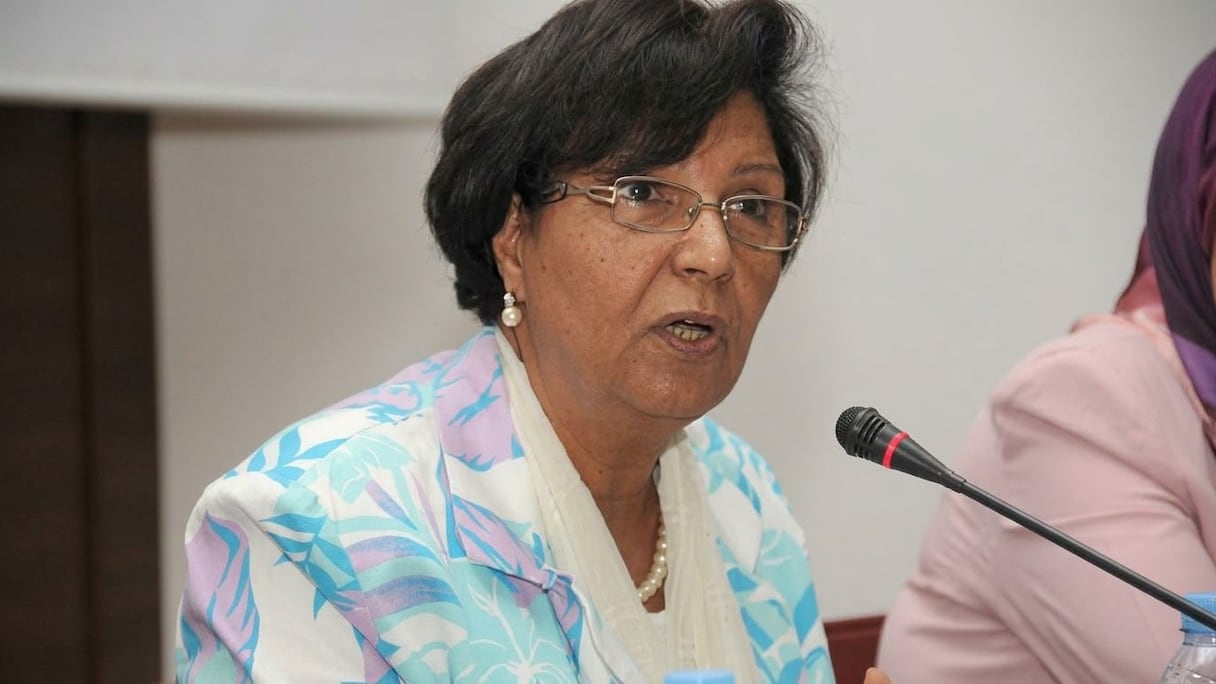
Zhor El Horr, who became Morocco’s first female judge in 1979, died on Friday, October 16, at the age of 79 after several months of illness. Over more than four decades, she held senior positions within the judiciary and contributed to the reform of the Family Code before continuing her work on human rights and the protection of women and children.
Born in Casablanca in 1947, El Horr began her professional life in education. In 1966, she became an Arabic language teacher while pursuing law studies. She earned her law degree in 1975 and passed the judicial recruitment examination. In 1979, she was assigned to the Court of First Instance in El Jadida, becoming the first woman to serve as a judge in Morocco.
She continued her career in Casablanca in 1983. Appointed vice-president of the Aïn Chock-Hay Hassani court in 1989, she joined the Supreme Court in 2000. She went on to preside over the Ben M’sik-Sidi Othmane courts in 2002 and Al Fida-Derb Sultan in 2003.
Read also : Lalla Meryem launches national mechanism for eradication of child labor
A role in the Family Code reform
In 2004, the year the new Family Code came into force, El Horr headed the family justice division in Casablanca. She took part in the work of the Royal Advisory Commission tasked with revising the Moudawana, as well as that of the panel of experts responsible for preparing a guide to implementing the new legislation.
She took a firm position against child marriage. Criticizing judges who granted exceptions to the minimum legal age for marriage, she called for the removal of Articles 20 and 21 of the Family Code, which allow such exemptions.
From 2006, she presided over a chamber at the Court of Cassation, where she continued to serve until her retirement at the end of 2010.
A commitment that continued after retirement
Retirement from the judiciary did not end El Horr’s professional activity. She joined the Casablanca Bar and remained involved in defending human rights. She served on the National Human Rights Council and, in September 2019, became president of the National Commission for the Care of Women Victims of Violence.
She also headed the Moroccan Association for Family Support and taught at the Higher Institute of the Judiciary. In 2014, she co-authored a book with Hassan Ibrahimi on protecting women’s rights in Moroccan case law.
Read also : Moroccan NGO Project Soar wins UNESCO prize for girls’ education
El Horr also worked as a mediator on “Assolh Khir,” a Radio Aswat program dedicated to family disputes.
Her career earned her several distinctions, including the Order of the Alaouite Throne at the rank of Knight in 2000 and Commander in 2003, as well as an Amnesty International Morocco award for human rights defenders. In April 2025, Mohammed V University in Rabat paid tribute to her.
With El Horr’s death, Morocco has lost a pioneer of its judiciary. From her first judicial appointment in El Jadida to her work supporting women who experienced violence, she devoted more than 40 years to justice and the defense of women’s and children’s rights.
