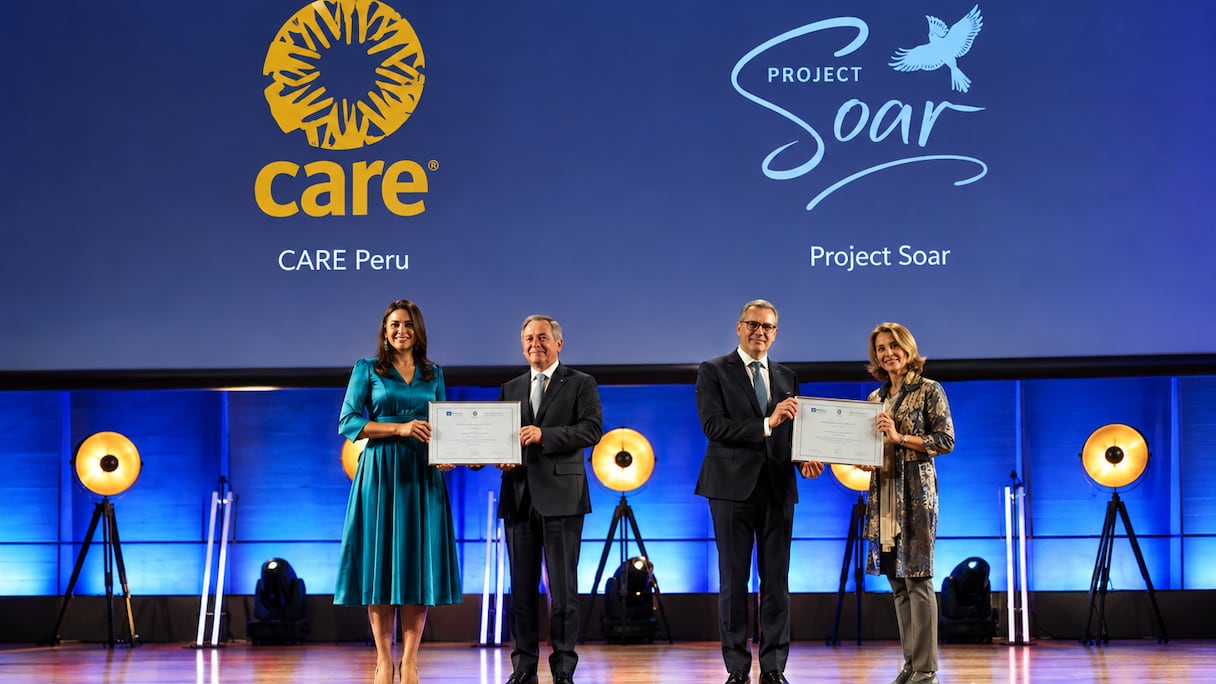
Project Soar was named a joint winner alongside CARE Peru’s “Girls with Opportunities” initiative. Both projects were recognized at a ceremony held on October 9 at UNESCO headquarters in Paris, ahead of the International Day of the Girl Child on October 11.
The awards were presented by UNESCO Director-General Khaled El-Enany and Ren Youqun, vice minister of education of the People’s Republic of China.
Selected by the UNESCO director-general on the recommendation of an international jury, the two winners each received $50,000 to continue their work promoting education for girls and women.
Read also : Moroccan teacher wins African Union’s top continental teaching award for 2026
Project Soar helps adolescent girls stay in school
Founded in 2013 by Maryam Montague, the Moroccan NGO received the award for “Project Soar in a Suitcase,” an initiative that supports disadvantaged adolescent girls in Morocco and beyond, helping them remain in school and build a future for themselves.
The program is delivered by locally trained facilitators and is built around five pillars: worth, voice, body, rights and pathways. It aims to strengthen girls’ self-confidence, improve their health knowledge, raise awareness of their rights and help them plan for the future.
The initiative combines a comprehensive girls’ empowerment program with menstrual health solutions and community engagement. It seeks to remove barriers to education and combat child marriage.
Two key components support this approach. Soar Clubs help girls develop solutions to challenges facing their communities, while Soar Dialogues engage parents, teachers and other community members.
Read also : Morocco falls two places to 139th in global gender equality ranking
The program reported strong results in 2025: 97.5% of participating girls passed their school year, while 99% did not experience early marriage.
Peruvian initiative supports rural and Indigenous girls
The second winner, CARE Peru, was recognized for its “Girls with Opportunities” project, which targets adolescent girls from Indigenous communities and rural areas. The initiative helps them complete secondary school and pursue further education and decent employment.
The program takes a whole-school approach, combining social-emotional learning, comprehensive sexuality education, financial literacy, education in science, technology, engineering, arts and mathematics (STEAM), life planning and mentoring.
The secondary school completion rate among participants rose from 65% to about 82%. Reports of early pregnancies at targeted schools also fell by half.
The model has been incorporated into public schools, supporting its long-term sustainability and expansion. Since 2016, the initiative has reached more than 37,000 adolescent girls aged 14 to 19 in rural areas.
Read also : Morocco launches first national program to combat gender stereotypes and promote equality by 2035
UNESCO prize established in 2015
Funded by the government of the People’s Republic of China, the UNESCO Prize for Girls’ and Women’s Education was established in 2015 to recognize outstanding and innovative contributions to girls’ and women’s education.
The annual award recognizes two winners and supports efforts to promote quality education and gender equality, contributing to the United Nations’ Sustainable Development Goals 4 and 5.
