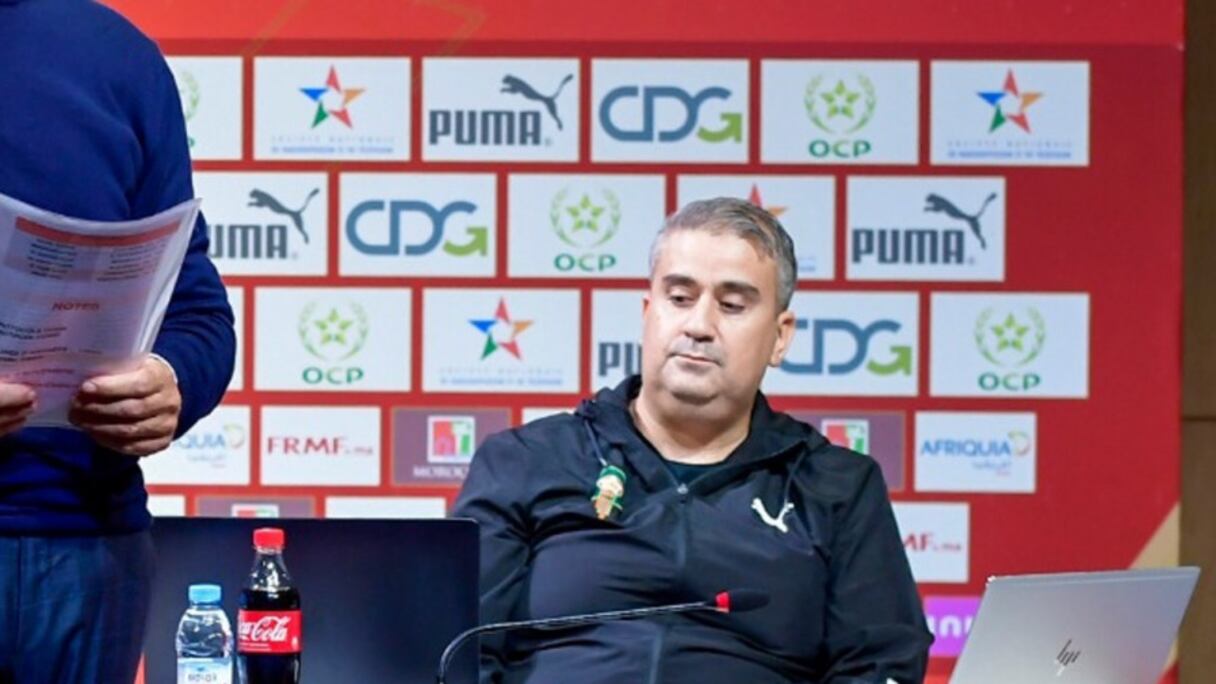
In modern football, where every detail can make the difference, video analysis has become an essential tool for improving performances and maximizing players’ potential.
Within Mohamed Ouahbi’s coaching staff, that responsibility belongs to Mousa El Habchi. His work helps shape the national team’s tactical approach and supports the continued development of a side that now ranks among the world’s elite.
The Making of a Specialist
Born in Tamise, Belgium, Mousa El Habchi, a lifelong admirer of Lionel Messi, initially dreamed of becoming a footballer before turning his attention to coaching. He began his career at Sporting Lokeren, where his technical expertise and analytical mindset quickly stood out.
An engineer by profession, El Habchi built an impressive international résumé. He worked at Saudi Arabia’s Al Shabab under Michel Preud’homme before returning to KRC Genk. His career later took him to Egyptian giants Zamalek, eventually leading to an opportunity with the Belgian Football Association.
In 2016, Belgium’s then-technical director Chris Van Puyvelde brought him into the federation, where he worked with both the women’s national team, the Red Flames, and the senior men’s side, the Red Devils.
Part of Belgium’s Historic Run
El Habchi was a member of Roberto Martínez’s coaching staff during the 2018 FIFA World Cup, where Belgium secured a historic third-place finish.
As video analyst, he played an important role by providing detailed tactical reports, statistical data and video breakdowns covering both Belgium’s own performances and those of their opponents. His work helped support what remains the most successful generation in Belgian football history.
In a previous interview, El Habchi explained what the role demands.
“A good video analyst must handle pressure and, above all, always be prepared. You need to have plans A, B, C, and D. During matches, I collect live footage so I can provide quick feedback at halftime, then after the game I break down every moment in the smallest detail.”
Away from football, El Habchi is also passionate about electronic music. Performing under the stage name Disco Dasco, he even celebrated Belgium’s 2018 World Cup success behind the DJ booth in Brussels’ Grand Place. His love for music has also seen him perform several times at the renowned Tomorrowland festival.
A Key Figure in Morocco’s Rise
El Habchi joined the Royal Moroccan Football Federation (FRMF) full-time in March 2020, just as a new generation of Moroccan talent was emerging. He has since been part of the national team’s remarkable journey, from the historic run to the semifinals in Qatar to Morocco’s rise to sixth place in the FIFA rankings.
Over the years, El Habchi has helped redefine the role of video analyst. He spends countless hours reviewing footage, dissecting every sequence of play and producing extensive tactical reports. Alongside British analyst Harrison Kingston, he applies the same meticulous approach to studying Morocco’s opponents.
Together, they identify strengths, expose weaknesses, and detect tactical vulnerabilities—work that has become an invaluable asset to Moroccan football.
Under Vahid Halilhodžić, Walid Regragui, and now Mohamed Ouahbi, El Habchi has held lengthy tactical meetings with the coaching staff, presenting his findings on positioning, movement, decision-making, and every other detail that could influence a match.
At a time when elite football increasingly relies on data and analytics, his contribution has become indispensable to Morocco’s setup.
When Morocco face France in Thursday’s World Cup quarterfinal, the battle will not be fought solely on the pitch. Behind the scenes, El Habchi and his team will go head-to-head with France’s own video analysis specialists, Thierry Marszalek and Éric Dubray—two respected figures within Les Bleus’ staff. It will be a quiet but potentially decisive tactical duel, one that could ultimately shape the decisions made by both head coaches.
