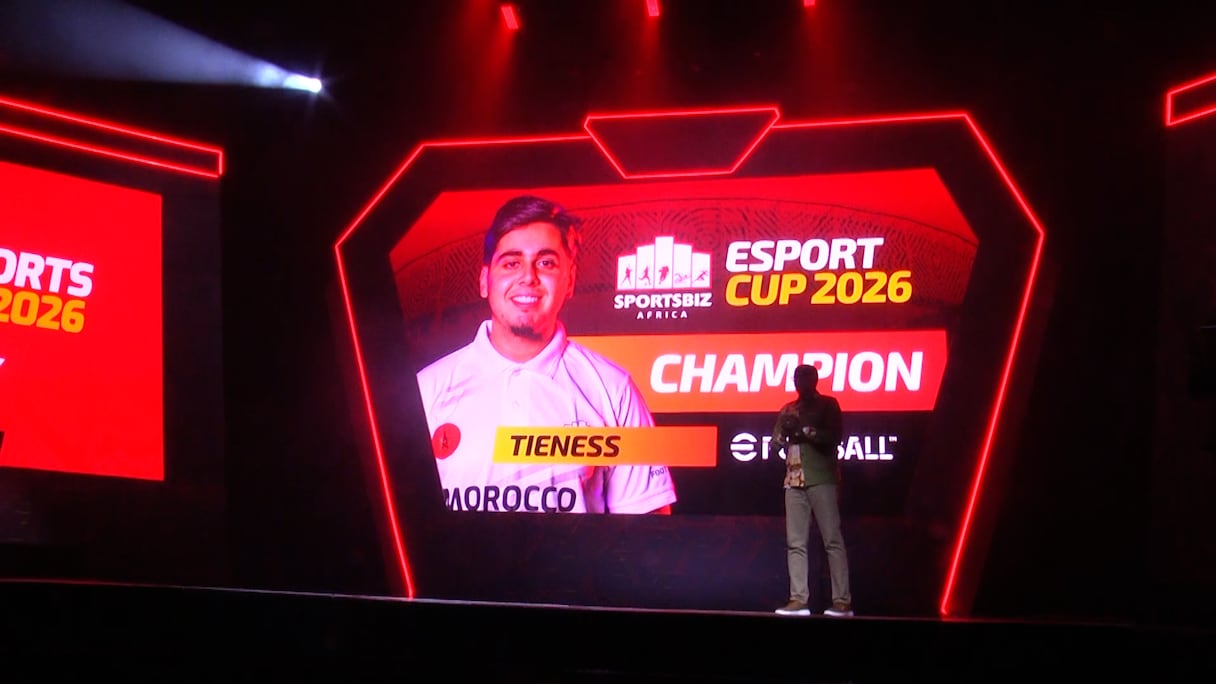
Controllers, screens and intense concentration. For two days, Africa’s top virtual football players competed in two disciplines: EA Sports FC26 and eFootball Mobile.
In the first, Egypt’s Anas Badr took the title ahead of fellow Egyptians Youssef Sherif, known as Toxic Joe, and Moaaz Ahmed Ibrahim, known as Xmozaa. In eFootball Mobile, Morocco’s Anass Moussa won the title ahead of Madagascar’s Sedra Nirina.
At 22, Anass Moussa has already established himself as a professional player. His ambitions now extend beyond the continent. “I want to become world champion,” the Moroccan player said. He had already competed in a World Cup and reached the final.
Read also : Chess: 15-year-old Indian player stuns Magnus Carlsen in Titled Tuesday upset
The phenomenon extends far beyond tournaments. According to official data, Africa’s video game market exceeded $1.8 billion in 2024, with 349 million players, including 304 million on mobile devices.
The e-sports sector remains much smaller, but already represents several tens of millions of dollars and could exceed $60 million, according to estimates published in 2025.
This is the space the organizers of the SportsBiz Africa E-sports Cup want to occupy. Ronny Lusigi, president of the Kenya Esports Federation and organizer of the competition, wants to turn these events into more than just tournaments.
This second edition brought together 40 players from 11 countries, compared with just eight players from eight countries at the first edition. More than 50,000 people followed the competition online.
But turning this audience into a real economy requires Africa to solve a very concrete problem: its infrastructure.
For Madagascar’s finalist Sedra Nirina, the lack of servers on the continent directly disadvantages African players, particularly because of latency when they face opponents based in other parts of the world. He is calling on game publishers, particularly FIFA and Konami, to install servers in Africa.
For Ronny Lusigi, the challenge is precisely to create the conditions that would allow African players to access the biggest competitions. His long-term goal is to organize events on the continent that could serve as official qualifiers for world championships. The lack of servers and organizers capable of hosting international competitions still limits those opportunities.
Read also : GTA VI to offer extended preview through Netflix partnership
The level of play, however, appears to be improving. At this edition, two East African players reached the quarterfinals, six made it into the final 16, and a Kenyan player reached the eFootball semifinals.
The potential is already there: hundreds of millions of players, a massive digital audience and a new generation that wants to turn gaming into a professional career. What remains is to build the infrastructure, competitions, media rights and investment needed to turn that passion into a genuine African industry.
