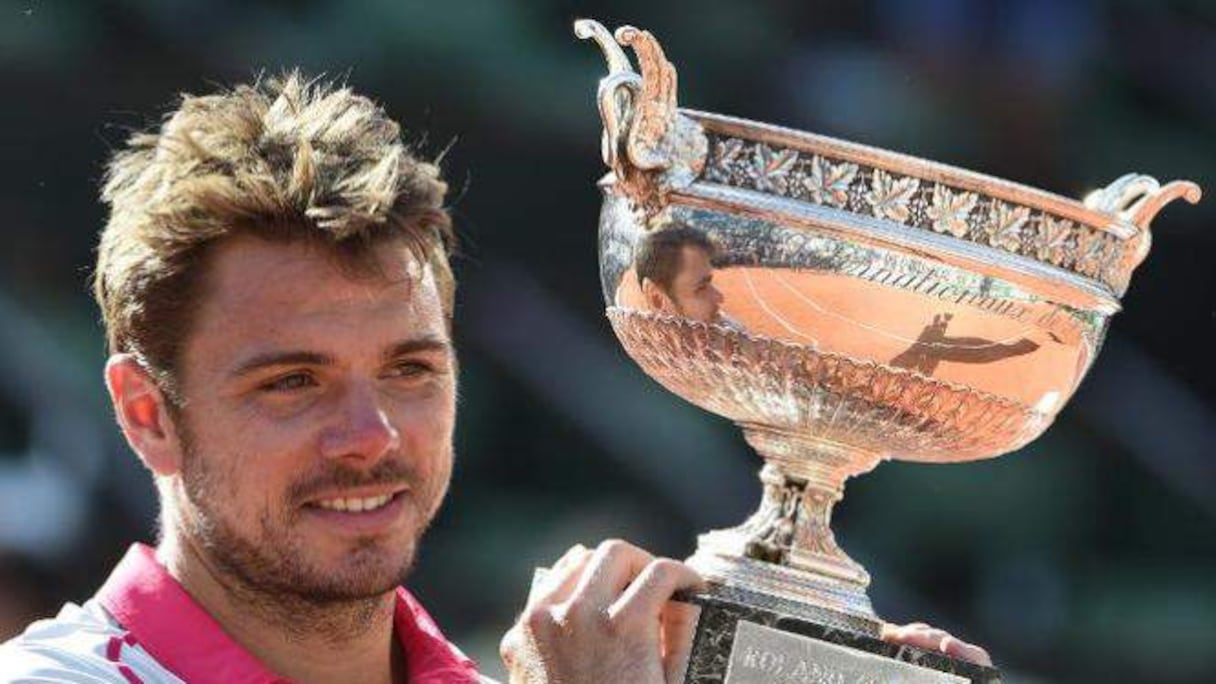
Stan Wawrinka’s final match came where his journey on the ATP Tour began, in Switzerland. The 41-year-old bowed out at the Swiss Indoors in Basel on Tuesday, October 27, losing 7-5, 7-6(2) to Czech player Jiří Lehečka in the first round. It was the last chapter of a career that took him from a dependable tour professional to a three-time Grand Slam champion in an era dominated by four of the greatest players the sport has known.
Known as “Stan the Man” and “Stanimal,” Wawrinka leaves professional tennis with 16 ATP singles titles, a career-high ranking of world No. 3, Olympic doubles gold and a Davis Cup crown with Switzerland. Yet his place in tennis history was forged above all by three Grand Slam triumphs that defied the established order of his time.
The match that changed everything
Born in Lausanne on March 28, 1985, Wawrinka turned professional in 2002 and made his ATP Tour debut in Gstaad in 2003. For much of his early career, he was a consistent presence among the top players without being regarded as a leading contender for the biggest titles. His ranking climbed as high as No. 9 in 2008, but the breakthrough that would change his career came five years later, in a match he lost.
At the 2013 Australian Open, Wawrinka faced Novak Djokovic in the fourth round. The Swiss pushed the defending champion through more than five hours of extraordinary tennis, eventually losing 1-6, 7-5, 6-4, 6-7(5), 12-10 in the deciding set. Wawrinka had led 6-1, 5-2 before Djokovic fought back, but the match revealed a level of shot-making and resilience that would become the defining features of his career.
The defeat was painful, but it also gave Wawrinka a new belief in his ability to compete with the best. A year later, he returned to Melbourne and went one step further.
Three Grand Slam titles against the best
Wawrinka won his first major at the 2014 Australian Open, beating Djokovic in the quarterfinals before defeating Rafael Nadal 6-3, 6-2, 3-6, 6-3 in the final. The result was particularly striking because Nadal was the world No. 1 and Wawrinka had never before won a Grand Slam title. He became the first man in the Open Era to defeat both Novak Djokovic and Rafael Nadal at the same Grand Slam tournament on his way to the title and remains the only player to have achieved the feat.
That season also brought his only ATP Masters 1000 title, at Monte Carlo, where he defeated fellow Swiss Roger Federer in the final. He also helped Switzerland win its first Davis Cup title, alongside Federer, later that year. Federer’s nickname for his compatriot, “Stanimal,” captured the physical intensity and power that Wawrinka brought to the court.
His second major arrived at Roland Garros in 2015. Wawrinka defeated Djokovic 4-6, 6-4, 6-3, 6-4 in a final that remains one of the defining performances of his career. Djokovic had arrived in Paris chasing the title that had eluded him, having beaten Nadal in the quarterfinals, but Wawrinka’s aggressive groundstrokes and willingness to take risks proved decisive.
Reflecting on that performance in a first-person account for The Players’ Tribune, Wawrinka wrote, “Over the next three sets I played the best tennis of my life.” His bold, plaid shorts from that tournament also became an enduring part of the story, but it was his tennis that made the outfit memorable.
In 2016, Wawrinka claimed his third and final Grand Slam title at the US Open. Once again, Djokovic stood across the net in the final. Wawrinka lost the opening set in a tiebreak but recovered to win 6-7(1), 6-4, 7-5, 6-3. Three major titles in three years, against Nadal and Djokovic in the finals, established him as a player capable of reaching a level few could match when the stakes were highest.
His success was all the more remarkable because the period was dominated by Federer, Nadal, Djokovic and Andy Murray. Wawrinka never maintained their consistency across an entire season, but his peak was sufficient to put him alongside them on the sport’s biggest stages.
A final major final and a difficult comeback
Wawrinka reached another Grand Slam final at Roland Garros in 2017, following a five-set semifinal victory over Murray. He lost the final to Nadal in straight sets, 6-2, 6-3, 6-1. It would be his last appearance in a major final.
Later that year, a left knee injury forced him to undergo two surgeries and end his season early. The interruption came after several seasons at the highest level and proved a major turning point. He returned to competition in 2018 but struggled to recover his previous form, with further knee problems affecting his comeback. Two left foot surgeries in 2021 added to the physical challenges he faced.
Wawrinka continued to compete, however, even as the results that had once made him a Grand Slam contender became increasingly difficult to reproduce. There were occasional reminders of his ability, but he could no longer sustain the level that had carried him to three major titles.
His final years were marked less by trophies than by his determination to keep playing. In 2026, at 41, he was still competing on the tour, returning to the Australian Open and reaching the third round before making his final appearances at tournaments across the season.
A legacy beyond the titles
Wawrinka finished his career with 16 ATP singles titles, including three Grand Slam crowns, Olympic doubles gold with Roger Federer at Beijing 2008 and Switzerland’s first Davis Cup title in 2014. He reached a career-high ranking of world No. 3 in January 2014 and spent three consecutive seasons, from 2014 to 2016, among the world’s top four.
But Wawrinka was more than his titles. Fans loved him for his character and the way he played, with a powerful, attacking game that could leave a crowd in awe. His one-handed backhand was a weapon in its own right, especially when he went down the line at full force, taking risks that few players would dare on the biggest points. There was something thrilling about watching him go for a winner when the safer option was to keep the rally going.
That fearlessness was central to his success. In an era dominated by Roger Federer, Rafael Nadal, Novak Djokovic and Andy Murray, Wawrinka never seemed intimidated by the challenge. He believed he could beat the best and backed that belief with his shotmaking, producing some of the finest tennis of his career when the stakes were highest. That was how he earned the nickname “Stan the Man”, by delivering on the biggest stages and proving he belonged among the champions.
The words tattooed on his left forearm, taken from Samuel Beckett, capture that spirit better than any statistic: “Ever tried, ever failed, no matter. Try again, fail again, fail better.” It is a fitting mantra for a player who endured serious injuries and difficult setbacks but kept coming back, kept taking on the best and never stopped believing he could do it again.
