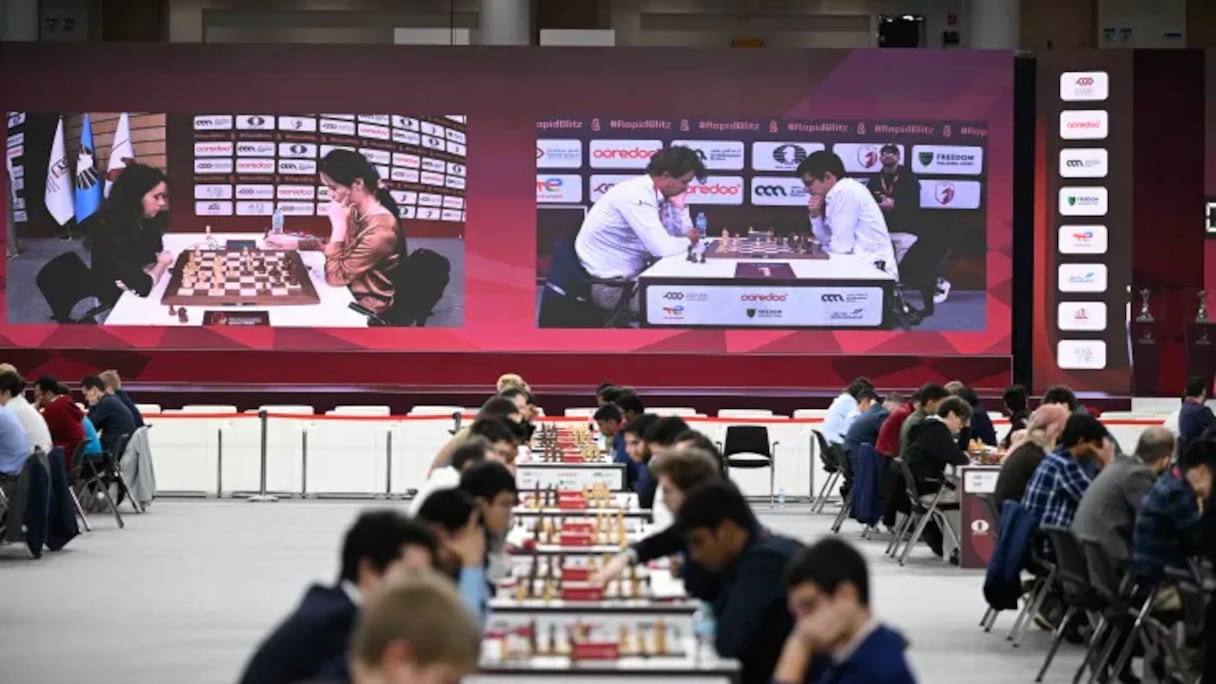
FIDE, the international governing body of chess, has approved a series of major changes to both the World Cup and the Candidates cycle beginning in 2027, introducing a new tournament format, expanding participation and eliminating the long-debated rating qualification spot for the 2028 Candidates Tournament.
The reforms, approved by the FIDE Council following recommendations from the Global Strategy Commission, are intended to make the competitions more inclusive while strengthening the link between the federation’s flagship events and the world championship cycle.
The most visible changes concern the FIDE World Cup and the Women’s World Cup, which have grown considerably since the knockout format was introduced in 2005. Over the past two decades, the open tournament has expanded from 128 to 206 players, while the women’s event has grown from 64 to 103 participants. By 2025, the open World Cup had stretched to 27 days, making it increasingly difficult to fit into the international calendar.
Beginning in 2027, both tournaments will adopt a new two-stage format lasting 19 days.
The opening phase will consist of Swiss-system tournaments played with a fast classical time control of 45 minutes plus a 30-second increment per move. The open event will be divided into four pools, while the women’s competition will feature two pools. The top players from each group will then advance to a 16-player knockout stage, which will retain the traditional format and classical time controls.
FIDE has also expanded both competitions, increasing the open World Cup from 206 to 224 players and the women’s tournament from 103 to 128 participants.
Several new qualification routes have been introduced. The top four finishers at the latest Grand Swiss and Women’s Grand Swiss tournaments will qualify directly, while additional places will be awarded through the FIDE Circuit and continental championships. The winner of the 2026 Total Chess World Championship will also earn a World Cup berth, and a qualification spot has been reserved for the highest-rated senior player.
“The new format has been designed to preserve the unique identity of the FIDE World Cup while adapting it to the evolving needs of modern chess,” FIDE president Arkady Dvorkovich said.
“At the same time, we are making the FIDE World Cups more inclusive than ever before. The increased number of places, including additional qualification spots for Africa and the Americas, will provide more opportunities for talented players from every continent to compete on one of the biggest stages in world chess.”
The changes extend beyond the World Cup itself and will reshape qualification for the 2028 Candidates Tournament, the event that determines the challenger for the world title.
One of the most significant decisions is the removal of the rating qualification spot, a pathway that had long generated controversy among players. In previous cycles, one player could qualify directly for the Candidates based on Elo rating, provided they met a minimum number of classical games.
The system came under increasing criticism in recent years. In 2025, American grandmaster Hikaru Nakamura drew attention after limiting his classical schedule and later competing in several lower-rated tournaments to satisfy the 40-game requirement while preserving his rating advantage. Similar debates surrounded Alireza Firouzja in 2023 and former world champion Ding Liren in 2021.
The rating place had also remained a possible route back for Magnus Carlsen, who stepped away from the world championship cycle after defeating Ian Nepomniachtchi in 2021. But with the former champion opting against a return and criticism of the system growing louder, FIDE ultimately chose to remove the qualification route.
Under the new rules, only the two finalists of the 2027 World Cup will qualify for the Candidates, down from three places in previous cycles. The eight-player Candidates Tournament will now feature four equally weighted qualification pathways: the Grand Swiss, the World Cup, the FIDE Circuit and the newly created Total Chess World Championship Tour.
“The qualification system for the Candidates Tournaments is one of the cornerstones of the World Championship cycle,” Dvorkovich said. “These changes have been carefully developed to make the qualification process more balanced, transparent and performance-based.”
