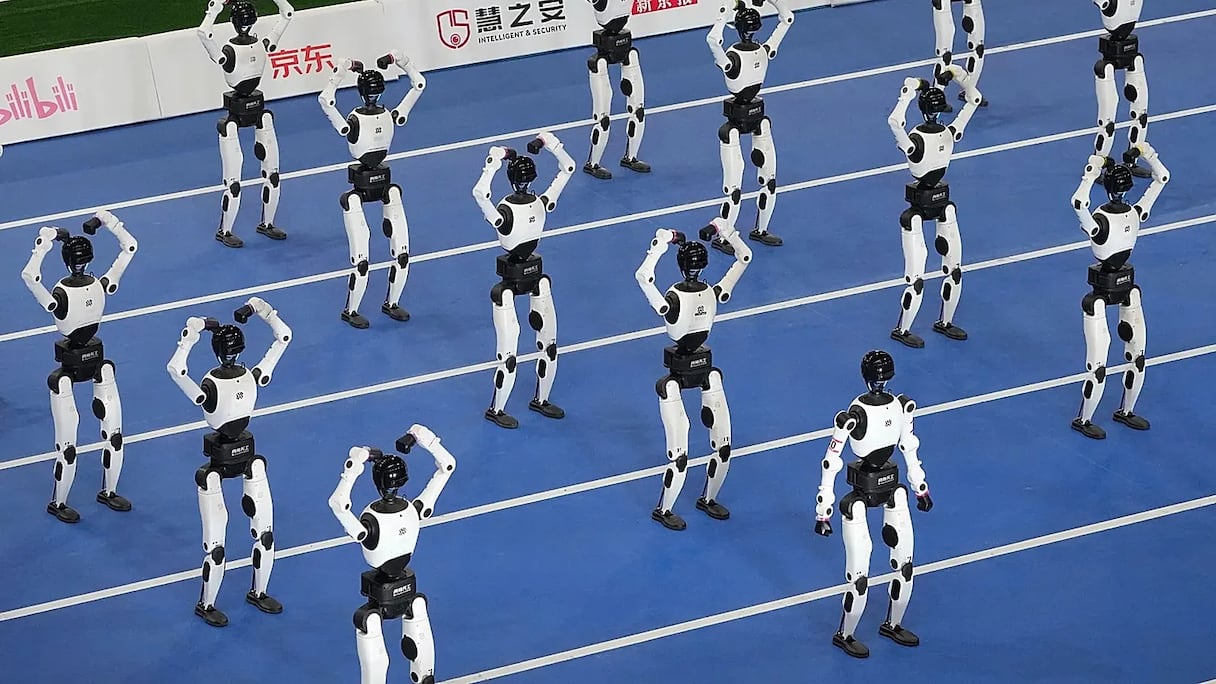
Counterpoint’s figures represent a nearly 300% increase from the same period last year and put the industry on track for more than 50,000 humanoid robot shipments worldwide in 2026, up about 210% from its 2025 estimate.
Other estimates point to an even larger market. Smart Analytics Global counted about 19,100 shipments in the first half of the year and expects roughly 60,000 units for the full year. Meanwhile, China’s Humanoid Robot Scene Application Alliance says Chinese manufacturers alone shipped more than 30,000 units in the first six months.
China dominates humanoid robot shipments
Chinese companies currently account for the overwhelming majority of humanoid robot shipments.
Counterpoint ranks Agibot first, with roughly 9,700 units shipped in the first half of 2026, giving it more than 43% of the global market under its methodology. Unitree followed with more than 7,000 units and a 31% share.
Galbot, UBTECH and Leju Robotics rounded out the top five. Together, the five Chinese manufacturers accounted for about 86% of shipments tracked by Counterpoint.
Agibot and Unitree alone represented roughly three-quarters of global shipments.
Read also : Robots break Bolt’s 100m record at Beijing humanoid games
The scale of China’s lead is also reflected in production. Interact Analysis previously estimated that Chinese manufacturers produced more than 90% of the world’s humanoid robots in 2025, with about three-quarters of global units delivered to Chinese users.
The market is also attracting substantial investor interest. Unitree’s debut on Shanghai’s STAR Market sent its shares sharply higher, briefly giving the company a valuation of around $50 billion following a $904 million fundraising.
Most robots are not yet doing industrial work
The rapid growth in shipments does not mean humanoid robots have already become widespread factory workers.
Counterpoint’s data shows that more than 60% of H1 2026 shipments went to entertainment, performance, data production and research.
Service and guidance accounted for about 19%, while intelligent manufacturing represented roughly 13%. Warehousing and logistics accounted for another 5%.
That means only a minority of the robots counted in the latest shipment figures went directly into manufacturing, warehousing or logistics.
Read also : SpaceX reaches 100 Falcon launches in 2026 with 27 more Starlink satellites
Interact Analysis estimates that only around 10% of more than 20,000 humanoids produced in 2025 went into real-world applications with a clear operational purpose. The majority were used for research and development, AI training, data collection or entertainment.
There is evidence that the productive segment is nevertheless growing quickly. The number of industrial humanoids deployed in 2024 was estimated at fewer than 100, making the latest manufacturing and logistics figures a significant increase from a very small base.
Industrial deployments are becoming more tangible
Despite those caveats, humanoid robots are increasingly appearing in real production environments.
Agibot’s G2, for example, has been deployed on Longcheer Technology’s consumer-electronics production line, where it performs production tasks. The company has also said that its 15,000th robot rolled off its production line in June.
Read also : Space robotics startup targets autonomous Mars city construction in the 2030s
Other manufacturers are pursuing similar industrial deployments.
Figure’s robots are being tested at BMW, while Agility Robotics’ Digit is operating in logistics through a commercial deployment with GXO. These projects provide a different type of evidence from laboratory demonstrations because the robots are being evaluated under real operating conditions.
The broader market is also seeing companies move toward larger-scale manufacturing. Figure has developed production capacity of thousands of robots per year, while Agility Robotics’ RoboFab facility is designed to produce up to 10,000 Digit robots annually.
The challenge is whether customer demand can grow quickly enough to absorb that capacity.
The real test is commercial demand
For humanoid robotics, the next stage of growth will depend less on whether manufacturers can build more robots and more on whether customers want to keep buying them.
The industry is already demonstrating that it can increase production rapidly. Chinese manufacturers are shipping thousands of machines, while US and European companies are building factories capable of producing thousands more.
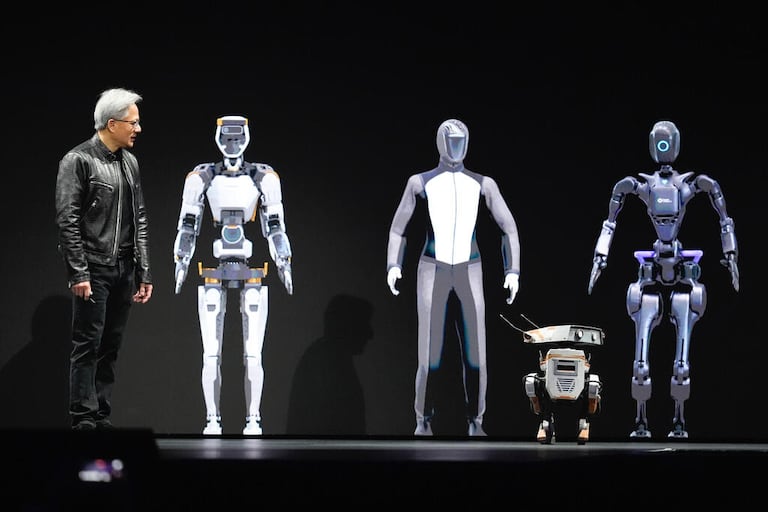
But much of today’s shipment growth still comes from research, entertainment, training and data collection.
For the market to become a major industrial automation sector, companies will need to demonstrate that humanoid robots can reliably perform useful tasks at a cost that makes sense for customers.
That means moving from one-off pilots to repeat orders, from demonstrations to sustained operating hours, and from subsidized or research-driven purchases to independent commercial demand.
