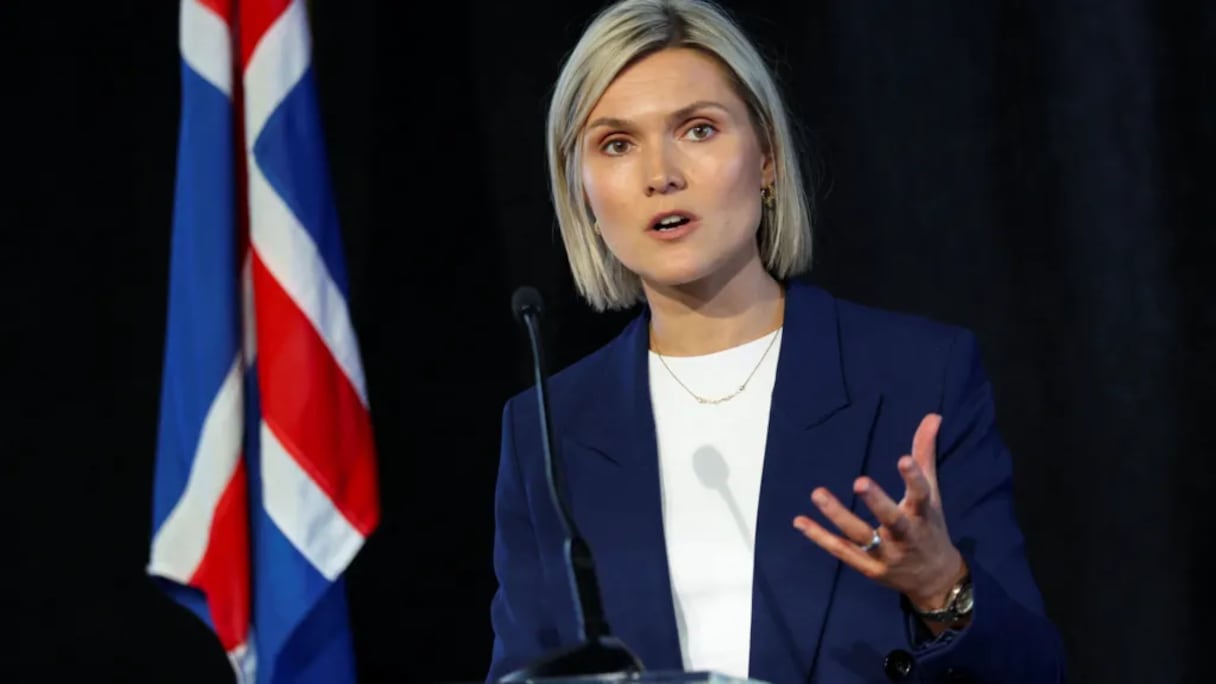
The referendum was held over the weekend, with more than 82% of eligible voters casting ballots. The result puts an end, for now, to efforts by Iceland’s government to reopen EU accession talks that were suspended more than a decade ago.
Prime Minister Kristrún Frostadóttir said her government would respect the result and would not move forward with the negotiations.
“This government will not go forward with it,” Frostadóttir said, while noting that circumstances could change in the future.

Iceland applied to join the EU in 2009 following the global financial crisis but suspended the negotiations in 2013 after a euroskeptic government came to power. The country has remained part of the European Economic Area since 1994, giving it access to the EU’s single market without being a member of the bloc.
The referendum campaign was shaped by concerns over Iceland’s sovereignty, fishing industry and natural resources, as well as growing geopolitical uncertainty.
Supporters of EU membership argued that joining the bloc could provide greater security amid Russia’s war in Ukraine, tensions in the Middle East and U.S. President Donald Trump’s repeated threats to take control of neighboring Greenland. They also argued that EU membership could help address Iceland’s high interest rates.
Opponents warned that EU membership could undermine Iceland’s control over its fishing waters and other national resources.
The result also revealed a divide between urban and rural areas, with Reykjavík reportedly the only part of the country where a majority voted in favor of restarting negotiations.
The outcome is a setback for Brussels, which had hoped to welcome Iceland as a new member and had indicated a willingness to compromise on sensitive issues such as fisheries.
European Council President António Costa also told Frostadóttir that the bloc “fully respects the democratic choice” of Icelanders, while stressing that Iceland remains one of the EU’s closest and most trusted partners.
The result quickly drew praise from prominent European euroskeptics. French far-right leader Marine Le Pen said the vote showed that “another Europe is possible” based on sovereign nations cooperating voluntarily, while Reform UK leader Nigel Farage congratulated Iceland for voting to “keep their independence.”
Read also : Germany backs new EU-Morocco trade framework covering products from the Sahara
Frostadóttir said she hoped the referendum would not leave Icelandic society divided and acknowledged that many people, particularly in rural areas, had concerns about the impact of EU membership on fisheries, agriculture and natural resources.
Iceland, a NATO member of about 400,000 people, will now continue its relationship with the EU through the EEA rather than pursuing membership negotiations.
