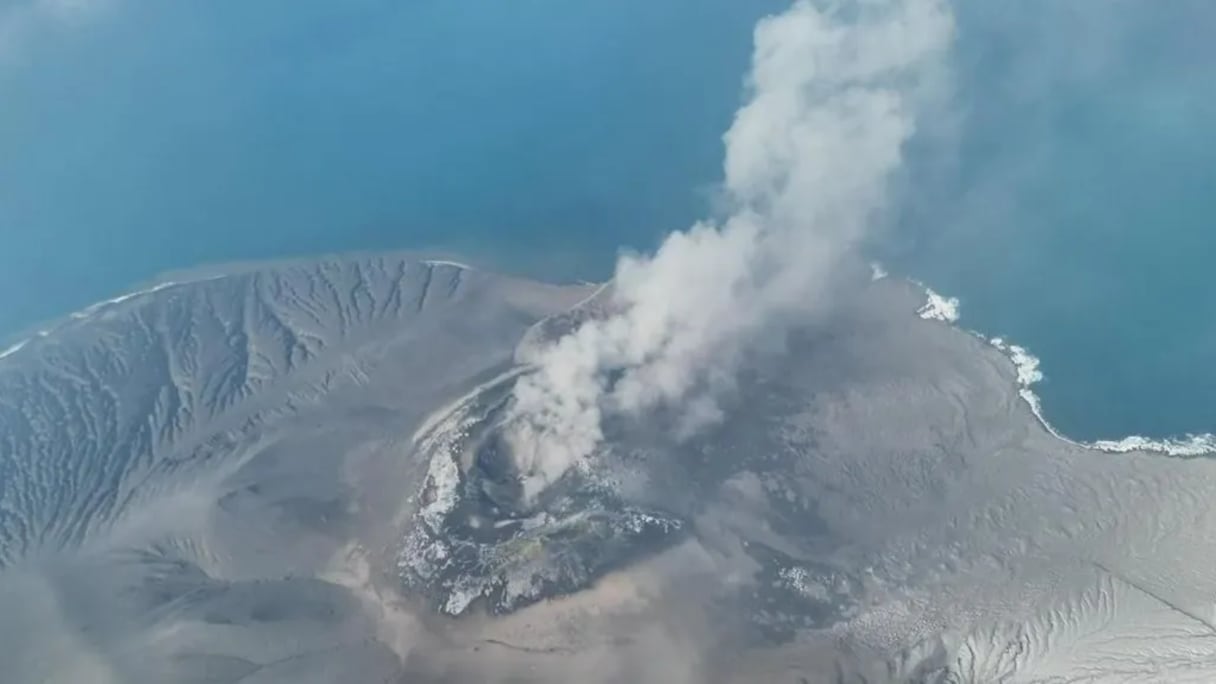
The volcano, located in the Sunda Strait between Java and Sumatra, erupted twice early Sunday after activity began late Friday. Volcanic ash spread across parts of Jakarta, West Java and Lampung, prompting airport closures and widespread flight disruptions.
Jakarta’s Soekarno-Hatta International Airport was among the airports forced to suspend operations after volcanic ash entered the area. Seven other airports were also affected.
Indonesia’s Transport Ministry said the disruption involved 1,558 flights and about 170,000 passengers across the eight airports. Flights to and from Singapore were particularly affected, along with international routes involving Doha, Sydney and Kuala Lumpur. At Soekarno-Hatta alone, hundreds of flights were disrupted, leaving large numbers of passengers waiting for updates and refunds.
Transport Minister Dudy Purwagandhi urged airlines to speed up refunds for affected passengers and provide timely information to travelers with upcoming flights to prevent overcrowding at airports. The closures were extended as authorities monitored the spread of volcanic ash and its impact on aviation safety.
Indonesia’s meteorological agency said volcanic ash reached about 6,000 meters on the Java side of the volcano and as high as 15,000 meters west of Anak Krakatau toward Sumatra. The Geological Agency said Anak Krakatau’s activity had intensified since July, with Sunday’s eruption the strongest recorded during that period. The two Sunday eruptions lasted about 30 seconds and 16 seconds, respectively, according to Indonesia’s Geological Agency.
Read also : Flash floods leave more than 150 dead and hundreds missing along Nepal-Tibet border
The eruption has also affected communities near the volcano. Schools in affected areas suspended activities after residents reported eye irritation caused by volcanic ash, while some fishermen cancelled trips at sea. Health authorities advised people in affected areas to stay indoors and wear masks to reduce exposure to ash.
No casualties or evacuation orders were reported following the latest eruptions. Authorities have nevertheless warned residents and visitors to remain at least 3 kilometers from the active crater.
Anak Krakatau, meaning “Child of Krakatau,” emerged from the caldera left by the 1883 eruption of Krakatoa. The volcano also caused a deadly tsunami in December 2018, when part of its flank collapsed into the sea. The resulting tsunami killed more than 400 people along the coasts of Java and Sumatra.
There is no tsunami warning linked to the latest activity, authorities said.
