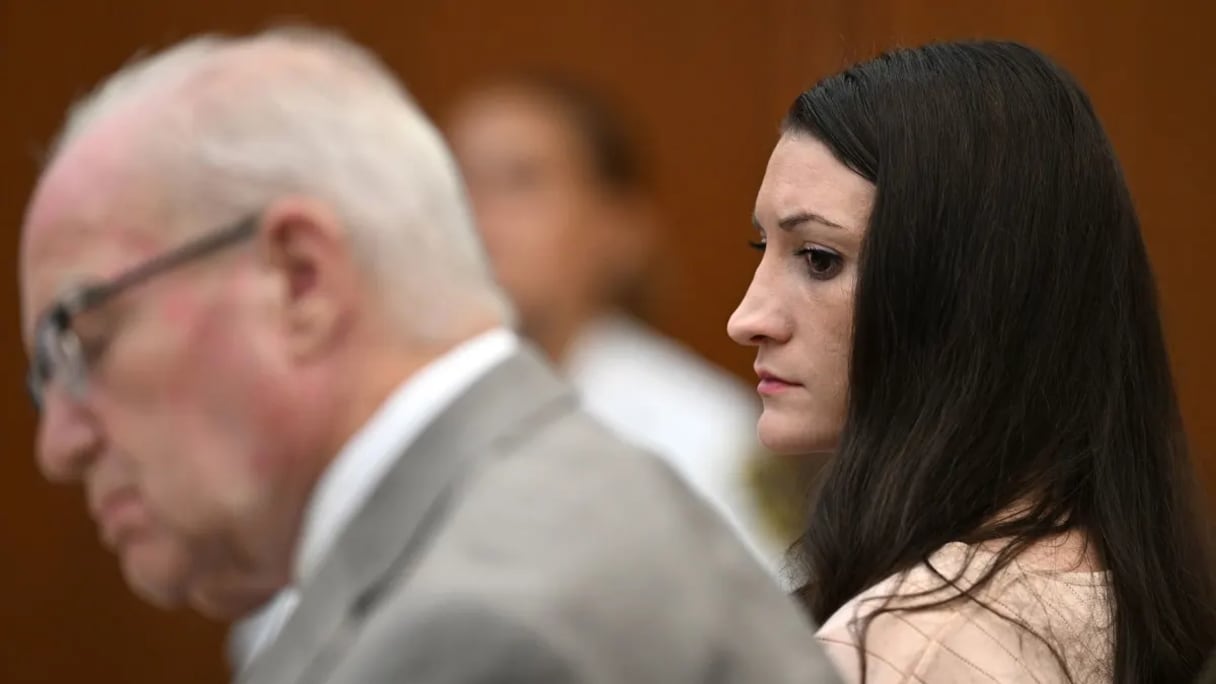
Clancy, a 36-year-old former labor and delivery nurse, is accused of killing her three children, Cora, 5, Dawson, 3, and Callan, 8 months, at the family’s home in Duxbury, Massachusetts, on Jan. 24, 2023. Her defense does not dispute that she killed the children. Instead, attorney Kevin Reddington argues that Clancy was suffering from postpartum psychosis and other serious mental health problems and should not be held criminally responsible.
That defense has placed maternal mental health at the center of a trial that has also become a major online phenomenon.
A trial turned social media obsession
Thousands of people have followed the proceedings through livestreams, news reports and social media clips. On TikTok alone, more than 164,400 videos have been posted using the hashtag #clancy.
The attention has gone far beyond discussion of the evidence presented in court.
Users have debated everything from the conduct of Clancy’s former husband, Patrick Clancy, to the clothing worn by prosecutors. Some have promoted theories accusing Patrick despite the fact that he is not a suspect in the killings.
Many TikTok users claimed Lindsay did not commit the killings and that Patrick had somehow convinced her that she had. Attorneys representing Patrick have called such claims false and defamatory, warning that the online accusations have had real consequences for him and his family.

The trial has also attracted people presenting themselves online as legal, medical or forensic experts. Some of their claims have little connection to the evidence presented in court.
Why are people blaming Patrick Clancy?
Patrick Clancy testified as the prosecution’s first witness. His testimony has since become a focus of online speculation, with some viewers claiming they noticed inconsistencies or suspicious details.
But publicly presented evidence places him away from the family home when prosecutors say the killings occurred.
On Jan. 24, Patrick left the house shortly after 5 p.m. to pick up medication and dinner. Phone records, pharmacy surveillance footage and a restaurant surveillance video were presented in court. Investigators also found evidence supporting his whereabouts outside the home.
When Patrick returned, he testified that he found Lindsay outside the house and then discovered the children in the basement.
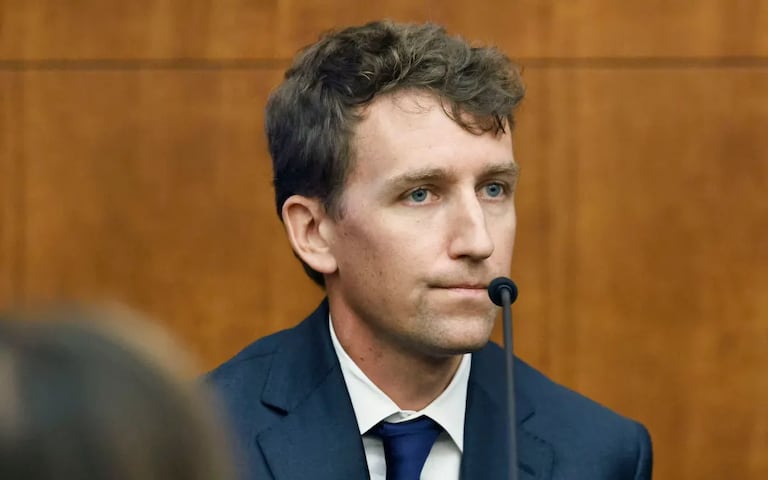
The prosecution’s case also does not depend on establishing that Patrick was somehow involved. Clancy’s defense accepts that Lindsay killed the children and is instead arguing that her mental state made her legally incapable of being held responsible.
For Michael Wagner, a journalism professor at the University of Wisconsin-Madison who studies online behavior, the willingness to search for another explanation can stem from the difficulty of accepting what happened.
The case presents an especially disturbing scenario: a mother described by people who knew her as devoted to her children is accused of killing them while her defense says she was experiencing a severe psychiatric crisis.
The defense: postpartum psychosis and a loss of control
Reddington has argued that Clancy suffered from postpartum psychosis after the birth of her third child. He has also said she had bipolar disorder and was overmedicated.
The defense presented testimony from forensic psychologist Paul Zeizel and forensic psychiatrist Dr. Phillip Resnick.
Zeizel, who met with Clancy dozens of times and reviewed her medical records, testified that she had described hearing a male voice ordering her to kill her children and then herself. He said psychological testing conducted by a government doctor found no evidence that she was fabricating or exaggerating psychiatric symptoms.
Resnick, who has worked on other high-profile postpartum psychosis cases, testified that Clancy was “frankly psychotic” when the killings occurred. He said she experienced command hallucinations and what he described as a delusion in which she believed an external force had taken control of her body.
Hospital chaplain Sheila Cavanaugh also testified that Clancy told her she had heard a male voice telling her that she and her children would not be safe if she did not follow its commands.
Cavanaugh recalled one of Clancy’s first statements to her after the killings: “I’m so glad my children are safe.”
Prosecutors have challenged the defense’s account.
Prosecutors argue Clancy acted deliberately
Prosecutors maintain that Clancy planned the killings and deliberately sent Patrick out of the house on an errand.
Their case relies in part on testimony suggesting that Clancy retained an understanding of her circumstances and was capable of making decisions around the time of the killings.
Psychiatrist Dr. Avram Mack testified that Clancy suffered from a major depressive episode in 2022 and 2023, but disputed the defense’s characterization of her condition at the time of the killings.
Read also : Selena Gomez, her mother sued by investors over troubled mental-health startup
Under Massachusetts law, the question is not simply whether Clancy suffered from a mental illness. Prosecutors must establish that she either did not suffer from a mental disease or defect at the time of the killings, or that she retained substantial capacity to understand the wrongfulness of her actions and follow the law.
The defense has attacked the basis for some of Mack’s conclusions, including his reliance on information Clancy provided while she was receiving psychiatric treatment.
The conflicting testimony means that expert witnesses could play a decisive role when jurors begin deliberating.
Hundreds rally outside the courthouse
The online attention has spilled into the physical world.
On Aug. 20, around 300 people gathered outside Plymouth Superior Court in support of Clancy. Many wore pink clothing carrying messages including “Believe,” “She Needed Help” and “Peace For Lindsay.”

Supporters said they wanted the case to draw attention to gaps in maternal mental healthcare and the experiences of women who seek help after giving birth.
“Women are being dismissed, neglected and ignored when we speak up,” supporter April Vincent told reporters at the rally.
The rally remained largely silent for more than an hour before supporters formed a circle, prayed and applauded Reddington when he appeared outside the courthouse.
For some criminologists, the support also reflects how people identify with victims or defendants in cases involving women and motherhood.
The case has revived questions about maternal healthcare
The trial has become a focal point for advocates concerned about postpartum mental health.
The defense says Clancy repeatedly sought treatment before the killings, including through outpatient providers, medication, an emergency room and psychiatric hospitalization. Her lawyers have also filed a civil lawsuit against healthcare providers, alleging medical malpractice.
The trial has therefore raised questions that extend beyond the criminal case itself: how postpartum psychiatric disorders are recognized, how women seeking help are treated, and where healthcare systems can fail patients experiencing severe mental illness.
At the same time, experts caution against allowing those questions to become a substitute for evidence about what happened in Clancy’s home.
Jordan said the case offers lessons about postpartum depression, postpartum psychosis, the insanity defense and the limits of the healthcare and criminal justice systems.
“That’s what I would like all of the obsession to be about,” she told CT Insider..
The trial enters its final stage
The jury is expected to hear closing arguments on Tuesday, Aug. 25, before beginning deliberations. If Clancy is found not criminally responsible by reason of insanity, she would be committed to a state psychiatric hospital and subject to periodic reviews. A guilty verdict on the murder charges would result in a life sentence without parole.
Whatever the verdict, the case will continue to raise questions about how postpartum mental illness is treated, how insanity defenses are understood and how quickly social media can turn a criminal trial into a parallel courtroom of its own.
