Global commitments to limit climate change remain largely insufficient, putting the world on track for 2.6°C of warming over the course of this century, the United Nations warned Wednesday, October 21, stressing the need for drastic and immediate action.
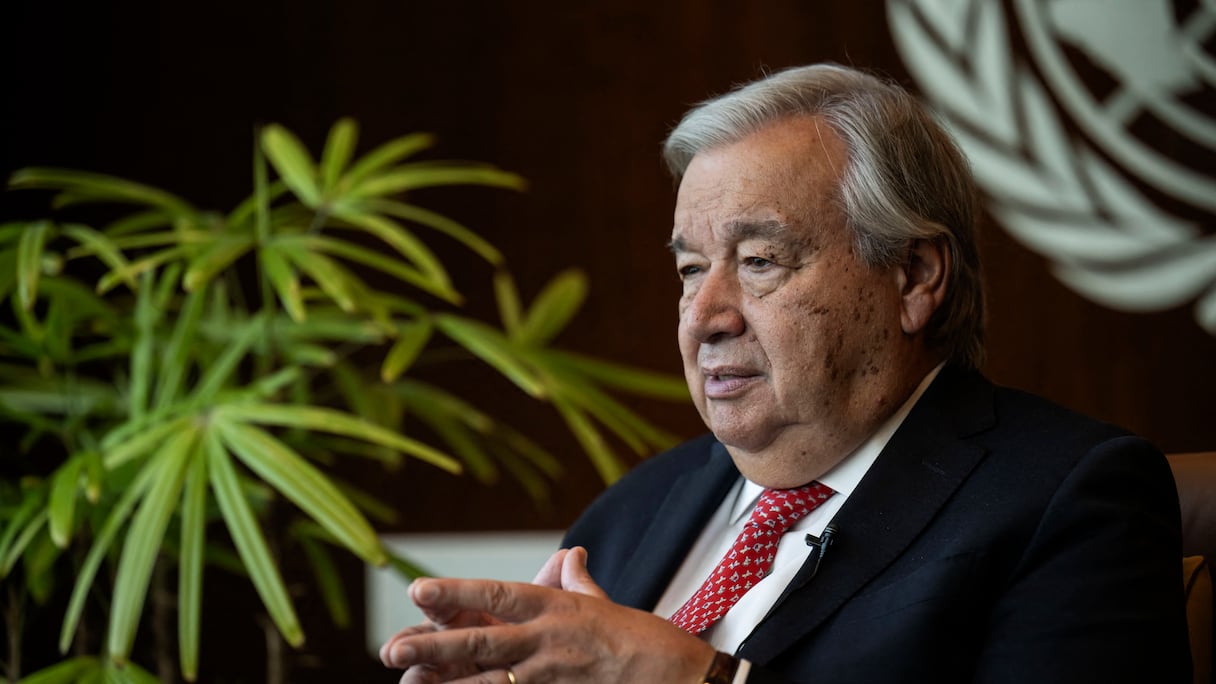
The world is “dangerously far off track” and “can no longer avoid overshooting the 1.5°C limit,” the most ambitious target of the 2015 Paris Agreement, UN Secretary-General Antonio Guterres said at the launch of the United Nations Environment Program’s (UNEP) annual Emissions Gap Report, which assesses the gap between projected emissions and climate targets.
According to the report, even if countries fulfill their commitments to cut greenhouse gas emissions, global temperatures would be 2.6°C above preindustrial levels by the end of the century.
These projections are more pessimistic than last year’s estimates, which put warming at 2.3°C to 2.5°C. The change is due in particular to the United States’ withdrawal from the Paris Agreement — the US is the world’s second-largest polluter — and revisions to estimates of historical emissions.
Based on current policies alone, without taking into account pledges to do more, global warming could reach 2.8°C by 2100, twice its current level. The world is already experiencing numerous extreme weather events, including deadly floods, sudden heat waves and uncontrollable wildfires, such as those that struck Europe this summer.
“Historic failure”
“The consequences are already devastating,” Guterres said, but this “does not mean we should give up.” He made the remarks three weeks before the 31st UN Climate Change Conference, scheduled for November 9-20 in Turkey.
Greenhouse gas emissions from burning coal, oil and gas remain “at record levels” in 2025. National climate plans and current policies are “dangerously insufficient,” but “we have the tools needed to change course and step back from the brink,” the UN chief said.
Preliminary data for 2025 show that emissions rose in the United States, Indonesia and China, while they fell in India, Russia and the European Union, among the six largest emitters.
The possibility of keeping warming below 1.5°C “is gone,” the report concludes, following “decades of insufficient climate action,” particularly by wealthy G20 countries, which account for three-quarters of global emissions.
“This is a historic failure of political leadership. The scientific evidence has been clear for decades, but governments have chosen to procrastinate rather than act. The consequences will be measured in lives lost, not just degrees of warming,” said Mohamed Adow, director of Power Shift Africa, an organization working to mobilize action on climate issues in Africa.
Scientists warn that every additional fraction of a degree above 1.5°C increases the frequency of extreme weather events and the likelihood of irreversible changes to the planet, from the decline of coral reefs to the thawing of permafrost.
“Significantly accelerate”
The report nevertheless outlines a more favorable scenario in which warming peaks between 1.7°C and 1.8°C before falling back below 1.5°C by 2100.
To achieve this, global emissions would need to fall by 18% by 2030, 45% by 2035 and 69% by 2040, compared with 2025 levels.
By comparison, fulfilling current climate pledges would result in emissions reductions of just 5% to 8% by 2030 and 11% to 15% by 2035, according to the UN.
“The decisive moment — the moment when everything is at stake — is here; it is now, not later,” said Inger Andersen, UNEP’s executive director, warning that “the window of opportunity is closing.”
Countries must therefore “scale up” the progress already made. Global renewable energy capacity has grown three times faster than expected, while solar photovoltaic deployment has increased sevenfold. They must also “significantly accelerate the momentum,” said Anne Olhoff, one of the report’s authors.
However, persistent obstacles remain, particularly regarding the phaseout of fossil fuels, where “we are seeing no progress commensurate with what is required,” Olhoff said, as well as efforts to halt deforestation.
