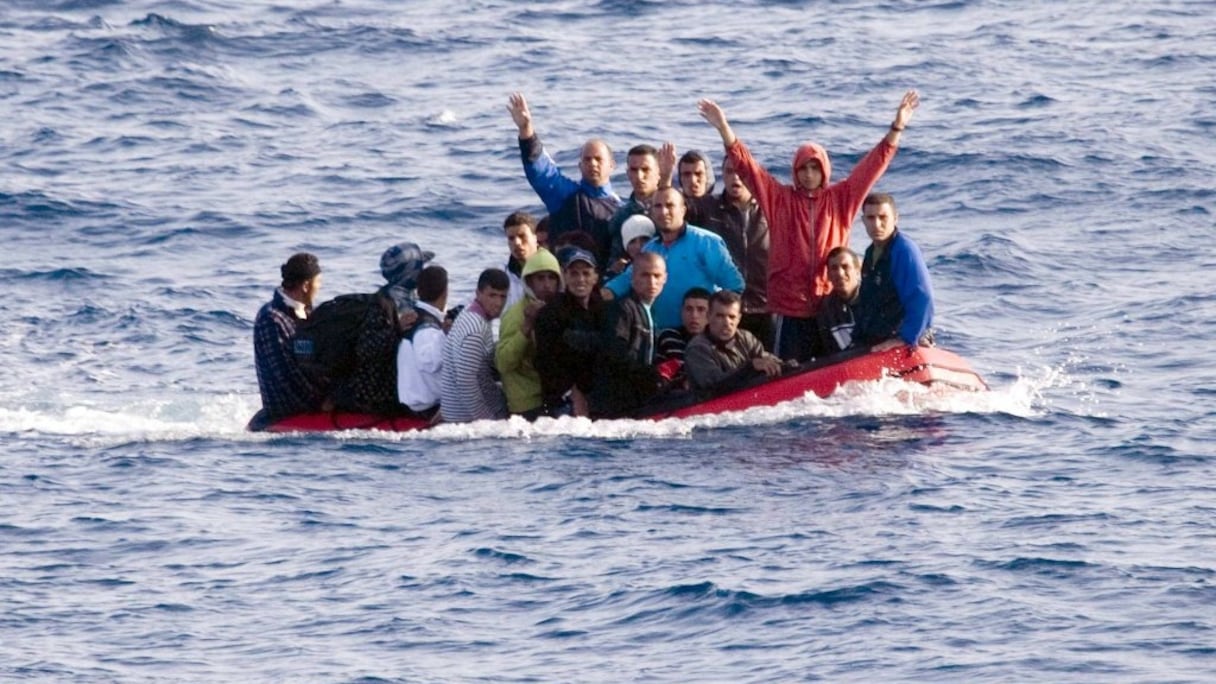
The figures come from Madrid, not Algiers. As of October 14, according to Spanish Interior Ministry data reported by the EFE news agency, 365 boats had brought 6,642 migrants to the Balearic Islands since the start of the year. In all of 2025, the figure stood at 7,321. Last year’s record will therefore be broken before winter. The island press puts it bluntly: the “vast majority” of these boats depart from Algeria, not Morocco.
This is no longer a marginal phenomenon. For the first time, the Balearic route has overtaken the Canary Islands route, long Spain’s main maritime entry point for migrants. The president of the regional government, Marga Prohens, described it to European Commissioner Dubravka Šuica as the fastest-growing migration route in Europe. In September, the Western Mediterranean route was already the only major European route recording an increase, with around 15,900 detections, up 34% in a year, and Algeria as the main country of departure.
The human cost is rising along with the numbers. On October 12, 23 people who had departed from the Algerian coast for the archipelago were reported missing. Their names will not appear in any Algerian media outlet.
Read also : Ceuta: From Algerian digital interference to the ‘Makhzen’s’ hand, José María Gil Garre’s startling U-turn
It is worth remembering where these young people are leaving from. Not a country at war, nor a failed state stripped of resources. They are leaving Africa’s third-largest gas producer and one of Europe’s main suppliers. On October 17, Energy Minister Mohamed Arkab told lawmakers that hydrocarbon export revenues had reached $37.5 billion in the first nine months of 2026. Algerian crude sold for an average of around $97 a barrel, 37% more than a year earlier. Oil tax revenues have already exceeded the forecast in the finance law by 5%. The Algerian state has not had this much money in a very long time.
The irony is geographical. According to the Spanish government, Algeria is Spain’s leading supplier of natural gas this year, and Prime Minister Pedro Sánchez praised the “reliability” of those supplies in July. Algerian gas reaches Spain through the Medgaz pipeline, running from Beni Saf to Almería. Its young people cross the same sea aboard rigid-hulled boats fitted with 300-horsepower engines. Both flows have the same destination. Only the first generates revenue for the state.
The promised “diversification” changes nothing. President Abdelmadjid Tebboune has set a target of $30 billion in non-hydrocarbon exports by 2030. According to the Ministry of Foreign Trade, such exports reached nearly $4 billion between January and August 2026 and are expected to exceed $5 billion by year’s end. But it is worth looking at what these “non-hydrocarbon” exports actually comprise. According to the World Bank, 80% consist of fertilizers, steel and cement. Nitrogen fertilizers and ammonia, the leading export categories, are produced using natural gas. Steel and cement are manufactured with subsidized energy. Algeria’s “non-hydrocarbon” exports are, for the most part, gas in another form.
The same president promises an Algerian-made car by 2028, while 190,000 Chinese vehicles were imported in eight months. He lectures exporters who fail to repatriate their foreign currency. Yet the only export truly independent of gas and oil, the country’s youth, has no place in his speeches to business leaders. It brings no foreign currency into the Bank of Algeria. It brings money to the smugglers.
Read also : Algerian general’s son exposes corruption, deadly feuds among army top brass
The regime has other priorities, too. This week, the Ministry of National Defense devoted 22 minutes of public television airtime to demonstrating that Amir Dz, an exiled YouTuber, had set fire to forests in eastern Algeria through voice messages. It could have spent one minute explaining how hundreds of boats leave the coastline it monitors every month, equipped with engines that cannot exactly be hidden in a pocket.
One question remains: how can a country that controls everything, from the press and social media to opponents abroad, fail to control its own beaches? Some see incompetence; others see a convenient pressure valve. Either way, the answer reflects badly on those in power. Through Medgaz, Algeria sells its gas to Spain. By sea, it hands over its youth. No invoice, and no regrets.
