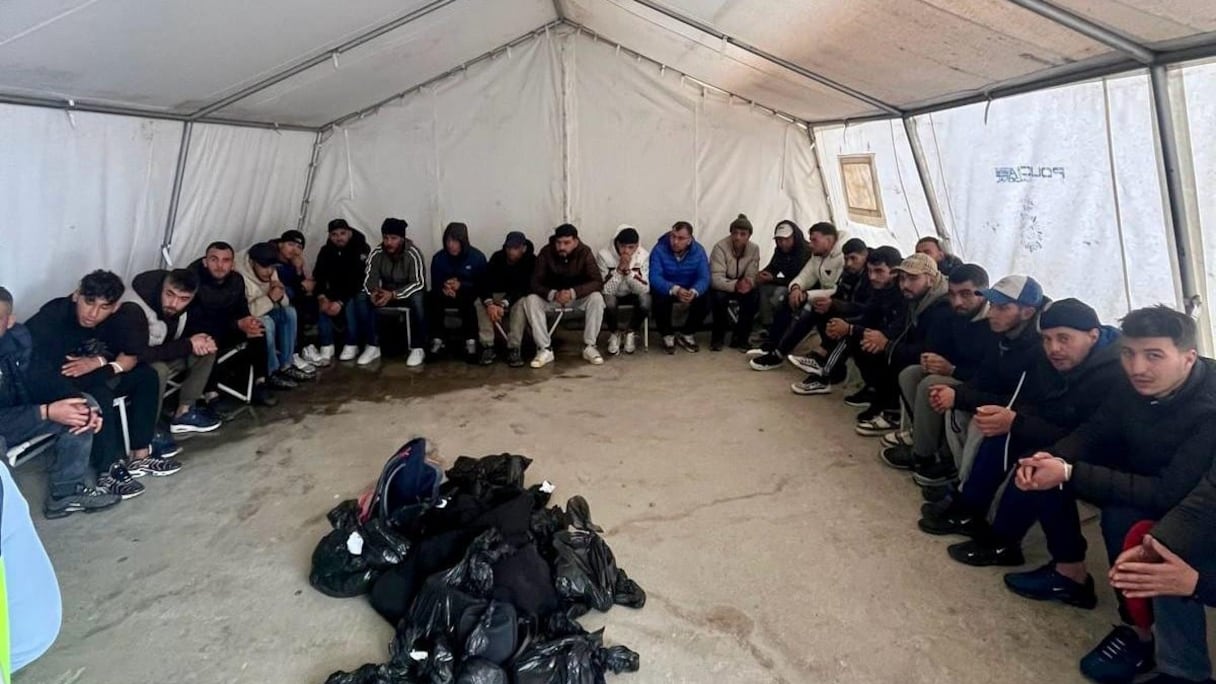
The coastline of the Murcia region in southeastern Spain is facing a major transformation in the methods used for irregular migration. The phenomenon originates primarily from the Algerian coast. While the debate in Spain is being diverted toward Ceuta, the proliferation of “taxi boats” is imposing an unprecedented and particularly aggressive dynamic on Spanish beaches.
These high-speed vessels, similar to the go-fast boats used by drug-trafficking networks, are equipped with extremely powerful engines ranging from 150 to 200 horsepower. Thanks to this propulsion, they can cross the Mediterranean in just a few hours. The modus operandi of these criminal networks is based on a lightning-fast landing strategy: the boats arrive at rugged points along the coast, drop off their passengers within minutes and immediately head back out to sea toward Algeria before any naval intervention can take place.
Two incidents that occurred on Saturday illustrate this reality in the municipality of Cartagena, according to Spanish news outlet La Gaceta. The first took place at Punta Negra, between Cala Reona and Calblanque, where a taxi boat landed around fifty passengers in broad daylight before turning back. The Civil Guard had to deploy across difficult terrain to intercept several of them as they moved away on foot. A few hours later, a similar scene unfolded at Cala de Huncos, where around ten passengers abandoned a second speedboat on the shore.
The speed at which these vessels operate makes the task of law enforcement considerably more difficult. The Unified Association of Civil Guards (AUGC) has denounced a glaring shortage of logistical and maritime resources needed to intercept these powerful boats on the high seas before they reach the beaches. At the same time, access to this rapid transport service has driven up the price for would-be migrants: according to police sources, the cost of the crossing from Algeria has risen sharply compared with the €2,500 charged only a few years ago.
The Shift Confirmed by the IOM
The latest statistics from the International Organization for Migration (IOM) establish that Algeria is now the leading country of origin for irregular migrants on this route, accounting for 42% of all arrivals recorded in Spain between January and April. By comparison, Morocco now represents just 22% of maritime flows over the same period, confirming a major structural shift in migration patterns across the Western Mediterranean.
Alongside this rise in departures, border-control activity has declined sharply along the Algerian coast, with a 37% drop in interceptions carried out by Algerian naval forces, which stopped only 1,002 people. This dynamic is reflected in a maritime flow that has become continuous, dispersed and definitive, operating through rapid crossings that leave no possibility of immediate return once the Spanish coast has been reached.
According to the IOM, on the Moroccan side, attempts often take the form of occasional large-group land assaults on Ceuta and Melilla, which generally end with the interception and rapid return of almost all those involved thanks to security cooperation between Rabat and Madrid. By contrast, the Algerian route relies on a silent strategy of methodical dispersal. Smugglers deploy their boats across the entire Spanish coastline, from the Balearic Islands to the shores of Almería, Alicante and Murcia, exploiting every favorable weather window.
This continuous flow raises questions about the posture of the Algerian authorities, all the more so because the statistics show a collapse in maritime controls from their own coastline. Faced with domestic socio-economic tensions and the lack of prospects affecting part of its youth, the Algerian regime appears to be facilitating this informal emigration, using it as a political safety valve to channel internal social pressure toward Europe.
Spain is merely a technical transit point. Drawing on linguistic ties, a long history of migration and firmly established family networks, almost all Algerian migrants landing on the beaches of Murcia or the Balearic Islands quickly leave Spanish territory for their final destination: France. This movement within the Schengen area renders the phenomenon invisible in destination statistics, obscuring the true impact of a maritime exodus undergoing rapid transformation.
While Spanish and European media attention remains traditionally focused on the spectacular crossings of the barriers in Ceuta and Melilla, official statistics reveal that Algeria has become the principal source of irregular migration along the Western Mediterranean route.
