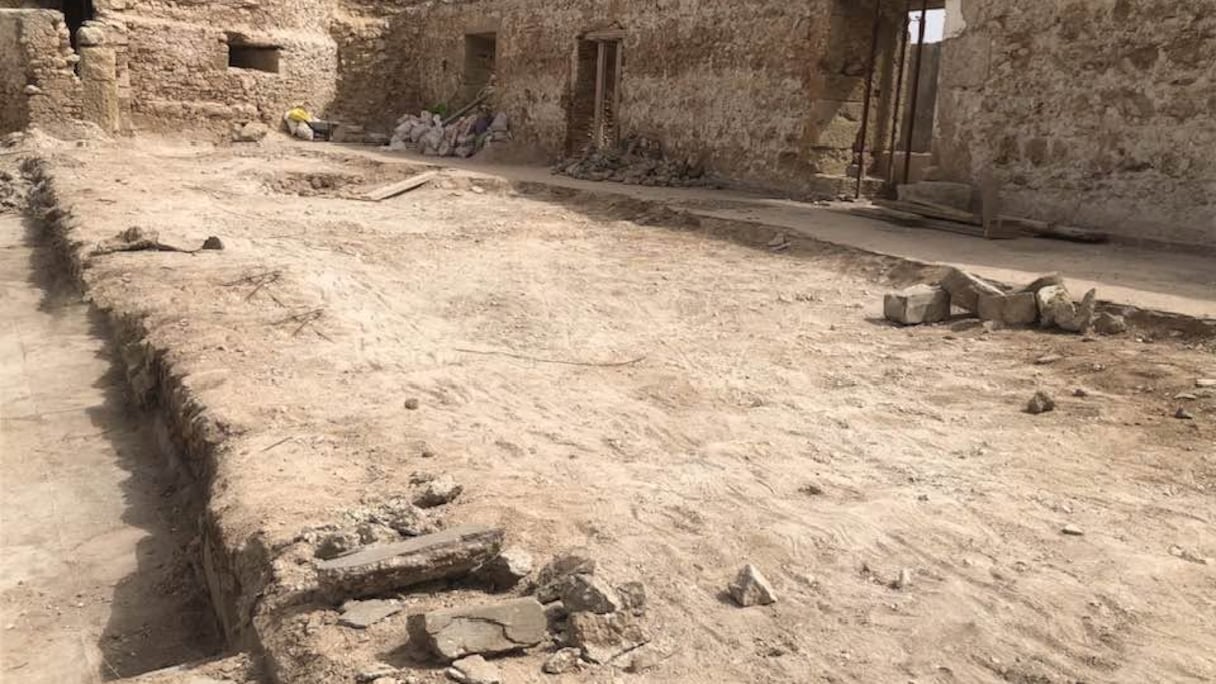
The Portuguese Citadel of El Jadida, a defining monument within the Portuguese City of Mazagan, a UNESCO World Heritage Site since 2004, is currently undergoing one of the most significant restoration campaigns in its history. After several years of technical studies and preparation, work is now fully underway and is expected to take 18 months.
Speaking to Le360, Aboulkacem Chebri, an archaeologist specializing in the restoration of Moroccan-Portuguese heritage and director of the Centre for Moroccan-Lusitanian Heritage Studies and Research (CERPML), outlined the project’s importance. He highlighted that it combines structural reinforcement, heritage conservation, and the enhancement of one of Morocco’s most iconic historical landmarks.
A MAD 2.5 million restoration project
Fully funded by the Ministry of Youth, Culture, and Communication, the project represents an investment of approximately MAD 2.5 million and is being overseen by the Regional Directorate of Culture for Casablanca-Settat.
“This has been a collaborative effort for more than three years, involving the Regional Conservation Office of Casablanca-Settat, the Regional Directorate, and the Centre for Moroccan-Lusitanian Heritage Studies and Research. The allocated budget is dedicated exclusively to the Citadel and the Cistern and should not be confused with the wider rehabilitation program covering the entire Portuguese City of Mazagan,” Chebri said.
The restoration encompasses the entire Citadel, including the semi-underground Cistern, its rooftop terrace, 25 supporting pillars, the four corner towers, adjoining galleries, and the minaret. A supervisory committee, comprising representatives from the ministry, CERPML, the municipality, and several local associations, is overseeing the project.
Addressing long-standing water infiltration
The restoration was launched in response to the severe storms that struck the region in 2021. Heavy water infiltration weakened the brick vaults of the Cistern, causing significant structural damage and forcing authorities to close the monument on safety grounds.
Subsequent technical assessments also revealed a long-standing structural issue. Over the centuries, successive layers of concrete and masonry had accumulated on the rooftop terrace, in some places exceeding one meter in thickness. This additional weight placed considerable strain on the original vaults beneath.
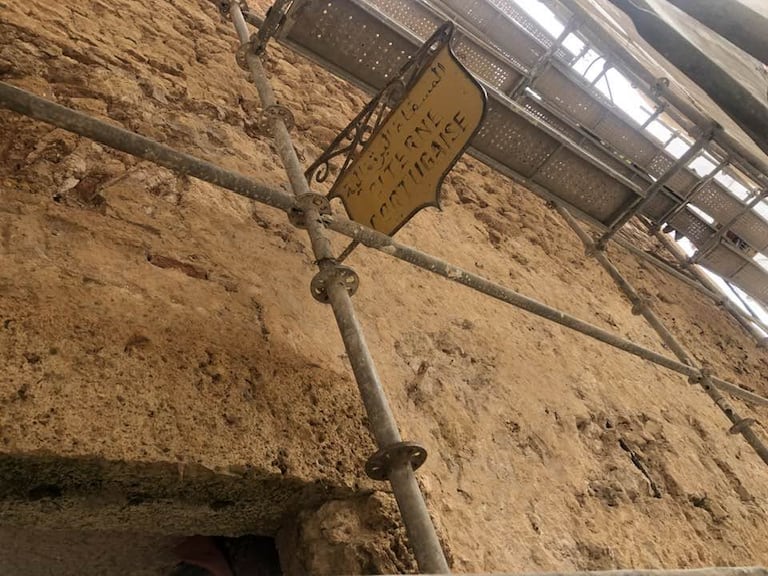
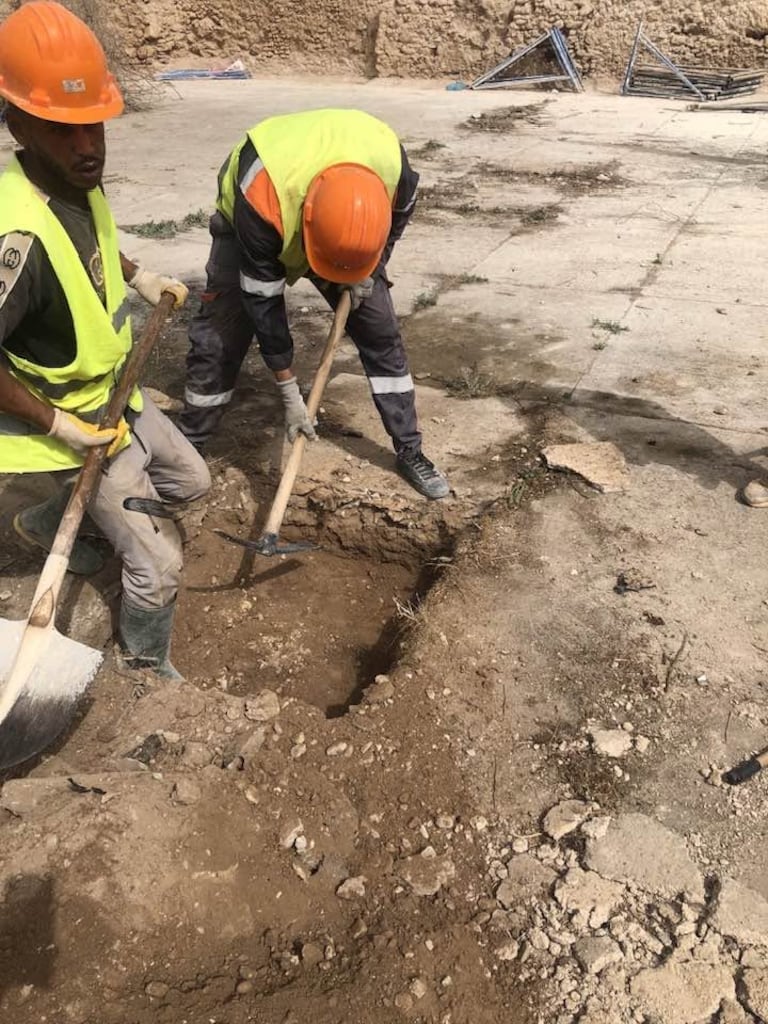
“We first removed all the layers that had been added over time in order to expose the original vaults,” Chebri explained. “Damaged sections are being restored using traditional bricks identical to those used when the monument was first built. A new waterproofing system will permanently prevent future water infiltration.”
A redesigned visitor experience
Beyond structural restoration, the project also encompasses a complete upgrade of the site’s technical infrastructure.
The aging electrical network, severely impacted by the constant humidity within the Cistern, will be entirely replaced. A new lighting system will illuminate the Gothic vaults, columns, and the renowned reflections that have brought international fame to the monument, while all technical installations will be discreetly hidden from visitors.
The site will also be outfitted with a modern video surveillance system to ensure continuous monitoring of both the monument and its entrances.
Furthermore, the visitor route is being redesigned. The entrance galleries, specifically the Abdelkébir Khatibi and Chaïbia Talal galleries, will house a new museum space dedicated to the history of Mazagan and the evolution of the Portuguese fortress.
“We plan to transform the entrance gallery into a museum space showcasing several important archaeological artifacts dating from the 16th and 18th centuries, including historical inscriptions, cannonballs, and two bronze artillery pieces,” Chebri stated.
Once restoration is complete, the Cistern will also resume its function as a vibrant cultural venue, hosting temporary exhibitions, artistic events, and heritage-related activities celebrating the rich history of Mazagan.
Moroccan expertise at the heart of the project
Following a public tender, the restoration contract was awarded to a specialized Moroccan company based in Fez, recognized for its expertise in restoring historic monuments, particularly within the medinas of Fez and Rabat.
The project is monitored daily by a committee comprising heritage architects, ministry experts, representatives from CERPML, and members of civil society.
Upon completion of the 18-month restoration, the Portuguese Cistern will reopen to the public under optimal safety conditions. With its restored architecture, upgraded facilities, and new museum experience, the landmark is expected to further enhance its appeal to both Moroccan and international visitors.